
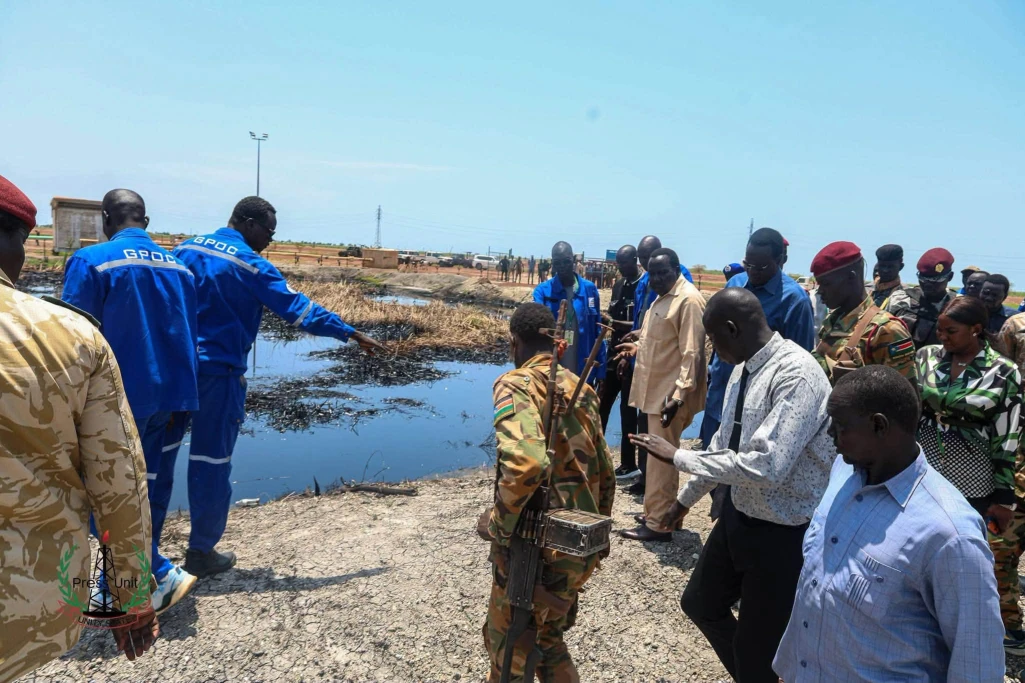
Malek Cook-Dwach: Demands GPOC Unity State Waste Pit Investigation
Summary
- A woman was injured after falling into an oil waste pit operated by Greater Pioneer Operating Company (GPOC) in Unity State, prompting parliamentary intervention.
- Lawmaker Malek Cook-Dwach demanded GPOC cover the victim's medical expenses and compensation, and cooperate with an independent investigation.
- An urgent, comprehensive audit of all oil waste facilities in Unity State and the Ruweng Administrative Area, including those of GPOC and SPOC, has been called for.
- Parliament's Standing Specialized Committee on Petroleum plans to summon government and company officials to address environmental safety and corporate responsibility.
- The incident highlights broader concerns about corporate neglect, the need for robust safety measures, and the social impact of oil operations on South Sudanese communities.
Lawmaker Demands Probe After Oil Waste Pit Incident
The incident has prompted a senior lawmaker to declare that South Sudanese lives must not be treated as a mere cost of doing business by oil operators.
A serious incident in Unity State has prompted a senior South Sudanese lawmaker to call for an independent investigation into the operations of the Greater Pioneer Operating Company (GPOC). The demand follows the injury of Kasare Nyier Gatluak, who fell into an oil waste pit managed by GPOC in Munga, Rubkona County, on September 14, 2026. Ms. Gatluak is currently receiving medical treatment at Gudele Hospital in Juba.
Malek Cook-Dwach, a member of the Transitional National Legislative Assembly's (TNLA) Standing Specialized Committee on Petroleum, addressed journalists on Monday, asserting that GPOC must take full responsibility. He specifically demanded that the company immediately cover all medical expenses for Ms. Gatluak until her full recovery and provide fair compensation to both her and her family. Furthermore, Cook-Dwach insisted that GPOC publicly explain the circumstances surrounding the incident and fully cooperate with any independent investigation.
Urgent Environmental Audit and Safety Measures Called For
Beyond the immediate incident, the lawmaker extended his demands to a broader review of oil waste safety across the region. Cook-Dwach urged the Ministry of Petroleum, in collaboration with relevant environmental authorities, to conduct an urgent and comprehensive audit of all oil waste ponds and pits throughout Unity State and the Ruweng Administrative Area. This inspection, he stated, should encompass facilities operated by GPOC, Sudd Petroleum Operating Company (SPOC), and other oil companies, beginning with the Munga site where the recent incident occurred.
Cook-Dwach emphasized the critical need for enhanced safety protocols, demanding that all hazardous facilities be secured, remediated, or permanently closed within a clearly defined timeline. He called for oil companies to implement robust security measures, including perimeter fencing, prominent warning signs, controlled access points, and adequate lighting where necessary. Additionally, he stressed that hazardous facilities must be situated away from villages, roads, and grazing routes, or otherwise rendered completely inaccessible to both people and livestock.
Heightened Scrutiny on Corporate Responsibility
The incident has prompted a broader call for increased corporate accountability within South Sudan's oil sector. Cook-Dwach underscored the necessity for oil operators to conduct thorough environmental and social impact assessments (ESIAs) and regular safety audits, with their findings shared transparently with government authorities, parliament, and host communities. He also mandated that companies maintain robust emergency response and rescue systems and assume full responsibility for the medical costs and compensation of any individuals affected by operational hazards.
In a move signaling intensified parliamentary oversight, Cook-Dwach announced that the Standing Specialized Committee on Petroleum plans to summon responsible government officials and company representatives to appear before the Assembly. These individuals will be required to report their findings and address the committee's concerns. The lawmaker also advocated for greater investment in host communities through essential services like water, healthcare, education, roads, and livelihood programs, alongside increased local employment and local content initiatives.
Oil Operations Under the Lens of National Sovereignty
Addressing the leadership of Nile Petroleum Corporation (NILEPET), the Ministry of Petroleum, GPOC, and SPOC, Cook-Dwach delivered a stark message regarding their responsibilities. He asserted that oil sector managers are not merely administrators of oil fields but are, in fact, "watchdogs of the sovereignty of this country," with a fundamental duty to protect communities residing near oilfields. The incident has prompted a senior lawmaker to declare that South Sudanese lives must not be treated as a mere cost of doing business by oil operators.
Cook-Dwach passionately argued that oil should not become a "curse" for the people living above it, especially given that Unity State communities have already endured significant conflict, displacement, and environmental damage. He concluded by affirming parliament's unwavering commitment to exercising its oversight role, ensuring that all petroleum operators strictly comply with South Sudanese laws and adhere to established safety standards.
Practical Implications
Oil and gas companies operating in South Sudan, especially in Unity State, face heightened parliamentary scrutiny and potential regulatory audits regarding environmental safety, waste management, and corporate social responsibility. Compliance officers should review their operational safety protocols, environmental impact assessments, and community engagement strategies to mitigate legal and reputational risks, and prepare for potential parliamentary summons or regulatory inspections.
Source
How does this affect you?
Get an AI analysis of this article grounded in your jurisdictions, practice areas, and any policy documents you've uploaded to Wansom.
Finish Reading the Full Story and the Expert Analysis.
Get the latest legal & regulatory intelligence in South Sudan
Wansom is AI and can make mistakes.