
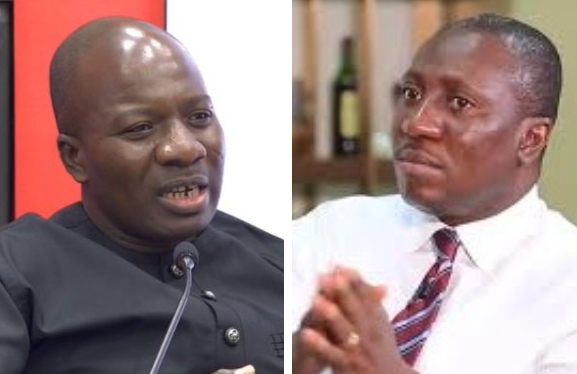
Dr Dramani: Ghana Parliament Partisan Solidarity Undermines Accountability
Summary
- Dr. Rasheed Dramani accuses Ghana's Parliament of consistently failing to hold its own members accountable due to partisan solidarity.
- He states that this partisan loyalty contributes to growing public perceptions of corruption and erodes public trust in the institution.
- Dr. Dramani emphasizes the critical need for parliamentary leaders with integrity, especially in a supermajority context, to ensure accountability.
- He questions Parliament's double standards, noting its rigorous scrutiny of the Executive but reluctance to investigate its own members due to high political costs.
- The ongoing dispute involving Majority Leader Alexander Afenyo-Markin and an extortion accusation is seen as a pivotal moment for Parliament to address these systemic issues.
Parliament's Accountability Deficit
He observed that this pattern of partisan solidarity overriding accountability has been a consistent feature in Ghana's Parliament over the years.
Dr. Rasheed Dramani, who serves as the Executive Director for the Africa Centre for Parliamentary Affairs, has voiced significant concerns regarding the Ghanaian Parliament's consistent failure to hold its own members accountable when serious allegations arise. Speaking on Joy News’ PM Express on a recent Tuesday, Dr. Dramani asserted that a pervasive culture of partisan solidarity frequently overshadows the rigorous scrutiny expected from lawmakers, contributing to a growing public perception of corruption within the institution.
His critique extends beyond the immediate controversy surrounding Majority Leader Alexander Afenyo-Markin. Instead, Dr. Dramani emphasized that the current dispute should compel Parliament to critically examine the integrity of its own offices and the institution as a whole. He expressed particular worry about this dynamic, especially given the context of a supermajority parliament, which he believes amplifies the need for robust internal oversight.
Erosion of Public Trust and Leadership Integrity
The expert highlighted that Ghana requires parliamentary leaders who possess a high degree of integrity to effectively hold the Executive accountable, a necessity that becomes even more critical under a supermajority government. He specifically noted the importance of a minority caucus demonstrating exceptional integrity to serve as a check on both the supermajority and the executive branch. Dr. Dramani's concerns are deeply rooted in the persistently low levels of public trust in Parliament and the widespread perception of corruption among citizens.
A significant factor contributing to this erosion of public confidence, according to Dr. Dramani, is the tendency of Members of Parliament to rally around colleagues facing accusations without first demanding answers or internal investigations. He observed that this pattern of partisan solidarity overriding accountability has been a consistent feature in Ghana's Parliament over the years. This issue is further exacerbated when accused lawmakers appear in court, often accompanied by broad support from their peers, sometimes even leading to an empty parliamentary chamber, which only deepens public mistrust.
Double Standards in Scrutiny
Dr. Dramani questioned whether Parliament applies the same stringent standards of scrutiny to itself as it does to the Executive. He pointed to the diligent work of the Public Accounts Committee as an example of Parliament's capacity for external oversight, noting that in 2024 alone, the committee conducted approximately 31 public hearings and issued over 1,000 recommendations for the recovery of public resources. However, he queried if such a rigorous standard is ever applied internally when allegations surface against its own members.
The reluctance to investigate fellow MPs, Dr. Dramani suggested, stems from the high political cost involved. He explained that lawmakers often prefer to remain silent due to the intricate web of relationships built over time, where current MPs might become future ministers, fostering various networks that discourage internal accountability. This intricate political ecosystem makes it challenging for Parliament to exercise moral authority in scrutinizing its own conduct.
The Afenyo-Markin Controversy: A Test Case
These observations come amidst a high-profile dispute involving Majority Leader Alexander Afenyo-Markin and GoldBod Chief Executive Officer Sammy Gyamfi. Mr. Gyamfi publicly accused Mr. Afenyo-Markin of extortion during a disagreement concerning criticism of GoldBod. In response, Mr. Afenyo-Markin vehemently denied the allegation and initiated legal proceedings, leading to a broader legal confrontation.
The Majority Leader has since pursued legal action in court, while the Office of the Special Prosecutor is currently conducting a preliminary assessment to determine whether a full investigation into the matter is warranted. Dr. Dramani views this ongoing controversy as a crucial opportunity for Parliament to introspect and address the systemic issues he has highlighted, particularly the challenge of Dr Dramani Ghana Parliament partisan solidarity.
Source
How does this affect you?
Get an AI analysis of this article grounded in your jurisdictions, practice areas, and any policy documents you've uploaded to Wansom.
Wansom is AI and can make mistakes.