
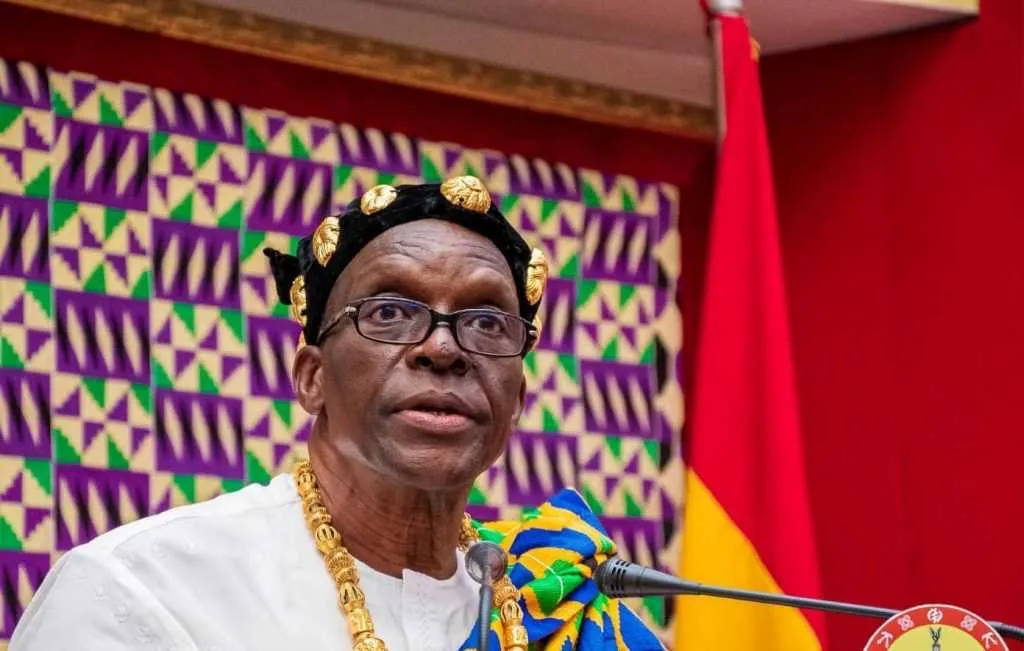
Dr. Dramani: Challenges Ghana Parliament Self-Scrutiny Amidst MP Allegations
Summary
- Dr. Rasheed Dramani challenged Ghana's Parliament to apply the same scrutiny to its own members' alleged wrongdoings as it does to the government.
- His comments were prompted by recent allegations against Minority Leader Alexander Afenyo-Markin, emphasizing the importance of the office's integrity.
- Dramani identified partisan solidarity, political reluctance, and a lack of clear resolution processes as key barriers to internal parliamentary accountability.
- He noted Parliament's strong external scrutiny, citing the Public Accounts Committee's 31 hearings and over 1,000 recommendations in 2024.
- To enhance credibility, Dr. Dramani suggested Parliament should consider including independent voices in investigations of its members.
The Call for Internal Scrutiny
The absence of a transparent and clear process for moving from an allegation to a resolution has significantly contributed to public mistrust, hindering legislative ethics Ghana.
Dr. Rasheed Dramani, Executive Director of the Africa Centre for Parliamentary Affairs, has issued a direct challenge to Ghana's Parliament, urging it to apply the same rigorous standards of scrutiny to allegations of wrongdoing involving its own members as it does when examining the government. Speaking on Joy News’ PM Express on a recent Tuesday, Dr. Dramani emphasized that the latest accusations against parliamentarians should be a significant concern for the institution, particularly given the current composition of a supermajority Parliament. His comments underscore a growing demand for enhanced Ghana parliamentary accountability.
The call for greater internal oversight comes amidst a high-profile public dispute involving Minority Leader Alexander Afenyo-Markin and GoldBod Chief Executive Officer Sammy Gyamfi. Mr. Gyamfi publicly accused the Minority Leader of being an “extortionist,” an allegation vehemently rejected by Mr. Afenyo-Markin, who has since initiated legal action. Dr. Dramani clarified that his primary concern was not the individual, Mr. Afenyo-Markin, but rather the integrity of the office he holds and the critical importance of maintaining credible parliamentary leadership, especially in a legislative body dominated by a supermajority.
Identifying Gaps in Oversight
Dr. Dramani's analysis points to several systemic issues contributing to low public trust in Parliament and a high perception of corruption. He highlighted a significant disparity in the institution's ability to scrutinize external bodies versus its own members. While Parliament demonstrates robust oversight of the executive, exemplified by the Public Accounts Committee (PAC) — which conducted approximately 31 public hearings in 2024 alone and issued over 1,000 recommendations for resource recovery — it struggles to apply similar standards internally. This observation directly addresses the challenge of Ghana MP conduct oversight.
A key factor identified by Dr. Dramani is the prevalence of partisan solidarity, which often overrides accountability within the legislative body. He noted that accusations against individual Members of Parliament frequently lead to an entire caucus rallying around the accused, rather than prompting critical scrutiny or an objective investigation into the allegations. Furthermore, political considerations often make MPs reluctant to investigate their colleagues, leading to a noticeable silence when such issues arise. The absence of a transparent and clear process for moving from an allegation to a resolution has significantly contributed to public mistrust, hindering legislative ethics Ghana.
Implications for Integrity and Public Trust
The Executive Director stressed that for Parliament to effectively hold both the supermajority and the executive accountable, it requires leaders of unquestionable integrity. The current situation, marked by a lack of consistent internal scrutiny, undermines parliamentary integrity Ghana and erodes public confidence in the institution's commitment to ethical conduct. The ongoing dispute between Mr. Afenyo-Markin and Mr. Gyamfi has broadened into a wider public debate concerning accountability, the scope of parliamentary oversight, and the expected standards of conduct for public officials.
Dr. Dramani's comments signal a critical juncture for Ghana's legislative body, urging a re-evaluation of its internal mechanisms for addressing misconduct. To bolster credibility and ensure fairness, he suggested that Parliament should consider incorporating independent voices into any investigations concerning its members. This move, he argued, could help bridge the gap between public expectations and parliamentary actions, fostering greater transparency and reinforcing the principles of good governance.
Practical Implications
This development signals growing pressure for enhanced transparency and accountability within Ghana's Parliament regarding the conduct of its members. Lawyers advising clients on public sector interactions, anti-corruption compliance, or legislative affairs should monitor potential shifts in parliamentary oversight mechanisms and ethical standards for public officials, which could impact future regulatory enforcement or legislative reforms.
Source
How does this affect you?
Get an AI analysis of this article grounded in your jurisdictions, practice areas, and any policy documents you've uploaded to Wansom.
Wansom is AI and can make mistakes.