
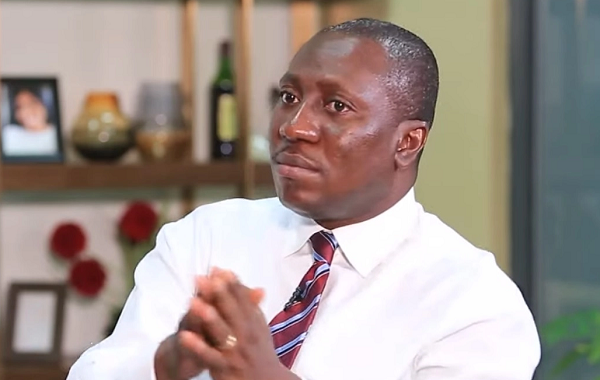
Ghana OSP: Afenyo-Markin Allegations Under Special Prosecutor Review
Summary
- Minority Leader Alexander Afenyo-Markin faces "extortionist" allegations from GoldBod CEO Sammy Gyamfi.
- Mr. Afenyo-Markin has rejected the claims and initiated legal action, leading to an ongoing legal confrontation.
- The Office of the Special Prosecutor is conducting a preliminary assessment to determine if a full investigation into related allegations is warranted.
- Dr. Rasheed Dramani of the Africa Centre for Parliamentary Affairs urged Parliament to seriously investigate claims against its members to prevent public mistrust.
- Dramani highlighted historical issues of partisan solidarity overriding accountability and called for a clear process for resolving parliamentary allegations.
Allegations Spark Legal Action and OSP Review
The Office of the Special Prosecutor is conducting a preliminary assessment of related allegations to determine whether there is sufficient basis to launch a full-scale investigation into the matter.
A significant controversy has erupted in Ghana's political landscape following allegations leveled against Alexander Afenyo-Markin, the Minority Leader. The claims, made by Sammy Gyamfi, Chief Executive Officer of GoldBod, accuse Mr. Afenyo-Markin of being an "extortionist." These serious accusations have not only triggered a strong denial from the Minority Leader but have also escalated into a formal legal confrontation, with Mr. Afenyo-Markin threatening legal action against his accuser.
The dispute has drawn the attention of the Office of the Special Prosecutor (OSP) in Ghana, which is currently conducting a preliminary assessment of related allegations. This initial review aims to determine whether there is sufficient basis to launch a full-scale investigation into the matter. The involvement of the OSP underscores the gravity of the claims and their potential implications for political accountability within the country.
The unfolding events highlight the legal risks associated with public allegations against political figures in Ghana, including potential defamation suits. Lawyers are closely monitoring the Special Prosecutor's assessment for any precedents it might set regarding public official accountability and are advising clients on managing both reputational and legal exposures stemming from such high-profile claims.
Calls for Parliamentary Integrity Amidst Supermajority Rule
Amidst the ongoing controversy, Dr. Rasheed Dramani, Executive Director of the Africa Centre for Parliamentary Affairs, has urged the Ghanaian Parliament to treat allegations involving its members with utmost seriousness. Speaking on Joy News’ PM Express, Dr. Dramani warned that a failure to thoroughly investigate such claims could significantly erode public trust in the institution. His primary concern, he explained, extended beyond the individual, Alexander Afenyo-Markin, focusing instead on the critical importance of the Minority Leader's office for parliamentary accountability, particularly under a supermajority government.
Dr. Dramani emphasized the indispensable need for political leaders to uphold stringent ethical standards. He articulated a vision for a robust minority group, characterized by a high level of integrity, capable of effectively holding both the supermajority and the executive arm of government accountable. This perspective frames the current Afenyo-Markin allegations Special Prosecutor Ghana investigation as a crucial test for the nation's commitment to ethical governance and Ghana political accountability Parliament.
Historical Precedent and Challenges to Accountability
The current situation, according to Dr. Dramani, must be viewed against a backdrop of historical allegations involving Parliament that have frequently lacked clear resolutions. He identified partisan solidarity as a significant factor contributing to public mistrust, observing that caucuses often rally behind accused Members of Parliament without first scrutinizing the substance of the allegations. This tendency, he argued, undermines genuine accountability and allows accusations to fester without proper redress.
Dr. Dramani further questioned Parliament's consistency in applying scrutiny, contrasting its rigorous oversight of the Executive with its approach to internal matters. He cited the Public Accounts Committee as an example, noting its 31 public hearings and over 1,000 recommendations for resource recovery in 2024. He pondered whether Parliament applies the same exacting standards when allegations concern its own members, highlighting the high political cost associated with investigating fellow MPs due to established relationships and future political aspirations. This dynamic, he suggested, often leads to a reluctance to confront internal issues directly, posing a challenge to Ghana parliamentary ethics investigation efforts.
The Path Forward: Legal Avenues and Ethical Oversight
To address these systemic issues, Dr. Dramani advocated for Parliament to establish a transparent and clear process for handling allegations, ensuring a defined path from initial claim to final resolution. He welcomed Alexander Afenyo-Markin's decision to pursue legal action in court, viewing it as a step towards clarity. Furthermore, he suggested that if Parliament opts to form an ad hoc committee to investigate the matter, it should adopt a broader, more comprehensive approach to ensure thoroughness and impartiality.
This ongoing legal confrontation and the preliminary assessment by the Office of the Special Prosecutor Afenyo-Markin underscore the critical need for robust ethical frameworks and accountability mechanisms within Ghana's political system. The outcome of the OSP's review and the legal proceedings will be closely watched, as they could establish important precedents for how allegations against high-ranking political figures are handled, influencing future standards of Ghana political accountability Parliament.
Practical Implications
This case highlights the legal risks associated with public allegations against political figures in Ghana, including potential defamation suits and investigations by the Office of the Special Prosecutor. Lawyers should monitor the Special Prosecutor's assessment for precedents on public official accountability and advise clients on managing reputational and legal exposures from such claims.
Source
How does this affect you?
Get an AI analysis of this article grounded in your jurisdictions, practice areas, and any policy documents you've uploaded to Wansom.
Wansom is AI and can make mistakes.