
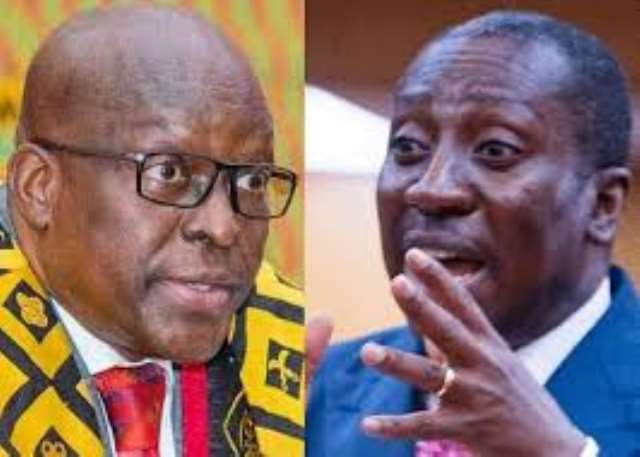
Ghana Parliament: Dramani Urges Clear MP Corruption Allegations Process
Summary
- Dr. Rasheed Dramani called for a clear process to investigate and resolve corruption allegations against Ghanaian Members of Parliament.
- His comments followed allegations against Minority Leader Alexander Afenyo-Markin, which led to a legal confrontation and a preliminary assessment by the Office of the Special Prosecutor.
- Dr. Dramani highlighted partisan solidarity and the high political cost as factors hindering Parliament's self-scrutiny regarding corruption.
- He noted that the lack of clear outcomes from past allegations has eroded public trust in Parliament.
- He proposed forming an investigative committee comprising both MPs and respected Ghanaian citizens to ensure impartiality and definitive resolutions.
Call for Accountability Amidst Allegations
The absence of clear resolutions for past corruption allegations has significantly contributed to public mistrust, a situation Dr. Dramani hopes the current Alexander Afenyo-Markin OSP investigation will help rectify.
Dr. Rasheed Dramani, who serves as the Executive Director of the Africa Centre for Parliamentary Affairs, has issued a strong call for the establishment of a transparent and definitive process to address corruption allegations involving Members of Parliament in Ghana. He emphasized the critical need for the Ghana Parliament to demonstrate that such accusations can progress from initial investigation to a clear and conclusive outcome. Speaking recently on Joy News’ PM Express on Tuesday, Dr. Dramani expressed his earnest hope that Parliament would approach the latest allegations with the utmost seriousness, signaling a departure from past patterns.
These recent allegations center on Minority Leader Alexander Afenyo-Markin and Sammy Gyamfi, the Chief Executive Officer of GoldBod. Mr. Gyamfi publicly accused Mr. Afenyo-Markin of "extortionist" behavior, an allegation that Mr. Afenyo-Markin vehemently denied, subsequently threatening legal action. This public dispute quickly escalated into a formal legal confrontation. Concurrently, the Office of the Special Prosecutor Ghana initiated a preliminary assessment to determine whether the evidence warrants opening a full-scale investigation into the matter, highlighting the ongoing Ghana MP corruption allegations process.
Systemic Challenges to Parliamentary Integrity
Dr. Dramani's concerns extend beyond the specific individuals involved in the current dispute, focusing instead on the broader integrity of the parliamentary office itself, particularly within the context of a "supermajority parliament." He underscored the necessity for leaders, including those in the minority, to possess a high level of integrity to effectively hold both the supermajority and the executive accountable. His apprehension deepened upon reflecting on the persistent public perception of corruption and the erosion of Ghana public trust in Parliament.
A significant factor contributing to this challenge, according to Dr. Dramani, is the prevalence of partisan solidarity within the legislative body. He observed that, historically, partisan loyalties often supersede the imperative for accountability, leading entire caucuses to rally around accused members without undertaking critical internal questioning. He further questioned Parliament's capacity for self-scrutiny, noting that it typically excels at scrutinizing the executive arm of government, citing the Public Accounts Committee's extensive work, which in 2024 alone conducted approximately 31 public hearings and issued over 1,000 recommendations for resource recovery. However, he posited that Parliament does not apply the same rigorous standards to itself when faced with internal issues, often due to the high political cost associated with investigating its own members, who build relationships and may aspire to future ministerial roles.
Erosion of Public Trust and Proposed Reforms
The absence of clear resolutions for past corruption allegations has significantly contributed to public mistrust, a situation Dr. Dramani hopes the current Alexander Afenyo-Markin OSP investigation will help rectify. He articulated a desire for this particular case to establish a precedent for a transparent and conclusive Ghana political corruption investigation.
To achieve this, Dr. Dramani proposed a significant reform to the investigative process: the formation of a parliamentary committee that includes not only Members of Parliament but also respected, independent Ghanaian citizens. This proposed structure aims to enhance the credibility and impartiality of investigations into Ghana parliamentary accountability integrity. By incorporating external, esteemed individuals, such a committee could potentially overcome the internal political pressures and partisan solidarity that Dr. Dramani identified as impediments to effective self-scrutiny. This move, he believes, is essential for restoring public confidence and ensuring that the process for addressing Ghana MP corruption allegations leads to definitive outcomes, thereby strengthening the institution of Parliament.
Practical Implications
Lawyers and compliance officers should closely monitor the development of clear investigative and resolution processes for corruption allegations against Ghanaian Members of Parliament. The outcome of the current preliminary assessment by the Office of the Special Prosecutor, and any subsequent parliamentary reforms, could establish crucial precedents for political accountability and influence legal strategies in cases involving public officials.
Source
How does this affect you?
Get an AI analysis of this article grounded in your jurisdictions, practice areas, and any policy documents you've uploaded to Wansom.
Wansom is AI and can make mistakes.