
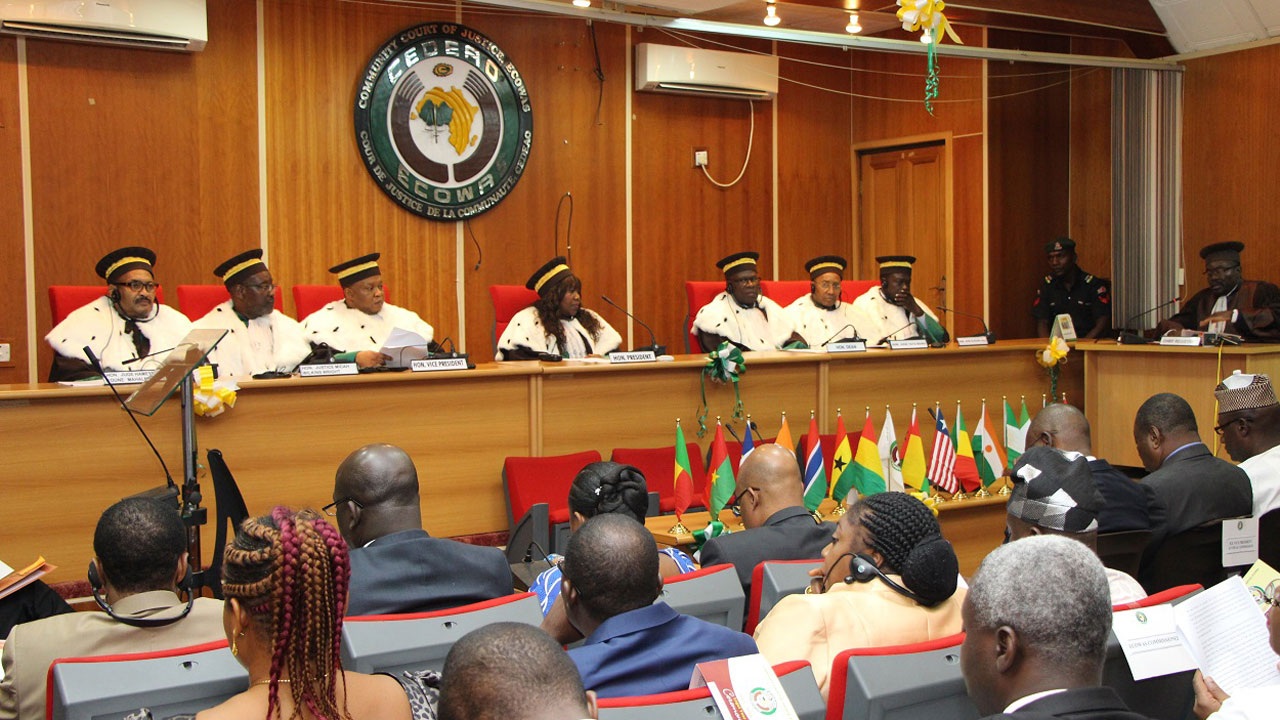
ECOWAS Court: Togo Pressed for Constitutional Reform Judgment Execution Update
Summary
- The ECOWAS Court of Justice has sent a letter to Togo's Minister of Justice, dated October 23, 2026, requesting an update on the execution of its January 29, 2026 judgment.
- The judgment found that the Togolese state violated Article 23 of the African Charter on Democracy, Elections, and Governance (ACDEG) concerning the March 2024 constitutional reform.
- The Court ordered Togo to ensure all future constitutional reforms comply with international obligations, including ACDEG.
- The case was brought by the Togolese Human Rights League (LTDH) and twelve other applicants.
- This renewed pressure coincides with an international colloquium in Lomé discussing regional courts' role in constitutional changes and state sovereignty.
ECOWAS Court Demands Action on Togo Constitutional Reform Judgment
The ECOWAS Court of Justice has formally pressed the Togolese government for an update on the execution of its January 29, 2026 judgment concerning the nation's constitutional reform.
The ECOWAS Court of Justice has formally pressed the Togolese government for an update on the execution of its January 29, 2026 judgment concerning the nation's constitutional reform. In a letter dated October 23, 2026, the regional court specifically inquired about the steps taken by Lomé to comply with the ruling. This communication underscores the ECOWAS Court's continued scrutiny of the Togolese constitutional changes, particularly the March 2024 reform that introduced a parliamentary system, which remains a contentious issue within the country's political landscape.
Dr. Ousmane Diallo, the Director of Research and Documentation of the ECOWAS Court, addressed the correspondence to Togo's Minister of Justice, Me Pacôme Adjourouvi. The letter explicitly requests that the Minister outline the measures the government intends to implement in response to the judgment, aligning with Article 24, paragraph 2, of the Additional Act governing the Court. This renewed pressure from the regional judicial body comes at a sensitive time, coinciding with an international colloquium in Lomé focused on the role of regional courts in constitutional matters and state sovereignty.
Legal Basis and Court's Findings
The January 29, 2026 judgment stemmed from a case initiated by the Togolese Human Rights League (LTDH) and twelve other applicants against the Republic of Togo. The ECOWAS Court deemed admissible the applicants' claims regarding alleged breaches of Article 23 of the African Charter on Democracy, Elections, and Governance (ACDEG), alongside violations of the right to participate in public affairs. Crucially, the Court found that the Togolese state had indeed violated Article 23 of the ACDEG.
In its ruling, the Court mandated that Togolese authorities adopt all necessary and appropriate measures to ensure that any future constitutional or institutional reforms adhere to the country's international obligations. This specifically includes compliance with the African Charter on Democracy, Elections, and Governance, as well as the fundamental democratic principles enshrined within it. However, the Court also made distinctions, declaring inadmissible the applications from the Association of Victims of Torture in Togo (ASVITTO) and the Alliance of Democrats for Integral Development (ADDI) due to a lack of legal capacity, and rejecting other grievances related to Protocol A/SP1/12/01 on Democracy and Good Governance for lack of standing.
Political Context and Regional Implications
The ECOWAS Court's latest inquiry into the execution of its judgment on the Togo constitutional reform occurs amidst ongoing political division within Togo. The March 2024 constitutional changes, which transitioned the nation to a parliamentary system, continue to be a source of significant debate. While the Togolese opposition advocates for a political transition, the government maintains its defense of the new institutional framework. This persistent disagreement highlights the domestic challenges surrounding the implementation of the Court's directives.
The timing of the ECOWAS Court's letter, sent just days before an international colloquium at the University of Lomé on October 29-30, 2026, adds another layer of significance. This academic gathering, bringing together experts, magistrates, and public officials, is dedicated to exploring the interplay between regional human rights courts, constitutional changes, and state sovereignty. The convergence of the ECOWAS Court's demand for accountability and this high-level discussion on regional judicial power underscores the broader implications of the ECOWAS Court Togo constitutional reform judgment execution for regional governance and the rule of law.
Practical Implications
Lawyers and compliance officers advising on Togolese affairs or regional human rights law should note the ECOWAS Court's continued pressure on Togo to execute its judgment regarding the 2024 constitutional reform. This signals ongoing legal uncertainty surrounding the constitutional changes and potential for further regional intervention or sanctions, impacting legal risk assessments and policy interpretation in Togo.
Source
How does this affect you?
Get an AI analysis of this article grounded in your jurisdictions, practice areas, and any policy documents you've uploaded to Wansom.
Finish Reading the Full Story and the Expert Analysis.
Wansom is AI and can make mistakes.