
CEDEAO Court: Togo Constitutional Revision Violated African Charter
Summary
- The ECOWAS Court of Justice ruled that Togo's March 25, 2024 constitutional revision violated Article 23 of the African Charter on Democracy.
- Togo's government disputes the ECOWAS Court's jurisdiction over the constitutional reform, despite the ruling not ordering its withdrawal or financial compensation.
- The University of Lomé hosted a two-day legal conference to discuss the limits of regional judicial power and state sovereignty, prompted by the CEDEAO Court Togo constitutional revision.
- Academics at the conference explored the reception of regional court decisions in national legal systems and the effectiveness of rulings against state sovereignty.
- The debate highlights the critical tension between regional judicial oversight and national sovereignty, particularly concerning constitutional amendments in ECOWAS member states.
Regional Judicial Scrutiny of Constitutional Changes
This central theme, exploring the Cour de justice CEDEAO souveraineté, was identified by the organizers as a pivotal issue in contemporary constitutionalism, directly impacting the future of regional integration and governance.
The ECOWAS Court of Justice recently issued a significant ruling concerning the CEDEAO Court Togo constitutional revision, which has ignited a broader debate across West Africa regarding the boundaries of regional judicial authority. On January 29, 2026, the Court determined that Togo's constitutional revision, enacted on March 25, 2024, contravened Article 23 of the African Charter on Democracy, Elections, and Governance. This decision stemmed from a case initiated by opposition parties and various civil society organizations within Togo, who sought redress for what they perceived as an unlawful amendment to the nation's foundational legal document.
While the ruling was hailed as a victory by the opposition, the Togolese government has vociferously challenged the ECOWAS Court jurisdiction Togo, asserting that the regional body overstepped its mandate. Notably, the Court's judgment did not include directives for the withdrawal of the contested constitutional law, nor did it impose any financial reparations. This nuanced outcome has further fueled discussions about the practical enforceability and scope of such regional judicial pronouncements, particularly when they touch upon sensitive matters of national sovereignty and constitutional integrity.
Navigating Sovereignty and Regional Authority
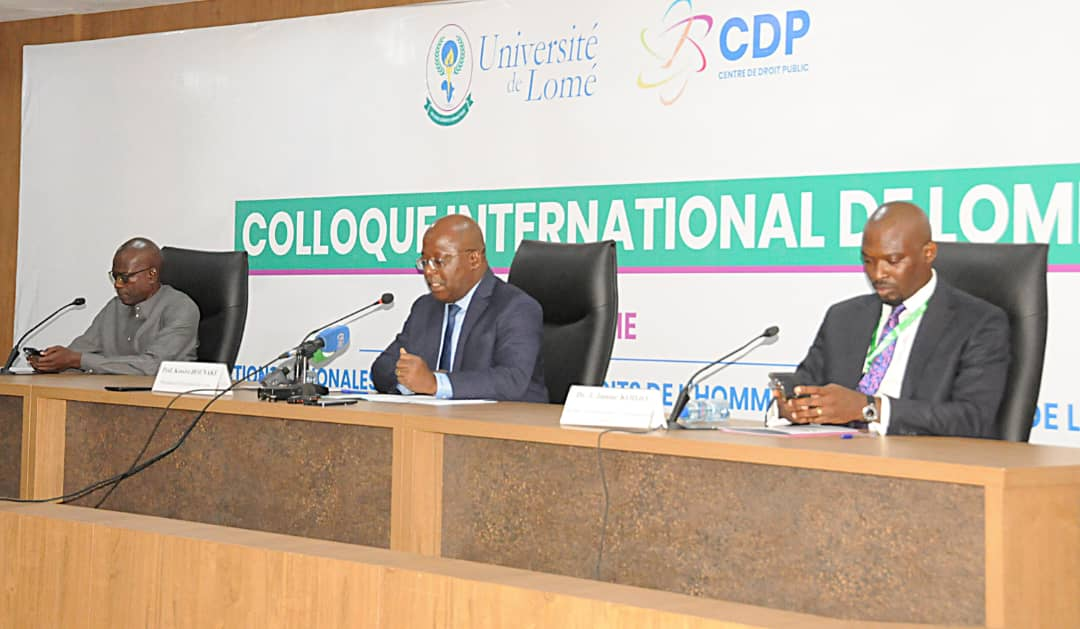
The controversy surrounding the Togo constitutional reform 2024 served as the primary catalyst for a two-day legal conference hosted by the University of Lomé. Organized by its Centre de Droit Public, the event convened academics and legal experts from eight countries to deliberate on a critical question: to what extent can a community judge intervene without encroaching upon the sovereignty of member states? This central theme, exploring the Cour de justice CEDEAO souveraineté, was identified by the organizers as a pivotal issue in contemporary constitutionalism, directly impacting the future of regional integration and governance.
Professor Kossivi Hounaké, President of the University of Lomé, articulated the conference's objective to critically examine the ECOWAS Court's role, avoiding both uncritical celebration and outright rejection based on a narrow interpretation of national sovereignty. He underscored the academic institution's commitment to fostering an open dialogue, emphasizing that the full effectiveness of any judicial decision hinges on its comprehension and subsequent application within the national context. This perspective highlights the complex interplay between legal pronouncements and their political and social reception, particularly in the context of the African Charter democracy article 23.
Academic Discourse on Regional Governance
The University of Lomé legal conference, held on October 29 and 30, featured an inaugural lecture by Professor Alioune Sall, a former judge of the ECOWAS Court, who offered a comparative analysis of regional judicial systems across Southern, Central, and West Africa. Subsequent discussions were structured around two main panels. The first panel, moderated by Professor Dodzi Kokoroko, delved into the regional oversight of constitutional revisions, exploring topics such as the limitations of such control, the criteria used to assess constitutional modifications, the authority of national constitutional court decisions before the ECOWAS Court, and the legal weight of the 2001 Additional Protocol and the African Union Charter. Comparative insights from the African Court of Human and Peoples' Rights and the European Court further enriched these discussions.
The second panel, chaired by Professor Alain Ondoua, addressed what organizers termed the 'crash-test' of integration: the execution of judicial decisions. This session examined the reception of regional rulings within national legal frameworks, the communication dynamics between different judicial systems, and the practical effectiveness of these decisions when confronted with national sovereignty. Professor Hounaké himself contributed to this panel, presenting on constitutional reforms as they appear before the ECOWAS Court. A concluding roundtable on October 30 focused on community protection of human rights, democracy, and the rule of law, covering topics like judicial dialogue, direct access for citizens and NGOs to community courts, the application of democratic clauses during political transitions, and the independence of the judiciary. Professor Nadine Machikou, Vice-Rector of the University of Yaoundé II, presented the general report, advocating for a discussion that transcends any single decision and acknowledges the realities of power dynamics and state reception of rulings.
Practical Implications
Lawyers and compliance officers advising governments or political entities in ECOWAS member states should closely monitor the evolving jurisprudence and political reception of the ECOWAS Court of Justice's rulings on national constitutional revisions. This ongoing debate, exemplified by the Togo case, highlights the critical tension between regional judicial oversight and state sovereignty, which could impact the legal validity and enforceability of future constitutional amendments across the region.
Source
How does this affect you?
Get an AI analysis of this article grounded in your jurisdictions, practice areas, and any policy documents you've uploaded to Wansom.
Finish Reading the Full Story and the Expert Analysis.
Wansom is AI and can make mistakes.