
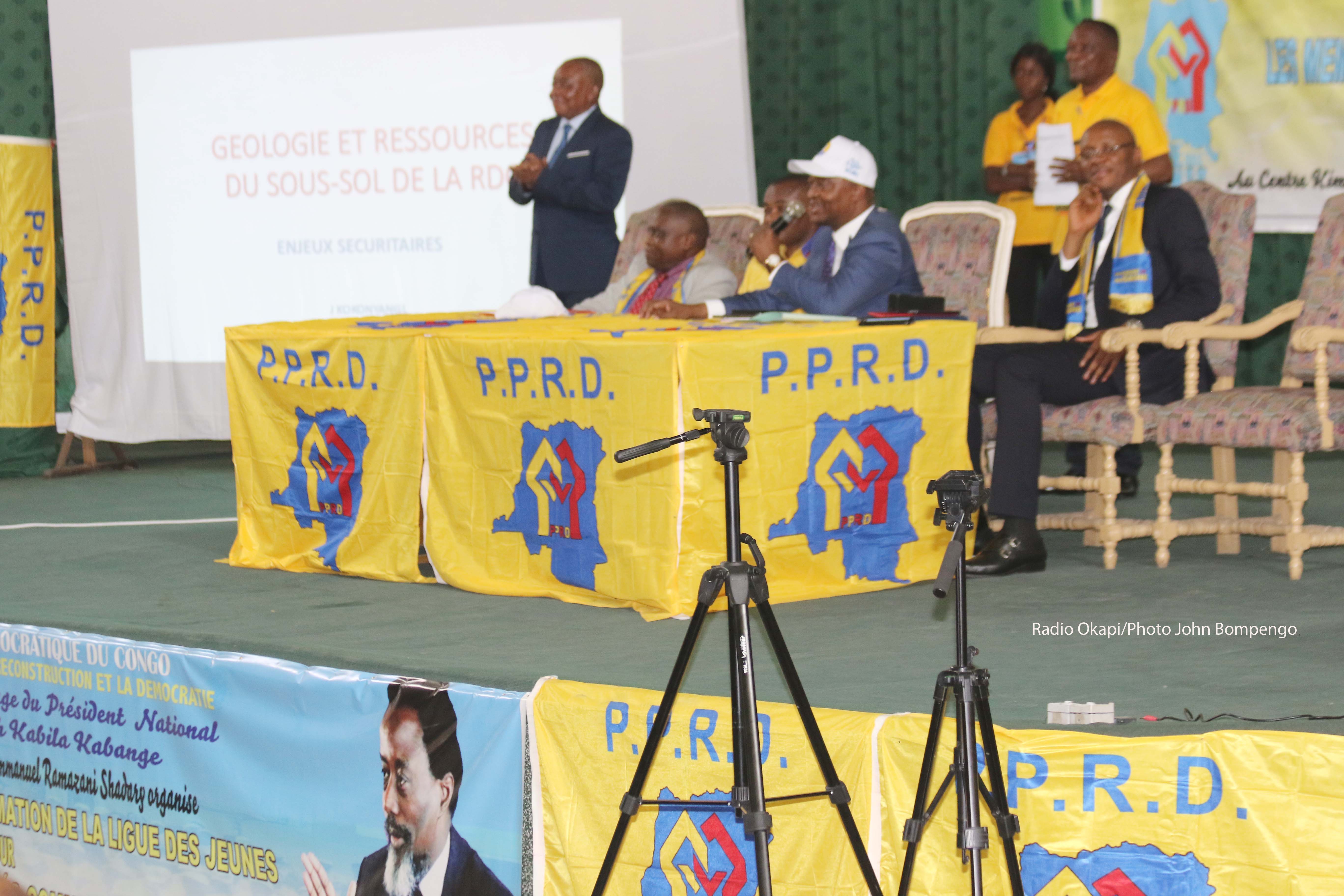
DR Congo Government: Prohibits Activities of 13 Political Parties
The Congolese government, through the Vice-Prime Minister in charge of Interior, Security, Decentralization, and Customary Affairs, Jacquemain Shabani, ordered the immediate prohibition of activities for thirteen political parties, including the PPRD and LGD, across the entire national territory on Thursday, October 15.
This directive from the government of the Democratic Republic of Congo (DRC) signifies a significant executive action impacting the political landscape. While the excerpt does not detail the specific reasons for this interdiction, it represents a broad measure against a substantial number of political entities, including historically prominent ones. Such actions can have profound effects on political freedoms, the right to association, and the overall democratic space within the country, potentially leading to political instability or shifts in power dynamics.
For legal practitioners, this development highlights the potential for executive authority to directly influence political participation. The legal framework governing political parties in the DRC is primarily rooted in the Constitution of February 18, 2006, which guarantees freedom of association and political pluralism, alongside specific organic laws regulating political parties. Any such prohibition would typically need to be grounded in these laws, and the absence of stated reasons in the excerpt raises questions about the adherence to due process and the specific legal grounds invoked. Challenges to such executive decisions would generally fall under the purview of administrative courts or the Constitutional Court.
Key parties involved are the Congolese government, represented by Vice-Prime Minister Jacquemain Shabani, and the thirteen political parties whose activities have been banned, notably the PPRD (Parti du Peuple pour la Reconstruction et la Démocratie) and the LGD (Ligue des Démocrates Congolais). The broader public and civil society organizations are also key stakeholders, as such measures affect the exercise of fundamental political rights.
Attorneys advising political organizations, civil society groups, or businesses with political sensitivities in the DRC should closely monitor any subsequent official communications that might clarify the legal basis for this interdiction. It is crucial to assess the potential for legal challenges to this decision and to understand the avenues available for recourse. Businesses should also re-evaluate their political risk assessments, considering the potential for increased political tensions or changes in the regulatory environment. The outcome of any potential legal challenges to this interdiction is not yet reported.
How does this affect you?
Get an AI analysis of this article grounded in your jurisdictions, practice areas, and any policy documents you've uploaded to Wansom.
Finish Reading the Full Story and the Expert Analysis.
Get the latest legal & regulatory intelligence in DR Congo
Wansom is AI and can make mistakes.