
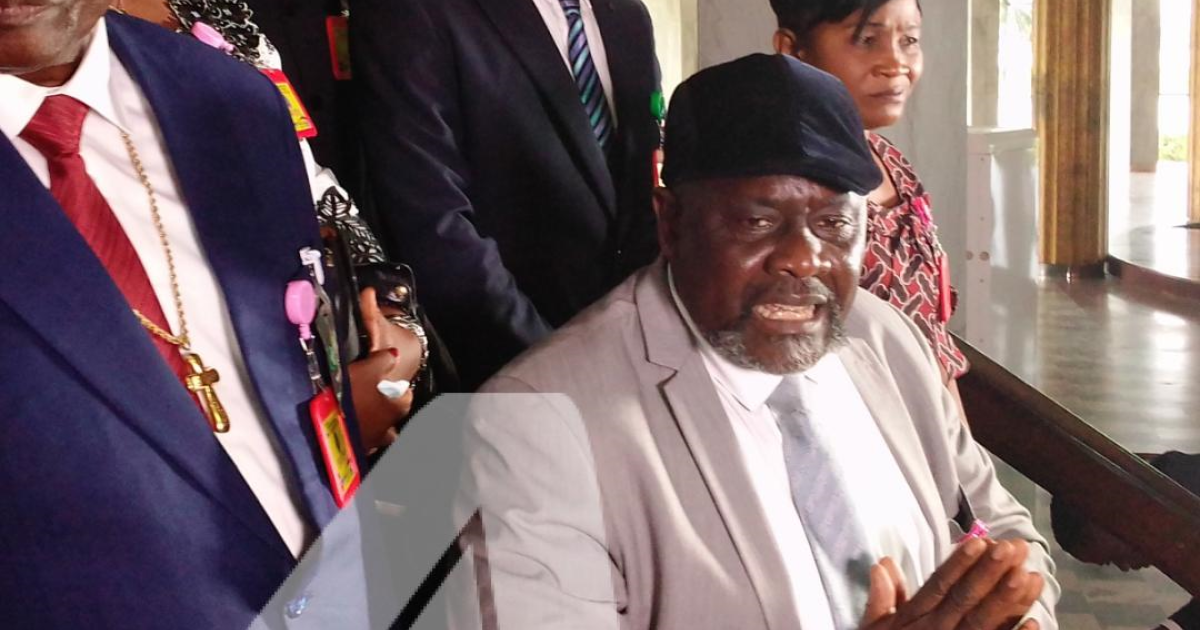
Franck Diongo: Defends Joseph Kabila's Armed FRN Under RDC Article 64
Summary
- Opposition figure Franck Diongo defended former President Joseph Kabila's leadership of an armed movement on October 15, 2026.
- Diongo, from the "Sauvons la RDC" platform, justified Kabila's role with the Front pour la refondation de la nation (FRN).
- The FRN is explicitly identified as an armed movement.
- Franck Diongo invoked Article 64 of the Constitution of the Democratic Republic of Congo as the legal basis for his defense.
- This event underscores the contentious use of constitutional articles to legitimize armed groups in the RDC.
Opposition Figure Defends Armed Movement
The interpretation and application of constitutional provisions to justify armed actions are critical for legal and compliance officers operating in the DRC, as they directly impact risk assessments and the rule of law.
A prominent political opponent in the Democratic Republic of Congo, Franck Diongo, recently provided a public defense for former President Joseph Kabila's decision to assume leadership of an armed organization. Diongo, president of the Mouvement lumumbiste progressiste (MLP), articulated his justification on Thursday, October 15, 2026, regarding Kabila's role at the helm of the Front pour la refondation de la nation (FRN).
This declaration by Franck Diongo specifically addressed and supported the former head of state's involvement with the FRN, which has been characterized as an armed movement. The public statement from a figure within the opposition landscape, defending such a significant and potentially destabilizing action, marks a notable development in the country's political discourse. His remarks underscore a contentious stance on the legitimacy of armed groups within the national political framework.
Constitutional Justification Invoked
Central to Franck Diongo's defense of Joseph Kabila's leadership of the armed FRN movement is the invocation of Article 64 of the Constitution of the Democratic Republic of Congo. Diongo explicitly cited this particular constitutional provision as the legal basis for his justification, suggesting that the actions taken by the former president, in leading what is described as an armed group, find grounding within the nation's supreme law.
The reference to Article 64 of the Constitution congolaise by a political figure to legitimize an armed movement led by a former president introduces a complex layer to the ongoing political and legal debates in the RDC. This specific constitutional article is being presented as a foundational element for understanding and potentially validating the formation and leadership of such a group, thereby placing its interpretation at the forefront of national attention.
Implications for Political Stability and Legal Scrutiny
The public defense by Franck Diongo of Joseph Kabila's leadership of an armed movement, specifically the FRN Joseph Kabila mouvement armé, using Article 64 of the Constitution RDC, carries significant implications for the country's political stability. Such an endorsement from an opposition leader like Diongo, who heads "Sauvons la RDC," could embolden various factions and further polarize the political landscape, potentially escalating tensions within the Democratic Republic of Congo.
This invocation of Article 64 to defend the prise d'armes Kabila will undoubtedly draw intense scrutiny from legal experts, government bodies, and international observers. The interpretation and application of constitutional provisions to justify armed actions are critical for legal and compliance officers operating in the DRC, as they directly impact risk assessments and the rule of law. The discourse surrounding this event highlights a crucial juncture where constitutional interpretation intersects with the potential for political unrest and armed conflict, demanding close monitoring from all stakeholders.
Practical Implications
Lawyers and compliance officers in the DRC should closely monitor the legal and political discourse surrounding Article 64 of the Constitution, particularly its invocation to justify armed movements. This development highlights potential constitutional interpretations that could impact political stability and legal risk assessments for businesses and individuals operating in the country.
Source
Source: Original reporting via FRN
How does this affect you?
Get an AI analysis of this article grounded in your jurisdictions, practice areas, and any policy documents you've uploaded to Wansom.
Finish Reading the Full Story and the Expert Analysis.
Get the latest legal & regulatory intelligence in DR Congo
Wansom is AI and can make mistakes.