
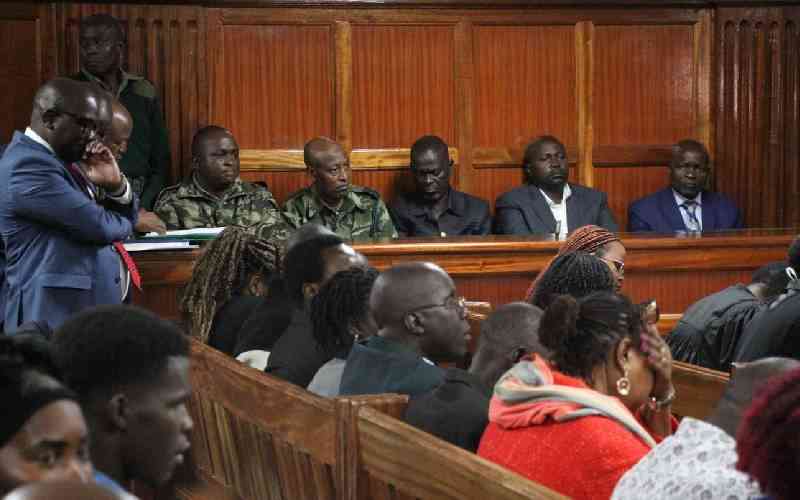
Milimani Law Courts: Douglas Otieno Sharon Otieno Testimony Reveals Anger, Forgiveness
Summary
- Douglas Otieno, father of the late Sharon Otieno, delivered powerful testimony before the Milimani Law Courts on September 16, 2026.
- He expressed profound bitterness towards two of his daughter's killers, stating he wished he "could be a dog" to "bite them and lick their blood."
- Otieno, accompanied by Sharon's mother Melinda Auma, also revealed he has forgiven former Migori Governor Okoth Obado.
- The forgiveness for Obado followed the former governor's initiative to seek reconciliation with the family.
What Happened
If I could be a dog, I would bite them and lick their blood.
Douglas Otieno, father of the late Sharon Otieno, delivered powerful testimony before the Milimani Law Courts in Nairobi on September 16, 2026. Accompanied by Sharon's mother, Melinda Auma, Otieno's appearance marked a significant moment in the sentencing proceedings following the conviction of those responsible for his daughter's death. His statement conveyed a profound depth of emotion, particularly concerning those responsible for the tragedy.
During his High Court appearance, Douglas Otieno expressed an unyielding bitterness towards two individuals implicated in his daughter's killing. He starkly articulated his visceral anger, stating that if he "could be a dog, I would bite them and lick their blood." This raw declaration underscored the immense pain and desire for retribution he harbors against these specific perpetrators.
In contrast to his stance on the two killers, Otieno revealed a different outcome regarding former Migori Governor Okoth Obado. He informed the court that he has extended forgiveness to Obado, following the former governor's initiative to seek reconciliation with the family. This act of outreach and subsequent forgiveness highlights a complex emotional landscape for the family amidst their pursuit of justice.
Legal Context
The testimony of Douglas Otieno forms a critical component of the sentencing phase of the judicial process unfolding at the Milimani Law Courts. His appearance on September 16, 2026, places his emotional declarations firmly within the formal framework of a High Court hearing, where victim impact statements and family perspectives often play a crucial role in shaping the narrative of a case. The presence of both parents, Douglas Otieno and Melinda Auma, underscores the collective family experience being presented to the court.
The sentencing proceedings involve multiple parties, with Douglas Otieno's statements distinguishing between those he holds unforgiven and former Governor Okoth Obado, who has been granted forgiveness after seeking reconciliation. This differentiation is legally significant, as it reflects the varying degrees of perceived culpability or remorse from the perspective of the victim's family, even if it does not directly alter the factual evidence presented by the prosecution.
Such testimony, particularly the raw emotional outburst from Douglas Otieno regarding the two killers, serves to humanize the impact of the crime for the court. While legal judgments are based on evidence, the emotional weight of a parent's testimony can provide a profound context to the severity of the offenses committed, influencing public perception and potentially the court's understanding of the lasting trauma inflicted.
Why It Matters
The Douglas Otieno Sharon Otieno testimony, delivered during the sentencing phase, is profoundly significant, not only for the specific legal case but also for its broader implications regarding justice, forgiveness, and the enduring pain experienced by victims' families. His public declaration of both intense bitterness and conditional forgiveness offers a rare glimpse into the complex emotional journey that accompanies such high-profile criminal proceedings. The stark contrast between his desire for vengeance against two individuals and his reconciliation with Okoth Obado illustrates the nuanced and often contradictory feelings that can arise in the aftermath of a devastating loss.
This testimony, delivered before the Milimani Law Courts, underscores the vital role that victims' families play in the judicial process. Their voices provide a human dimension to legal arguments and evidence, reminding all parties of the real-world consequences of crime. The emotional candor displayed by Douglas Otieno on September 16, 2026, serves as a powerful reminder of the deep personal stakes involved, transcending mere legal technicalities.
Ultimately, the impact of Douglas Otieno's statement extends beyond the courtroom, resonating with public discourse on crime and punishment. His willingness to articulate such raw emotions, including the chilling desire to "bite them and lick their blood" directed at two of the killers, highlights the profound psychological scars left by violent acts. Simultaneously, his decision to forgive former Governor Obado, prompted by an act of reconciliation, introduces a dimension of healing and closure, however partial, into a narrative otherwise dominated by grief and anger.
Source
How does this affect you?
Get an AI analysis of this article grounded in your jurisdictions, practice areas, and any policy documents you've uploaded to Wansom.
Finish Reading the Full Story and the Expert Analysis.
Get the latest legal & regulatory intelligence in Kenya
Wansom is AI and can make mistakes.