
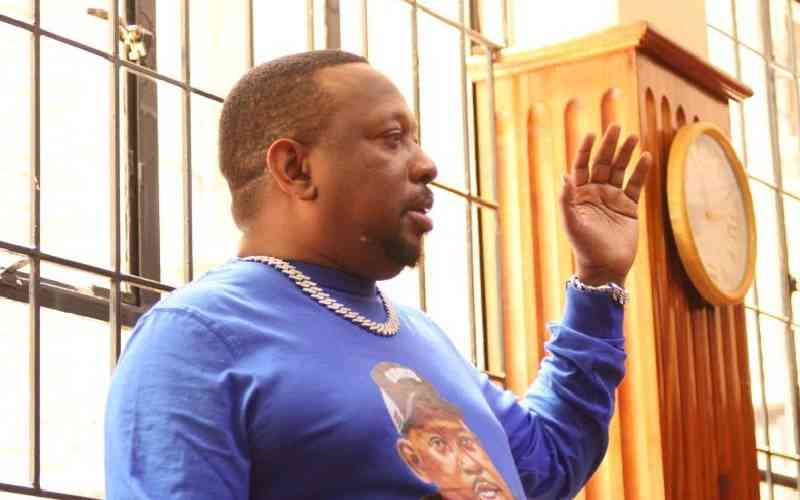
High Court: Justice Aburili Declines Orders Against Sonko NEDP Leadership
Summary
- The High Court declined to issue interim orders against Mike Sonko.
- These orders would have prevented Sonko from holding a leadership role in the National Economic Development Party (NEDP).
- Justice Roselyne Aburili made the ruling on Friday, rejecting lawyer Nick Sanare's plea for conservatory orders.
- The decision allows Sonko to continue in his party role while a separate petition challenging his eligibility proceeds.
- The court's refusal highlights the high legal threshold for granting conservatory orders in such cases, particularly concerning political party leadership.
What Happened
It signals that obtaining High Court conservatory orders to prevent an individual from exercising political leadership, even when a petition questions their eligibility, requires a compelling case that goes beyond merely filing a substantive challenge.
The High Court in Kenya recently declined a request to issue interim orders that would have prevented former Nairobi Governor Mike Sonko from holding a leadership position within the National Economic Development Party (NEDP). Justice Roselyne Aburili delivered the ruling on Friday, specifically rejecting an application from lawyer Nick Sanare. Sanare had sought conservatory orders aimed at blocking Sonko from assuming, exercising, or even purporting to exercise the powers associated with the party leader role, or any other position within the NEDP's governing structure.
This application for interim relief was made in anticipation of a new petition that challenges Sonko's eligibility to hold such a position. The court's decision means that, for now, Sonko is not legally restrained from engaging in his duties as a leader within the National Economic Development Party, despite the pending legal challenge to his suitability for the role. The request for these specific High Court conservatory orders regarding Sonko's leadership was a critical procedural step that the court ultimately did not grant.
Legal Context
Conservatory orders are a significant tool within the Kenyan legal system, designed to maintain the status quo or prevent irreparable harm while a substantive legal dispute is being heard and determined. They are typically granted under strict conditions, requiring the applicant to demonstrate a prima facie case with a high probability of success, and that they would suffer prejudice that cannot be compensated by damages if the orders are not issued. In this instance, lawyer Nick Sanare's petition sought to invoke this power to immediately halt Mike Sonko's involvement in the National Economic Development Party's leadership.
The High Court's refusal to issue these conservatory orders suggests that Justice Aburili found the threshold for immediate intervention was not met at this preliminary stage. This ruling underscores the judiciary's cautious approach to granting interim injunctions, particularly when they concern political party leadership and the exercise of constitutional or statutory rights. The decision allows the underlying petition challenging Sonko's eligibility to proceed through the judicial process without the immediate imposition of a temporary ban on his activities within the NEDP. This approach aligns with the principle that substantive issues should be fully litigated before definitive restrictions are put in place.
Why It Matters
The High Court's decision to not issue conservatory orders against Mike Sonko has immediate and significant ramifications for the National Economic Development Party and its leadership structure. It means that Sonko is currently free to continue in or assume his role as a leader within the NEDP, unhindered by a court injunction while the broader question of his eligibility is still being litigated. This provides a temporary reprieve for Sonko and the party, allowing them to proceed with their internal affairs without judicial interference at this juncture.
Beyond the immediate parties, this ruling offers insight into the judiciary's approach to challenges against political figures and their roles. It signals that obtaining High Court conservatory orders to prevent an individual from exercising political leadership, even when a petition questions their eligibility, requires a compelling case that goes beyond merely filing a substantive challenge. The outcome of Nick Sanare's petition concerning Sonko's eligibility for party leadership will still be determined, but the court has indicated a preference for allowing that process to unfold without pre-emptive restrictions on the individual's political activities. This Kenya political party leadership ruling sets a precedent for how similar challenges might be handled in the future, emphasizing the high bar for interim relief.
Practical Implications
Lawyers advising political parties or individuals facing eligibility challenges should note that the High Court declined to issue conservatory orders preventing Mike Sonko from holding party leadership, indicating a high bar for interim injunctions even when a substantive petition is pending.
Source
How does this affect you?
Get an AI analysis of this article grounded in your jurisdictions, practice areas, and any policy documents you've uploaded to Wansom.
Finish Reading the Full Story and the Expert Analysis.
Wansom is AI and can make mistakes.