
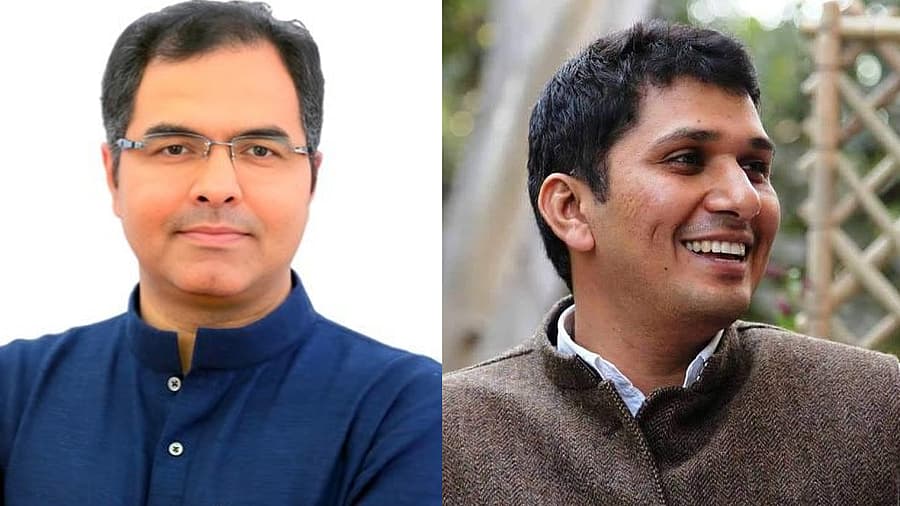
Delhi Court: Questions Minister Not Defamation, Dismisses Verma's Complaint
Summary
- Delhi Deputy Chief Minister Parvesh Verma's criminal defamation case against AAP leader Saurabh Bharadwaj was dismissed.
- The court ruled that merely asking questions to a public representative, even critically, does not constitute defamation.
- Additional Chief Judicial Magistrate Neha Mittal of the Rouse Avenue Courts made these observations.
- The court emphasized that suppressing public questioning would be a "dark spell in the era of democracy."
- Bharadwaj's social media posts, which were the subject of the complaint, were deemed critical questions, not defamatory content.
What Happened
The court explicitly stated that the mere act of posing questions to a public representative, particularly within the parliamentary context, concerning matters of law and order or other public interest issues, cannot be construed as defamation.
A Delhi court recently rejected a criminal defamation complaint lodged by Delhi Deputy Chief Minister Parvesh Verma against Aam Aadmi Party (AAP) leader Saurabh Bharadwaj. The case, heard by Additional Chief Judicial Magistrate (ACJM) Neha Mittal at the Rouse Avenue Courts, centered on social media posts made by Bharadwaj. Verma had alleged that these posts were "false, malicious and highly defamatory," claiming they insinuated that a person named Singh had leveraged his influence to benefit officials at a school where a three-year-old girl had been raped.
The court declined to take cognizance of the matter, effectively dismissing the criminal defamation proceedings. This decision came after a thorough review of the content in question, with the court concluding that Bharadwaj's social media activity constituted questions posed with the explicit intention of criticizing the government, rather than an effort to defame any individual. This outcome underscores a significant judicial stance on the boundaries of public discourse involving elected representatives.
Legal Context
In its ruling, the Delhi court articulated a fundamental principle of democratic governance, asserting that both the press and the general public possess an inherent right to scrutinize and question the government. ACJM Neha Mittal emphasized that elected officials and governmental bodies are obligated to consider and engage with perspectives that diverge from their own. The court explicitly stated that the mere act of posing questions to a public representative, particularly within the parliamentary context, concerning matters of law and order or other public interest issues, cannot be construed as defamation.
The judicial pronouncement further cautioned against any interpretation that would stifle such questioning, warning that a contrary view would usher in a "dark spell in the era of democracy," thereby paving the way for a profound disregard of constitutional rights. This legal framework establishes a high threshold for criminal defamation claims, particularly when they involve criticism directed at public figures. The court's analysis focused on the intent behind the communication, distinguishing between critical inquiry and malicious defamation.
Why It Matters
This judgment from the Delhi court carries substantial implications for the landscape of free speech and political criticism in India, especially concerning criminal defamation cases involving public figures. By affirming that questioning a minister does not amount to defamation, the ruling reinforces the constitutional right to criticize government actions and policies. It sets a crucial precedent that may influence how similar cases are adjudicated in the future, potentially making it more challenging for public officials to use defamation laws to silence dissent or critical inquiry.
The decision highlights the judiciary's role in safeguarding democratic values, where robust public debate and accountability are paramount. It underscores that public representatives, by virtue of their office, are subject to a greater degree of scrutiny and must tolerate criticism, even if it is sharp or uncomfortable. This ruling is a significant affirmation of the right to criticize government in India, ensuring that the public and media can hold their leaders accountable without undue fear of legal repercussions for merely asking questions.
Practical Implications
This ruling establishes a significant precedent for defamation law in India, particularly concerning criticism of public officials. Lawyers advising clients on free speech, media law, or defending against defamation claims should be aware that merely asking questions of public representatives, even critically, may not constitute defamation, reinforcing the high bar for such claims in a democratic context.
Source
How does this affect you?
Get an AI analysis of this article grounded in your jurisdictions, practice areas, and any policy documents you've uploaded to Wansom.
Finish Reading the Full Story and the Expert Analysis.
Get the latest legal & regulatory intelligence in India
Wansom is AI and can make mistakes.