
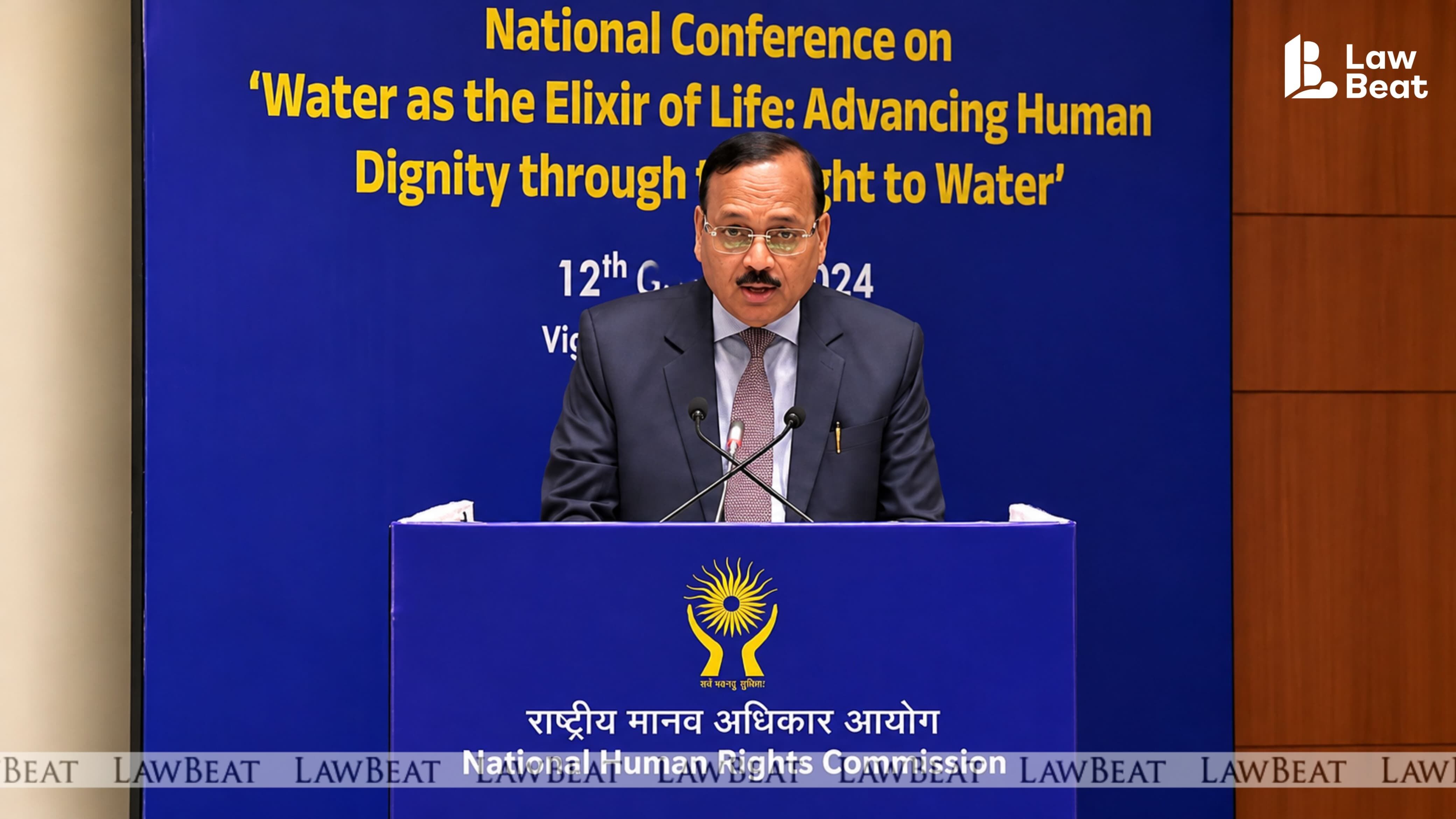
CJI Surya Kant: Article 21 Right to Water Requires Safe, Reliable Supply
Summary
- Chief Justice of India Surya Kant declared that the right to water under Article 21 of the Constitution mandates a safe, reliable, and available supply, not merely a tap connection.
- Speaking at the National Human Rights Commission's 33rd Foundation Day, CJI Kant emphasized that a dry pipe fails to fulfill the promise of water access.
- He highlighted the NHRC's crucial role in bridging the gap between constitutional rights and their enforcement for vulnerable populations.
- The CJI noted the NHRC's impressive record of registering over 24 lakh cases and disposing of more than 23 lakh over 33 years.
- CJI Kant stressed that the credibility and moral authority of human rights bodies are built through diligent inquiry and timely interventions.
CJI Clarifies Right to Water Under Article 21
The fundamental right to life, enshrined in Article 21 of the Constitution, necessitates more than a mere tap connection; it demands a supply of water that is consistently safe, reliable, and accessible to families in their required locations.
Chief Justice of India Surya Kant delivered a significant address on Monday, October 12, 2026, during the 33rd Foundation Day celebration of the National Human Rights Commission (NHRC). His remarks centered on the expansive interpretation of the right to water within the framework of India's Constitution. The fundamental right to life, enshrined in Article 21 of the Constitution, necessitates more than a mere tap connection; it demands a supply of water that is consistently safe, reliable, and accessible to families in their required locations.
During the event, which also featured a national conference dedicated to the theme of water, CJI Kant issued a clear caution. He articulated that a mere tap does not equate to genuine access to water, emphasizing that a pipe that remains dry cannot fulfill the inherent promise of water availability it represents. He further connected the abstract concept of human rights to tangible realities, stating that they are as concrete as a glass of clean water held by a child, thereby highlighting the profound importance of the chosen conference theme.
Constitutional Interpretation and Implications
The Chief Justice of India's pronouncement provides a critical constitutional interpretation of Article 21, which guarantees the right to life and personal liberty. By asserting that this right is not satisfied by a rudimentary tap connection alone, but rather by a supply that is safe, reliable, and available, CJI Surya Kant has effectively elevated the standard for water provision in India. This clarification moves beyond a superficial understanding of infrastructure to a substantive requirement for quality and accessibility, ensuring that the promise of water is genuinely met for all citizens.
This judicial perspective suggests that governmental and public bodies responsible for water infrastructure must ensure not only the physical presence of water supply mechanisms but also the consistent functionality and safety of the water delivered. The emphasis on "reliable" and "available" implies a continuous and uninterrupted supply, directly addressing situations where infrastructure exists but fails to provide water due to scarcity, contamination, or operational issues. This interpretation could significantly influence future legal challenges and policy formulations concerning water rights across the nation.
The Indispensable Role of Human Rights Institutions
CJI Surya Kant also used the occasion to elaborate on the vital role and operational philosophy of human rights bodies, particularly the National Human Rights Commission. He asserted that the authority of such institutions stems from their credibility rather than any coercive power, urging State commissions to extend their reach to the "last person in the line." The Chief Justice observed that while courts are entrusted with enforcing rights, individuals in remote areas often face significant barriers to accessing the judicial system.
In this context, the NHRC serves as a crucial bridge, filling the gap between constitutional promises and their realization for the most vulnerable. CJI Kant likened the Commission to a "solitary lighthouse" that casts a guiding light for those adrift in injustice, emphasizing its capacity to listen to the voiceless and act proactively without explicit requests. He highlighted that the NHRC's influence is built slowly, like a bank balance, through diligent inquiries, timely interventions, and honest reporting, underscoring that its moral authority is a precious asset that must be carefully maintained.
NHRC's Track Record and Future Focus
The NHRC has demonstrated a significant impact since its inception, which Parliament established to "stand guard over human dignity." Secretary General Piyush Goyal's figures, cited by the CJI, reveal that the Commission has registered over 24 lakh cases and successfully disposed of more than 23 lakh cases over its 33-year history, reflecting an impressive disposal rate exceeding 98 percent. This track record underscores its effectiveness as a trusted address for those seeking redress.
CJI Kant further detailed the breadth of the Commission's interventions, which include critical work on issues such as custodial torture and deaths, bonded labor, silicosis resulting from industrial exposure, and the protection of rights for marginalized communities. He stressed that human rights protection must extend beyond merely identifying violations to actively seeking accountability, providing meaningful relief to affected individuals, and implementing changes to prevent future recurrences. The Chief Justice concluded by noting that the experience of rights in India is often shaped in remote villages or households, rather than in the capital, highlighting the indispensable role of State commissions in addressing violations closer to the ground.
Practical Implications
Lawyers and compliance officers should note that the Chief Justice of India has clarified the scope of the right to water under Article 21, emphasizing that it requires a safe, reliable, and available supply, not just a mere tap connection. This interpretation sets a higher standard for water provision and could impact future litigation, policy development, and compliance requirements for entities responsible for water infrastructure and public health.
Source
How does this affect you?
Get an AI analysis of this article grounded in your jurisdictions, practice areas, and any policy documents you've uploaded to Wansom.
Finish Reading the Full Story and the Expert Analysis.
Get the latest legal & regulatory intelligence in India
Wansom is AI and can make mistakes.