
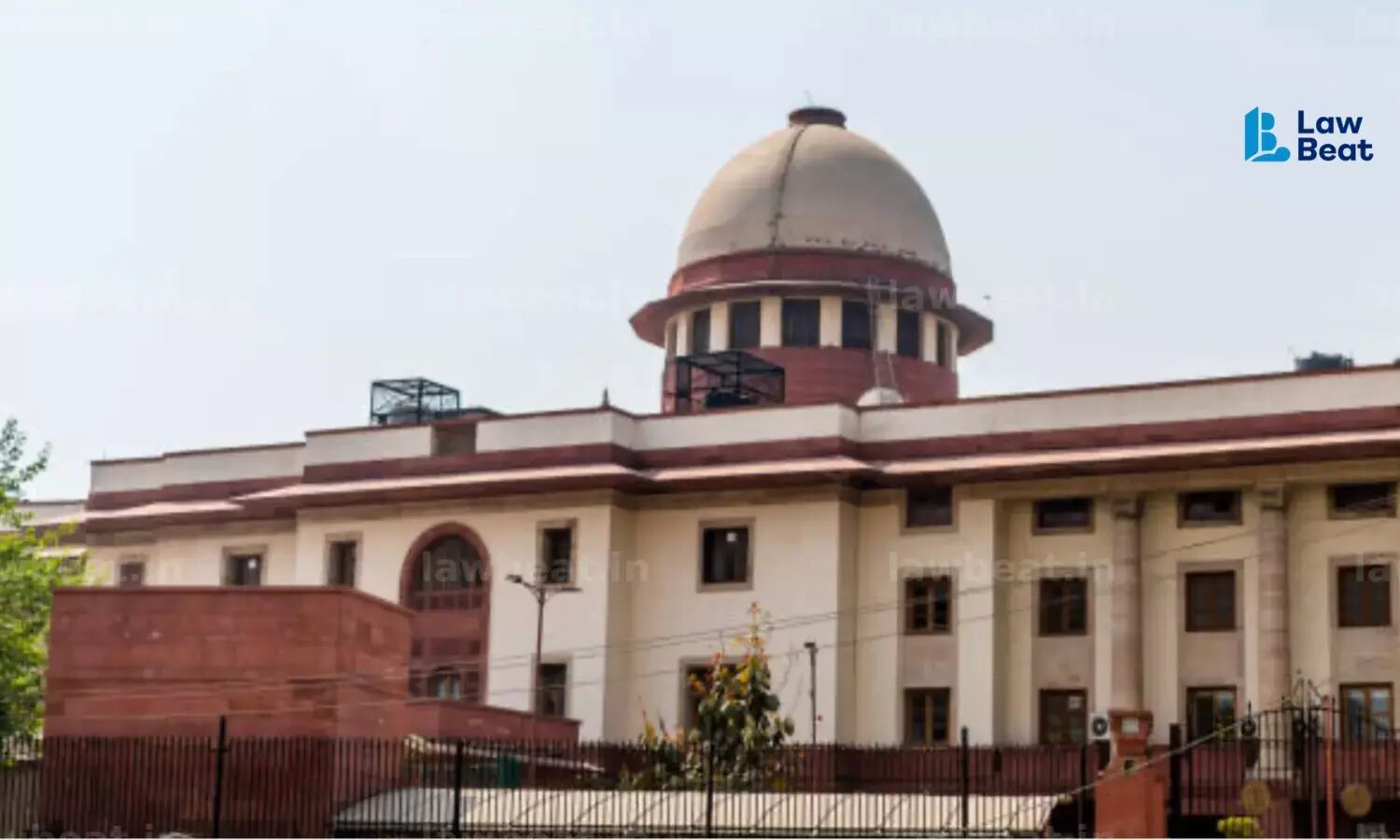
Centre Seeks OBC Creamy Layer CSE 2025 Clarification
Summary
- The Union government has asked the Supreme Court to clarify if its March 2026 verdict on OBC creamy layer criteria applies to the Civil Services Examination (CSE) 2025.
- The Centre argues that the March 11 judgment, which altered creamy layer criteria, was delivered after the CSE-2025 final results were declared, making retrospective application discriminatory.
- The Supreme Court's March 2026 ruling stated that parental income alone cannot determine OBC creamy layer status and that differential treatment of PSU, private, and government employees violates Article 14.
- This verdict upheld High Court judgments and emphasized that creamy layer status must consider the 1993 Office Memorandum's categories and status parameters, not just income.
- A Special Bench will now hear the Centre's plea, with its decision set to impact the application of reservation policies for CSE 2025 and future examinations.
Centre Seeks Clarity on OBC Creamy Layer for CSE 2025
The Supreme Court has clarified that a combined interpretation of the 1993 OM and the 2004 clarification makes it evident that salary income alone cannot be the decisive factor; the status and category of the posts held by a candidate's parents are also crucial considerations.
The Union government has approached the Supreme Court of India, requesting clarification on the applicability of a significant March 2026 verdict concerning the "creamy layer" within Other Backward Classes (OBC) reservations. This plea specifically asks whether the ruling should extend to the Civil Services Examination (CSE) 2025. The Supreme Court has acknowledged the Centre's request and agreed to constitute a Special Bench to deliberate on this crucial matter, addressing the target keyword phrase: Centre seeks OBC creamy layer CSE 2025 clarification.
The government's application highlights that its March 11 judgment, which altered established criteria for the creamy layer, was delivered just five days after the final results for CSE-2025 had already been declared. It contends that the CSE-2025 selection process was largely concluded and had reached the "terminal stage of service allocation" prior to the pronouncement of the judgment. The Centre argues that a "mechanical or unqualified application" of this judgment's principles, with retrospective effect on an already completed selection process like CSE-2025, would lead to "a peculiar and acute anomaly amounting to discrimination inter se candidates" within the same examination cycle.
The Supreme Court's March Ruling on Creamy Layer Criteria
The March 2026 Supreme Court decision, which the Centre now seeks to clarify for CSE 2025, established that parental income alone is insufficient to determine an individual's OBC creamy layer status. This landmark ruling also found that treating employees of public sector undertakings (PSUs) and private entities differently from government employees and their children, when assessing eligibility for reservation benefits, constitutes hostile discrimination, thereby violating Article 14 of the Constitution.
A bench comprising Justices PS Narasimha and R Mahadevan delivered this judgment, upholding previous decisions by the Delhi, Madras, and Kerala high courts. These high court rulings had directed that successful OBC candidates in the Civil Services Examination be categorized as non-creamy layer, challenging the Union government's appeals. The Supreme Court bench emphasized that relying solely on income to decide creamy layer status, without considering the categories of posts and status parameters outlined in the 1993 Office Memorandum, is legally unsustainable. It further noted that giving undue weight to a 2004 clarification letter, to the extent that income becomes the sole determinant without regard for parents' status or service category, would undermine the exclusion framework originally envisioned by the 1993 OM.
Evolution of Creamy Layer Criteria
The concept of the "creamy layer" within OBC reservations stems from the Supreme Court's seminal judgment in Indra Sawhney v. Union of India and others [1992 Supp (3) SCC 217]. Following this ruling, the Union government issued a central policy document, the 1993 Office Memorandum (OM), on September 8, 1993. This OM serves as the foundational guide for identifying and excluding socially advanced sections among OBCs from reservation benefits, ensuring these advantages reach genuinely backward groups.
The Court's recent pronouncements underscore that the primary objective of excluding the creamy layer is to prevent socially advanced individuals within the Other Backward Classes from appropriating benefits intended for truly disadvantaged groups, rather than to create arbitrary distinctions among similarly situated individuals. The 2004 clarification letter, issued on October 14, 2004, by the Department of Personnel and Training (DoPT) under the Ministry of Personnel, Public Grievances and Pensions, aimed to clarify the application of the creamy layer test where the equivalence of PSU or private sector posts with government positions had not been established. The Supreme Court has clarified that a combined interpretation of the 1993 OM and the 2004 clarification makes it evident that salary income alone cannot be the decisive factor; the status and category of the posts held by a candidate's parents are also crucial considerations.
Why This Clarification Matters for Public Employment
The Supreme Court's decision to form a Special Bench to address the Centre's plea regarding the OBC creamy layer CSE 2025 clarification is highly significant for public employment and reservation policies. The outcome will determine whether the new, more nuanced criteria for identifying the creamy layer will apply retrospectively to an examination cycle that the government considers already concluded. This has direct implications for candidates of CSE 2025, potentially altering their eligibility for Civil Services Exam 2025 reservation benefits based on the revised interpretation of OBC creamy layer income criteria.
Beyond the immediate impact on the Civil Services Exam 2025 reservation, the Special Bench's ruling will provide crucial guidance on the implementation of OBC creamy layer income criteria and the broader framework for reservation policies. It will clarify the balance between ensuring equitable access to opportunities for genuinely backward groups and preventing the creation of "artificial distinctions" or "anomalies" in the application of legal judgments. This ongoing legal scrutiny reinforces the complex nature of reservation policies and their continuous evolution in light of judicial interpretations.
Practical Implications
This development signals ongoing legal uncertainty regarding the retrospective application of the Supreme Court's OBC creamy layer judgment to specific selection processes like CSE 2025. Lawyers advising on public employment, reservation policies, or constitutional law must monitor the Special Bench's decision, as it will clarify the scope and implementation of creamy layer criteria, potentially impacting current and future candidates and government recruitment practices.
Source
How does this affect you?
Get an AI analysis of this article grounded in your jurisdictions, practice areas, and any policy documents you've uploaded to Wansom.
Finish Reading the Full Story and the Expert Analysis.
Wansom is AI and can make mistakes.