
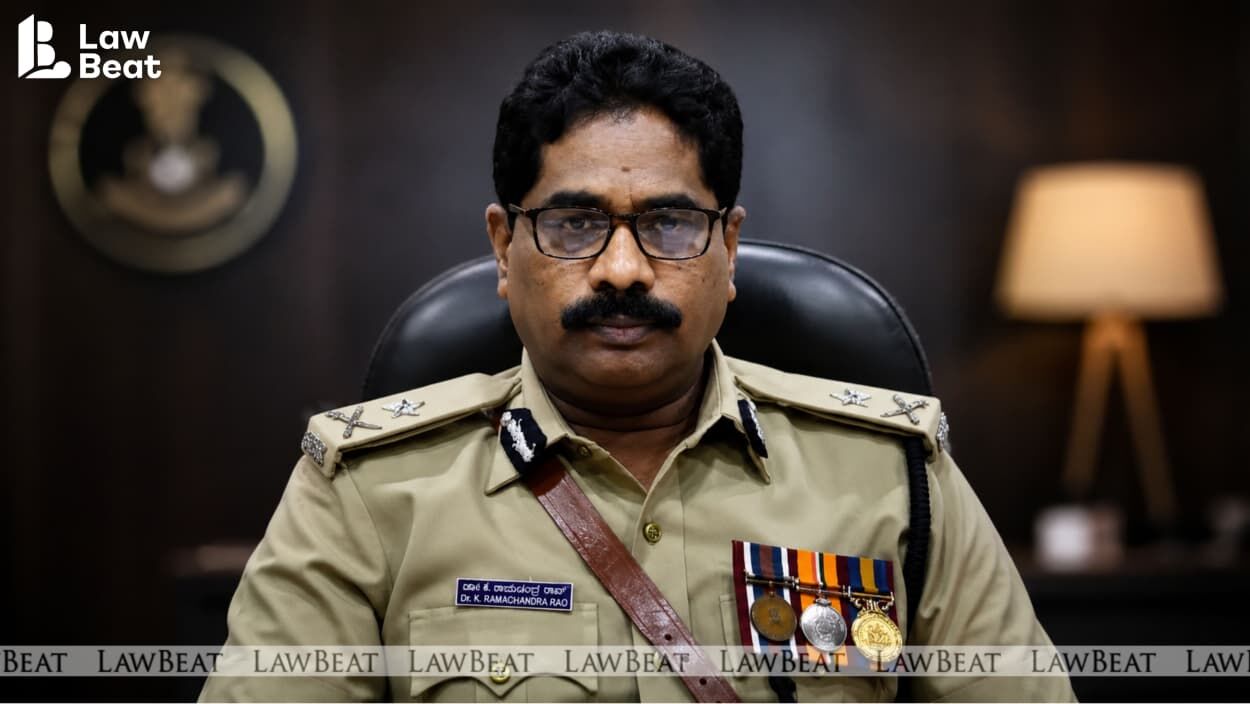
CAT Rejects Ex-Karnataka DGP Rao Plea: Disciplinary Inquiry Proceeds
Summary
- The Central Administrative Tribunal (CAT), Bangalore, dismissed a plea by retired Karnataka DGP Dr. K. Ramachandra Rao to quash disciplinary proceedings.
- The proceedings concern an alleged obscene video showing Dr. Rao in police uniform, leading to charges of gross misconduct and violation of All India Services (Conduct) Rules.
- The CAT ruled that a separate approval for initiating disciplinary proceedings is not required when the charge memo itself has been approved by competent authorities.
- The Tribunal relied on the Supreme Court's decision in *State of Jharkhand v. Rukma Kesh Mishra* to support its finding.
- The CAT emphasized that the merits of the allegations are to be examined during the departmental inquiry, not at the charge-memo stage.
Tribunal Upholds Disciplinary Action Against Former DGP
The Tribunal underscored that once the charge memorandum receives approval from the competent authorities, the absence of a distinct, separate approval for merely initiating disciplinary proceedings does not invalidate the process.
The Central Administrative Tribunal (CAT), Bangalore Bench, has dismissed a petition filed by Dr. K. Ramachandra Rao, a retired Director General of Police (DGP) for Karnataka, who sought to quash disciplinary proceedings initiated against him. The proceedings stem from an alleged obscene video that reportedly depicts him with a woman while in his police uniform. The CAT's decision, rendered on August 27, 2026, by a bench comprising Justice S. Sujatha and Dr. Sanjiv Kumar, concluded that there were no sufficient grounds to intervene with the charge memorandum at its current stage.
The Tribunal clarified that its role at the charge-memo stage does not extend to examining the veracity or merits of the allegations. Such an assessment, the CAT emphasized, falls squarely within the purview of the subsequent departmental inquiry. This ruling effectively rejects the ex-Karnataka DGP K. Ramachandra Rao plea to halt the disciplinary process, allowing the inquiry into the serious allegations to proceed.
Allegations and Officer's Defense
The disciplinary action against Dr. Rao followed the widespread circulation of a video on news channels and various media platforms on January 19, 2026. The video purportedly showed him engaging in obscene behavior with a woman while dressed in his police uniform. At the time, Dr. Rao was serving as the Director General of Police for the Directorate of Civil Rights Enforcement. Immediately after the video surfaced, he was placed under suspension, with the State citing conduct unbecoming of a government servant and the embarrassment caused to the government as reasons.
A four-member committee conducted a preliminary inquiry, submitting its report on March 16. This report indicated that the available material suggested Dr. Rao had engaged in inappropriate conduct with a woman while on duty and in uniform, specifically in his office during his tenure as Inspector General of Police (IGP), Northern Range, Belagavi, between 2016 and 2017. This alleged behavior was deemed a violation of Rule 3(1) of the All India Services (Conduct) Rules, 1968. Subsequently, on March 18, 2026, Articles of Charge were issued, accusing Dr. Rao, as an All India Services officer, of failing to uphold the required high ethical standards, integrity, and good behavior, thereby committing gross misconduct, misusing his official position, and causing embarrassment to both the government and the department.
Dr. Rao vehemently denied these allegations, arguing that the disciplinary proceedings should be quashed. He contended that the authorities had acted with a predetermined mindset, pointing to a communication that directed the preliminary inquiry while simultaneously mentioning the preparation of Articles of Charge. He also highlighted the significant delay, noting that the alleged conduct occurred in 2016-17, while proceedings were initiated in 2026. Further, he argued that no complaint had been lodged by the woman allegedly featured in the video and challenged the validity and approval of the charges. A central point of his defense was the absence of a separate approval for the initiation of disciplinary proceedings, despite the charge memorandum having been approved by the Home Minister and Chief Minister.
Legal Context and Tribunal's Rationale
The Central Administrative Tribunal Bangalore disciplinary proceedings against Dr. Rao hinged significantly on his argument regarding the lack of a distinct approval for initiating the disciplinary process. However, the Tribunal firmly rejected this contention. Citing the Supreme Court's precedent in *State of Jharkhand v. Rukma Kesh Mishra*, the CAT held that a separate approval for merely initiating disciplinary proceedings is not a legal prerequisite when the charge memorandum itself has already received the necessary approval from the competent disciplinary authority.
The Tribunal underscored that once the charge memorandum receives approval from the competent authorities, the absence of a distinct, separate approval for merely initiating disciplinary proceedings does not invalidate the process. The original government files, as noted by the CAT, clearly showed that both the Home Minister and the Chief Minister had approved the charge memo. Furthermore, the Tribunal also dismissed Dr. Rao's claims of predetermination by the authorities and the argument of undue delay in initiating the K. Ramachandra Rao obscene video case disciplinary action.
Implications for Government Servant Conduct
This ruling by the CAT reinforces the high standards of conduct expected from officers serving in the All India Services and clarifies the scope of judicial intervention in disciplinary matters. The Tribunal's observation that a government office is akin to a temple and officers must serve as role models underscores the ethical imperative for public servants in India. The decision highlights that challenges to quash charge memo proceedings based on procedural technicalities, such as the absence of a separate 'initiation' approval when the charge sheet itself is approved, are unlikely to succeed.
For government servant conduct rules India, this judgment emphasizes that the focus remains on the substance of the allegations and the integrity of the departmental inquiry process. It signals that courts will generally defer to the disciplinary authority's process once the charge memorandum has been properly sanctioned, limiting judicial review at the preliminary stages to ensure procedural fairness rather than delving into the merits of the accusations. This approach ensures that disciplinary actions against officers, particularly those involving alleged violations of All India Services conduct, can proceed without undue obstruction on procedural grounds.
Practical Implications
This ruling clarifies the limited scope for judicial intervention in disciplinary proceedings at the charge memo stage, particularly regarding arguments of predetermination or lack of separate approval for initiation. Lawyers advising public servants facing disciplinary action should note that approval of the charge memo by competent authorities is generally sufficient, and procedural challenges based on the absence of a distinct 'initiation' approval are unlikely to succeed. It also reinforces the high standard of conduct expected from All India Services officers.
Source
How does this affect you?
Get an AI analysis of this article grounded in your jurisdictions, practice areas, and any policy documents you've uploaded to Wansom.
Finish Reading the Full Story and the Expert Analysis.
Wansom is AI and can make mistakes.