
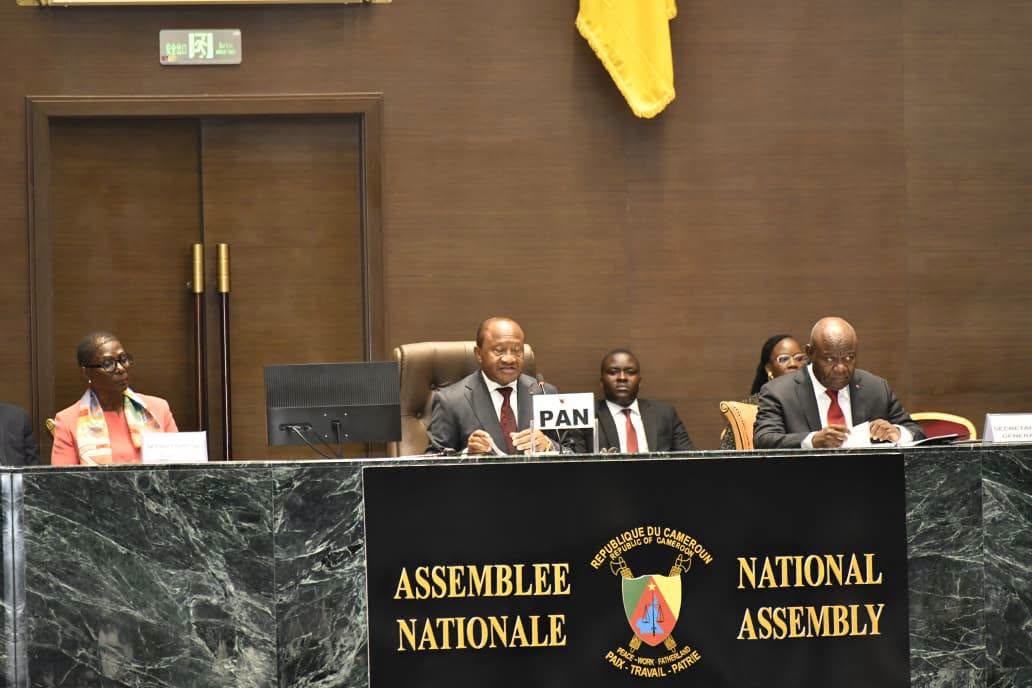
Cameroun Assemblée Nationale: Reviews Projet Loi Règlement 2025
Summary
- Cameroon's National Assembly has commenced the review of the 2025 budget settlement bill.
- The 2025 state budget was revised upwards to 7,735.9 billion FCFA from an initial 7,250.8 billion FCFA.
- Revenues mobilized for 2025 reached 5,174.8 billion FCFA, while expenditures totaled 5,729.7 billion FCFA.
- The nation recorded a budget deficit of 1.6% of its Gross Domestic Product for the 2025 fiscal year.
- Minister of Finance, Louis Paul Motaze, is scheduled to defend the bill before the parliamentary Finance and Budget Committee.
Legislative Scrutiny Begins
For legal and compliance professionals, the final approval and specifics of this settlement bill are crucial.
The Cameroonian National Assembly has initiated the review process for the 2025 budget settlement bill, a critical legislative document. The Conference of Presidents formally declared the proposed text admissible, paving the way for its detailed examination. This crucial phase is now underway within the parliamentary Finance and Budget Committee, where lawmakers will delve into the specifics of the nation's financial performance for the past fiscal year.
Minister of Finance, Louis Paul Motaze, is slated to present and defend the bill before the committee. This parliamentary oversight is essential for assessing how the government managed public funds and adhered to its financial projections. The process underscores the legislative branch's role in ensuring fiscal accountability and transparency in the management of the Cameroun budget 2025.
Revised Budgetary Framework
The 2025 fiscal year saw a significant adjustment to Cameroon's state budget. Initially set at 7,250.8 billion FCFA, the budget underwent an upward revision, ultimately reaching 7,735.9 billion FCFA. This revised figure encompasses two primary components: a general budget amounting to 7,669 billion FCFA and an additional 66.9 billion FCFA allocated to special appropriation accounts. These figures are central to the ongoing discussions within the Assemblée nationale Cameroun finances committee as they scrutinize the loi de règlement Cameroun.
The increase reflects evolving economic conditions or policy priorities that necessitated a larger financial envelope for government operations. Understanding the rationale behind this revision is a key aspect of the parliamentary review, as it sheds light on the government's financial strategy and its impact on various sectors.
Financial Performance and Deficit
An analysis of the 2025 fiscal year's execution reveals a mixed financial picture. Total revenues mobilized reached 5,174.8 billion FCFA, falling slightly short of the projected 5,350.8 billion FCFA, resulting in an execution rate of 96.7%. Conversely, expenditures surpassed initial forecasts, with 5,729.7 billion FCFA spent against a prediction of 5,646.3 billion FCFA, indicating an execution rate of 101.4%. This disparity between revenue collection and expenditure outlays contributes to the overall financial landscape.
For the special allocation accounts, revenues collected amounted to 58.6 billion FCFA, which represents 87.7% of the anticipated 66.9 billion FCFA. The nation recorded a déficit budgétaire Cameroun 2025 of 1.6% of its Gross Domestic Product (PIB). These figures are critical for evaluating the government's fiscal discipline and the effectiveness of its revenue generation and spending mechanisms, providing a factual basis for the Cameroun projet loi règlement 2025.
Implications for Future Fiscal Policy
The detailed examination of the 2025 budget settlement bill by the Finance and Budget Committee, with the active participation of Louis Paul Motaze budget insights, is more than a mere accounting exercise; it sets precedents and informs future fiscal planning. The observed deficit and the variances in revenue and expenditure execution rates highlight areas where adjustments might be necessary for upcoming budgets. The parliamentary review provides an opportunity to understand the underlying causes of these financial outcomes and to propose corrective measures.
For legal and compliance professionals, the final approval and specifics of this settlement bill are crucial. They offer insights into potential shifts in government spending priorities, changes in tax policy, or evolving regulatory enforcement. Such information is vital for anticipating impacts on public sector contracts, identifying new investment opportunities, and ensuring compliance with updated financial regulations. The outcome of this legislative process will significantly influence the economic and regulatory environment in Cameroon.
Practical Implications
Lawyers and compliance officers should monitor the final approval and details of Cameroon's 2025 budget settlement bill to anticipate potential shifts in government spending priorities, tax policy, or regulatory enforcement that could impact public sector contracts, investment opportunities, or compliance obligations.
Source
How does this affect you?
Get an AI analysis of this article grounded in your jurisdictions, practice areas, and any policy documents you've uploaded to Wansom.
Finish Reading the Full Story and the Expert Analysis.
Get the latest legal & regulatory intelligence in Cameroon
Wansom is AI and can make mistakes.