
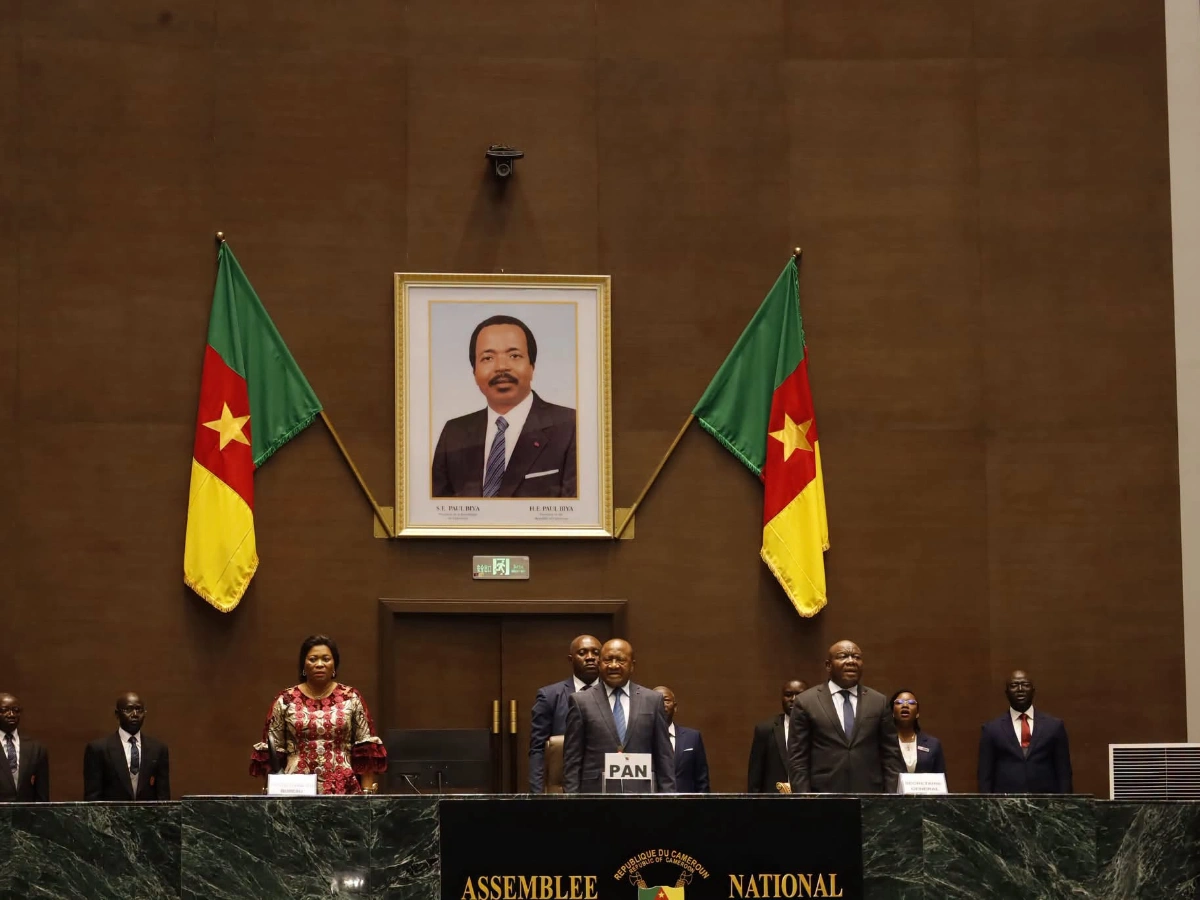
Assemblée Nationale Cameroun: Accepte Projet Loi de Règlement 2025
Summary
- Cameroon's National Assembly has declared the 2025 settlement bill admissible, initiating parliamentary review of state accounts.
- The bill, a key tool for transparency, compares initial budget forecasts with actual financial operations to ensure accountability.
- The 2025 revised state budget was 7,735.9 billion FCFA, with mobilized revenues of 5,174.8 billion FCFA and expenditures of 5,729.7 billion FCFA.
- A budget deficit of 535.2 billion FCFA, representing 1.6% of GDP, was recorded for the 2025 fiscal year.
- Minister of Finance Louis Paul Motaze will defend the bill before the Finance and Budget Committee, justifying any discrepancies between forecasts and actuals.
Parliamentary Scrutiny Initiated
This parliamentary review of Cameroon's 2025 state accounts signals increased scrutiny on public financial management and transparency.
The National Assembly in Cameroon has formally accepted the draft settlement bill for the 2025 fiscal year, marking a critical advancement in the legislative oversight of government spending. This pivotal decision, made by the Conference of Presidents under the leadership of Théodore Datouo, who currently serves as the President of the National Assembly, officially initiates the phase for evaluating the state's financial performance during the specified period. The Cameroun loi de règlement 2025 is now set for in-depth review by the nation's elected representatives.
Following this essential procedural validation, the legislative text will proceed to a substantive examination by the relevant parliamentary bodies. The next crucial step involves the Minister of Finance, Louis Paul Motaze, presenting the bill before the National Assembly's Finance and Budget Committee. This upcoming session will provide a vital opportunity for the minister to clarify any variances between the initial budgetary projections and the actual financial outcomes, addressing questions from deputies regarding public expenditure.
The Framework for Accountability
The settlement bill serves as a fundamental mechanism for ensuring transparency and sound governance within Cameroon's public financial management system. Its primary function is to enable the National Assembly to conduct a thorough examen comptes État Cameroun, meticulously verifying that the government's actual financial operations align precisely with the budgetary allocations initially approved by parliament. This comprehensive process underscores the vital role of contrôle parlementaire exécution budgétaire Cameroun in maintaining fiscal discipline.
By systematically comparing planned expenditures and revenues against what was actually executed, the Assemblée nationale Cameroun budget 2025 review becomes a powerful tool for accountability. Deputies are specifically empowered to meticulously scrutinize the management of public funds and rigorously assess the effectiveness of policies implemented throughout the 2025 fiscal year, prior to the bill advancing to a full plenary session for final deliberation and adoption.
Unpacking the 2025 Financial Landscape
The financial data embedded within the draft settlement bill provides a clear and detailed picture of Cameroon's macroeconomic balances for the 2025 fiscal year. According to the document, the revised state budget for this period stood at a substantial 7,735.9 billion FCFA. However, the actual revenues successfully collected and mobilized by the government amounted to 5,174.8 billion FCFA, indicating a significant gap between initial projections and the financial reality.
Conversely, the total expenditures executed by the government reached 5,729.7 billion FCFA during the same fiscal year. These combined figures collectively reveal a déficit budgétaire Cameroun 2025 of 535.2 billion FCFA. This deficit represents 1.6% of the nation's Gross Domestic Product, highlighting the fiscal challenges and the need for careful financial stewardship during the period under review.
Broader Implications for Governance
This parliamentary review of Cameroon's 2025 state accounts signals increased scrutiny on public financial management and transparency, a critical development for national governance. This rigorous process is designed to ensure that public funds are utilized efficiently, effectively, and in strict accordance with legislative mandates, fostering greater accountability across government operations. The upcoming deliberations by the Finance and Budget Committee, and subsequently the full Assembly, are crucial for identifying potential inefficiencies, discrepancies, or areas requiring enhanced oversight and corrective action.
The thorough examen comptes État Cameroun and its eventual outcome could significantly influence future budgetary planning, government spending policies, and the overall framework for public procurement. It reinforces the commitment to robust financial oversight, aiming to foster greater public trust and ensure that the nation's financial resources are managed responsibly and transparently for the benefit of all its citizens.
Practical Implications
This parliamentary review of Cameroon's 2025 state accounts signals increased scrutiny on public financial management and transparency. Lawyers and compliance officers advising entities engaged in public procurement or state contracts should monitor the outcomes of this review, as identified discrepancies or inefficiencies could influence future regulatory changes, enforcement actions, or government contracting policies.
Source
How does this affect you?
Get an AI analysis of this article grounded in your jurisdictions, practice areas, and any policy documents you've uploaded to Wansom.
Finish Reading the Full Story and the Expert Analysis.
Get the latest legal & regulatory intelligence in Cameroon
Wansom is AI and can make mistakes.