
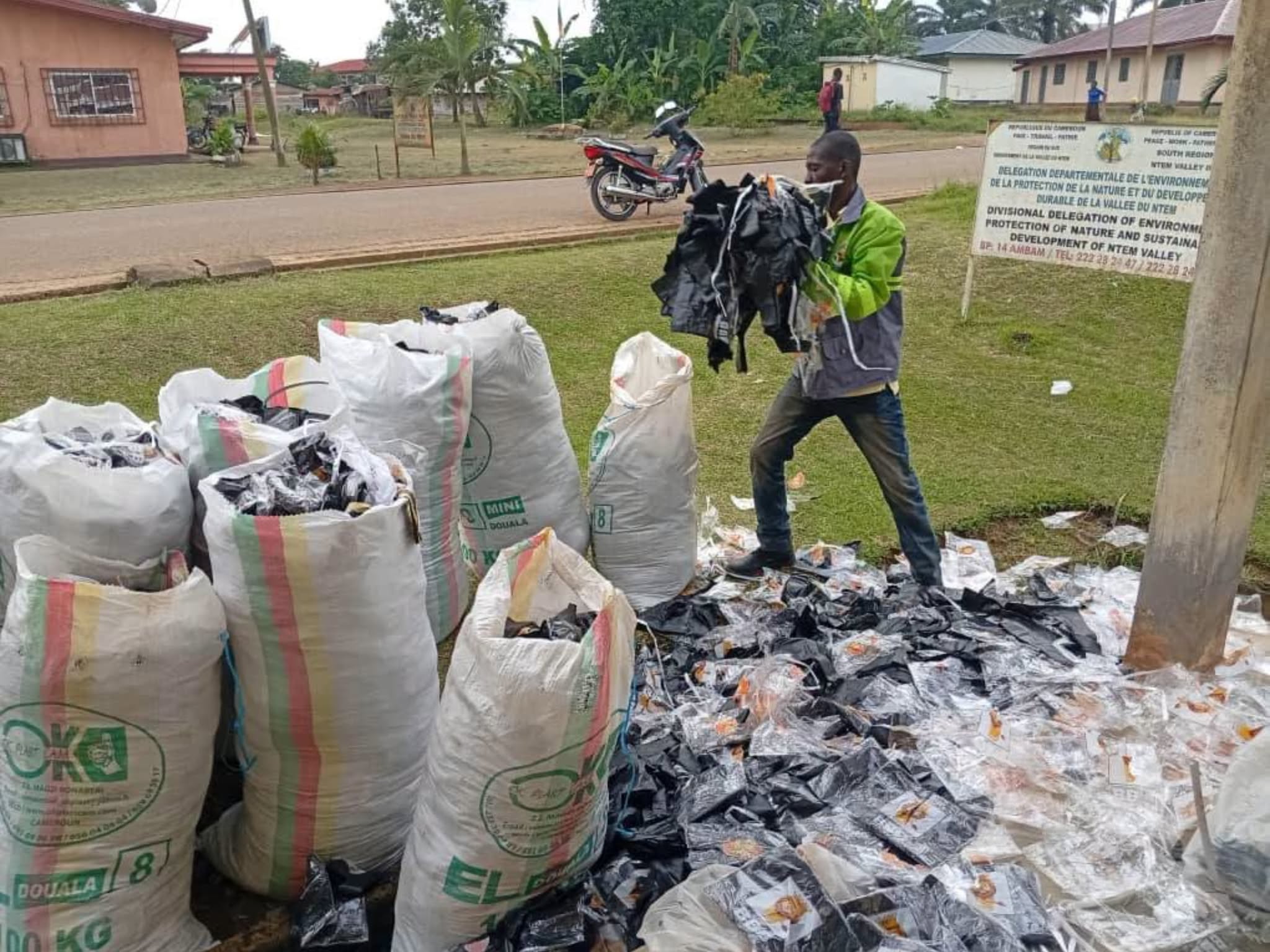
Ambam: Destruction Emballages Plastiques Prohibés by Customs, Environmental Agencies
Summary
- On November 11, 2026, Cameroonian authorities destroyed approximately two tons of prohibited non-biodegradable plastic packaging in Ambam.
- The destruction, led by Janvier Duclair VONGWAÏ, involved 107 bales intercepted by customs near the Equatorial Guinea border.
- Cameroon's joint decree of 2012, implemented in April 2014, bans the manufacture, import, possession, and commercialization of non-biodegradable plastic packaging under 60 microns.
- The ban is enforced due to the severe environmental and health impacts of these plastics, including soil sterilization, wildlife harm, drainage obstruction, and the release of toxic substances.
- Customs and environmental agencies maintain high vigilance to track smuggling networks in the strategic tri-border region.
Significant Seizure and Destruction in Ambam
The state's persistent pressure to enforce the ban on non-biodegradable plastic packaging stems from the severe environmental and public health consequences associated with these materials.
In a decisive move against illicit trade, Cameroonian authorities recently oversaw the destruction of a substantial quantity of prohibited non-biodegradable plastic packaging in Ambam, the administrative center of the Vallée du Ntem. The operation, which took place on November 11, 2026, involved the obliteration of 107 bales of plastic materials, collectively weighing an estimated two tons. This public destruction event served as a stark reminder of the nation's unwavering commitment to enforcing environmental regulations that have been in effect for over a decade.
The proceedings were led by Janvier Duclair VONGWAÏ, the First Deputy Prefect for the Vallée du Ntem Department, and unfolded within the premises of the Departmental Delegation of Environment, Nature Protection, and Sustainable Development (MINEPDED). Representatives from administrative, customs, and environmental agencies were present to ensure the strict application of the law. The illicit cargo had been intercepted by customs officials during a routine inspection at Akonangui, a locality situated close to Cameroon's land border with Equatorial Guinea. The plastics were discovered concealed within a vehicle, indicating an attempt to introduce them into the local market.
Customs played a pivotal role in this enforcement action, with key officials such as the Head of the Ambam Commercial Subdivision, the Head of the Kyé-Ossi Customs Commercial Brigade, and the team leader for Operation HALCOMI IV actively participating. Following the destruction, Mr. VONGWAÏ commended the collaborative efforts and vigilance demonstrated by both customs and environmental services. He further underscored the government's firm resolve to dismantle smuggling networks operating within this critical tri-border region, which connects Cameroon with Gabon and Equatorial Guinea.
Cameroon's Strict Ban on Plastic Packaging
The recent destruction emballages plastiques prohibés Ambam highlights the rigorous enforcement of Cameroon's long-standing prohibition on certain plastic products. A joint decree issued in 2012, which became effective in April 2014, formally outlaws the manufacture, importation, possession, and commercialization of non-biodegradable plastic packaging, specifically those with a density equal to or less than 60 microns. This legislative measure forms the bedrock of the country's strategy to combat plastic pollution.
Cameroonian Customs, often described as the vanguard in this battle against illicit goods, maintains a high level of vigilance at both national borders and within the country's interior. Their consistent efforts, exemplified by operations like HALCOMI IV, are crucial in intercepting contraband before it can infiltrate local distribution channels. The interception near the Equatorial Guinea border underscores the challenges posed by cross-border smuggling and the strategic importance of customs checkpoints in preventing the entry of banned items.
This incident serves as a clear signal to businesses and individuals that the government is serious about upholding the 2012 Arrêté conjoint emballages plastiques. Compliance officers and legal advisors must ensure that any entities operating in or importing into Cameroon are fully aware of and adhere to these stringent regulations to avoid severe penalties, including the seizure and destruction of non-compliant goods.
Environmental and Health Imperatives
The state's persistent pressure to enforce the ban on non-biodegradable plastic packaging stems from the severe environmental and public health consequences associated with these materials. Unlike biodegradable alternatives, these plastics persist in the environment for centuries, leading to widespread ecological damage. Their presence sterilizes agricultural soils, rendering them unproductive, and poses a direct threat to wildlife by causing asphyxiation.
Beyond ecological harm, these plastics contribute significantly to urban infrastructure problems. They frequently obstruct drainage systems and gutters, leading to recurrent and severe flooding during the rainy season, which can devastate communities and infrastructure. Furthermore, when these plastic sachets are improperly used for packaging hot foods, they can leach toxic and carcinogenic substances, directly contaminating the food and posing serious health risks to consumers. The uncontrolled incineration of these materials by households in open air also releases highly noxious gases, further exacerbating air pollution and public health concerns.
Given these multifaceted dangers, the government's determination to track down and eliminate the networks involved in the contrebande plastique trade is not merely a regulatory exercise but a critical public health and environmental protection initiative. The destruction of two tons of prohibited plastic packaging in Ambam is a tangible demonstration of this commitment, reinforcing the message that environmental protection is a national priority.
Practical Implications
Lawyers and compliance officers advising businesses operating in or importing into Cameroon must ensure strict adherence to the 2012 ban on non-biodegradable plastic packaging (especially those ≤ 60 microns). This event underscores active and severe enforcement by customs and environmental authorities, indicating a high risk of seizure and destruction of non-compliant goods, and potential legal penalties for clients involved in their manufacture, import, possession, or commercialization.
Source
How does this affect you?
Get an AI analysis of this article grounded in your jurisdictions, practice areas, and any policy documents you've uploaded to Wansom.
Finish Reading the Full Story and the Expert Analysis.
Get the latest legal & regulatory intelligence in Cameroon
Wansom is AI and can make mistakes.