
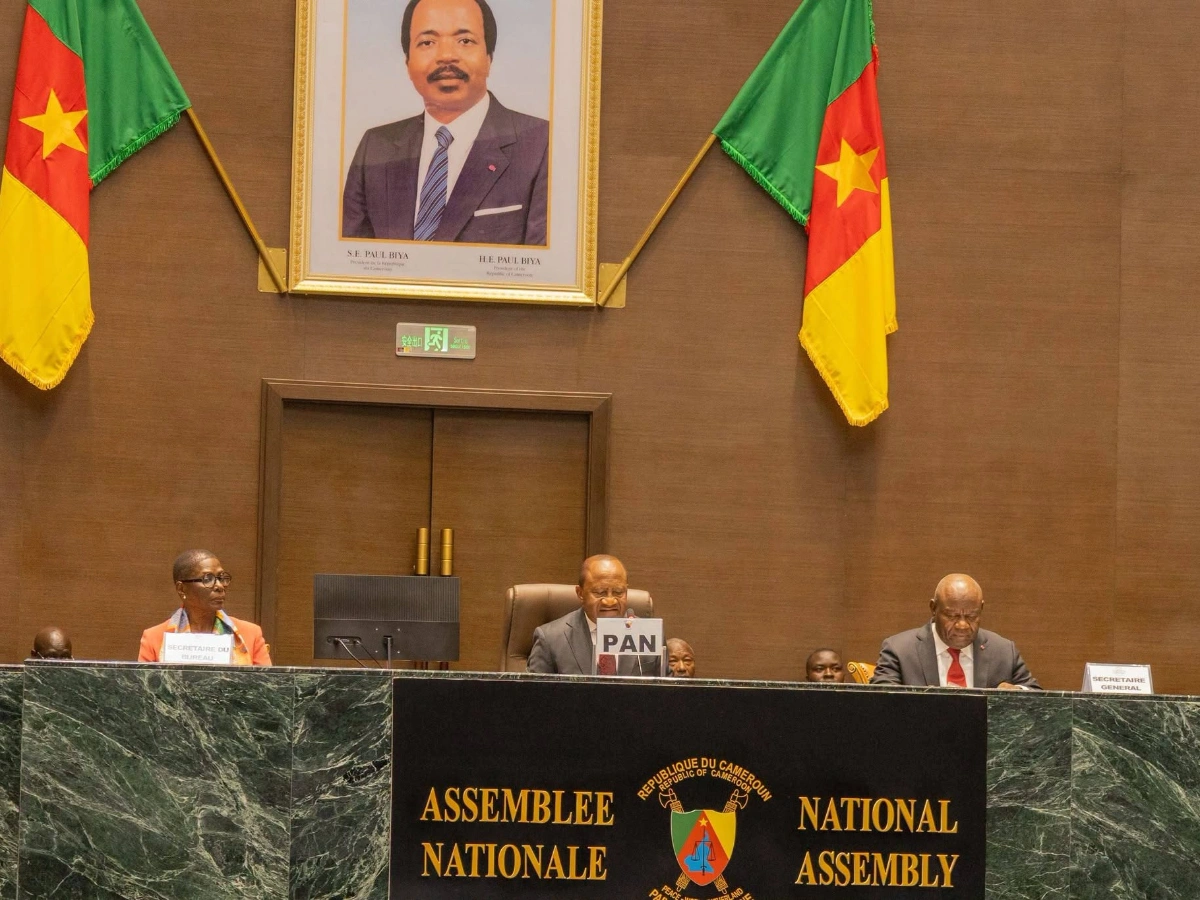
Cameroun Projet Loi Règlement 2025: Assembly Admits Bill, 535.2 Billion FCFA Deficit
Summary
- Cameroon's National Assembly has declared the 2025 budget settlement bill admissible for review.
- The bill reports a 2025 budget deficit of 535.2 billion FCFA, representing 1.6% of the nation's GDP.
- This deficit, significantly exceeding initial projections, stems from a combination of reduced domestic revenue collection and higher-than-anticipated government spending.
- Revenues achieved 96.7% of forecasts, while expenditures reached 101.4% of their projected levels.
- Finance Minister Louis Paul Motaze is expected to defend the bill before the parliamentary Finance and Budget Committee.
Legislative Review Initiated
This deficit, significantly exceeding initial projections, stems from a combination of reduced domestic revenue collection and higher-than-anticipated government spending.
The Conference of Presidents within Cameroon's National Assembly has officially declared the **Cameroun projet loi règlement 2025** admissible for parliamentary review. This crucial legislative document, which details the execution of the state budget for the 2025 fiscal year, now moves forward for examination by deputies. Chaired by President Théodore Datouo, the conference's decision paves the way for a thorough assessment of the nation's financial performance.
The bill highlights a significant **déficit budgétaire Cameroun 2025**, amounting to 535.2 billion FCFA. This figure represents 1.6% of the country's Gross Domestic Product (GDP), indicating a substantial gap between government revenues and expenditures. The admissibility of this bill marks an important step in the annual budgetary oversight process, providing transparency on how public funds were managed throughout the year.
Fiscal Performance and Budgetary Execution
An in-depth look at the figures presented in the bill reveals the specifics of the **exécution budget État Cameroun**. Initially, the state budget was set at 7,250.8 billion FCFA. However, an ordinance issued on July 11, 2025, led to a revision, increasing the budget to 7,735.9 billion FCFA.
Regarding revenue generation, the general budget collected 5,174.8 billion FCFA. This amount fell short of the projected 5,350.8 billion FCFA, resulting in a realization rate of 96.7%. Conversely, government expenditures reached 5,729.7 billion FCFA, surpassing initial forecasts and indicating an execution rate of 101.4%. This disparity between revenue collection and spending directly contributed to the reported deficit.
Understanding the Budgetary Shortfall
The final **déficit budgétaire Cameroun 2025** of 535.2 billion FCFA significantly exceeded the initially anticipated shortfall of 309.9 billion FCFA. This considerable variance is attributed to two primary factors outlined in the bill. Firstly, domestic revenues experienced a 7.2% decrease compared to their forecasts, indicating challenges in tax collection or other internal income streams.
Secondly, government expenditures rose by 4.8% above what was planned, contributing further to the expanded deficit. These combined elements underscore the financial pressures faced by the state during the 2025 fiscal year. The **Assemblée nationale Cameroun loi** will now scrutinize these figures to understand the underlying causes and their implications for future fiscal planning.
Ministerial Accountability and Parliamentary Oversight
In the next phase of the legislative process, the Minister of Finance, **Louis Paul Motaze**, is scheduled to appear before the parliamentary Finance and Budget Committee. His role will be to defend the provisions and findings of the budget settlement bill, providing explanations for the reported figures and the government's financial management strategies.
Deputies on the committee are tasked with a critical responsibility: to meticulously examine the outcomes of the budget's execution. Their assessment will involve evaluating the government's overall management of public finances for the 2025 fiscal year, ensuring accountability and transparency in the handling of state resources.
Practical Implications
Lawyers and compliance officers should monitor the final approval of Cameroon's 2025 budget settlement law to understand the government's financial performance and deficit. This insight can inform strategies related to public sector contracts, tax policy, and regulatory enforcement, as fiscal health often dictates government priorities and resource allocation.
Source
How does this affect you?
Get an AI analysis of this article grounded in your jurisdictions, practice areas, and any policy documents you've uploaded to Wansom.
Finish Reading the Full Story and the Expert Analysis.
Get the latest legal & regulatory intelligence in Cameroon
Wansom is AI and can make mistakes.