
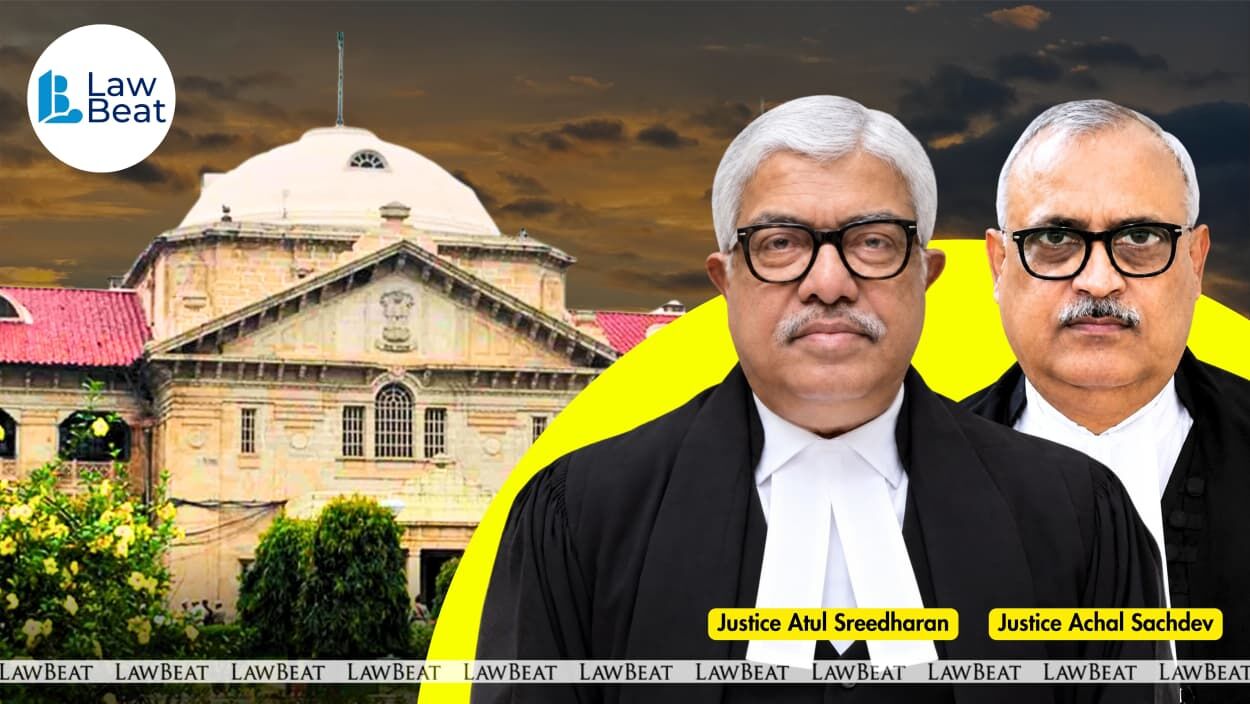
Allahabad High Court: 5-Day Illegal Custody Compensation Ordered
Summary
- The Allahabad High Court ordered the Uttar Pradesh government to pay Rs 50,000 in compensation to Kamlesh Kumar.
- Kamlesh Kumar was held in illegal police custody for five days, from August 15 to August 19, 2026, before being formally arrested.
- His detention stemmed from a property dispute where a neighbor accused him of being a Bangladeshi citizen, leading to a criminal case under the Bharatiya Nyaya Sanhita.
- Two police officers, the SHO and IO of Meja police station, were suspended for "gross negligence" related to the unlawful detention.
- The ruling reinforces the importance of habeas corpus petitions and holds law enforcement accountable for procedural violations in India.
Landmark Ruling on Unlawful Detention
The Allahabad High Court's ruling establishes a crucial precedent regarding police misconduct compensation in Uttar Pradesh, affirming that authorities cannot hold individuals without formal arrest and due process.
The Allahabad High Court recently mandated the Uttar Pradesh government to pay Rs 50,000 in compensation to an individual who was held in illegal police custody for five days. The ruling, issued on September 18 by a bench comprising Justices Atul Sreedharan and Achal Sachdev, came in response to a habeas corpus petition filed by Kamlesh Kumar. The court determined that Mr. Kumar had been taken into custody by police on August 15, 2026, but was not formally arrested until August 19, 2026, highlighting a significant procedural lapse.
This decision underscores the judiciary's commitment to upholding individual liberties against arbitrary state action, particularly concerning illegal detention in India. The Allahabad High Court 5-day illegal custody compensation order sets a clear standard for accountability when law enforcement bypasses established legal procedures for arrest and detention.
The Circumstances of Kamlesh Kumar's Illegal Custody
The events leading to Mr. Kumar's unlawful detention stemmed from a property dispute with his neighbor, Geeta Vishwas, who accused him of being a citizen of Bangladesh. Following this accusation, Meja police took Mr. Kumar from his medical shop in Sonar Tara on August 15. An inquiry into his nationality was subsequently conducted by the Assistant Commissioner of Police, Meja, which led to the registration of a criminal case against him under provisions of the Bharatiya Nyaya Sanhita, the Immigration and Foreigners Act, 2025, and the Passport Act. Despite the formal charges, the court noted that Mr. Kumar was only produced before a magistrate on August 19, when he was sent to judicial remand, confirming a five-day period of unacknowledged police custody.
Further investigation revealed significant police misconduct. An affidavit submitted by the Deputy Commissioner of Police (DCP) to the high court confirmed Mr. Kumar's pickup on August 15 and stated that the Station House Officer (SHO) of Meja police station and the investigating officer (IO) failed to provide a satisfactory explanation for the detention. The inquiry report characterized their actions as "gross negligence," resulting in the suspension of both officers on September 17. The SHO offered an explanation to the court, claiming he had merely instructed constables to ask Mr. Kumar to report to the station, but they misunderstood and brought him in. He also stated he was away at SRN Hospital, Prayagraj, approximately 60 km distant, from August 15 until the early hours of August 16 due to a firing incident. However, the court found the police's own records demonstrated a clear admission of illegal detention extending beyond the permissible 24-hour period.
Reinforcing Habeas Corpus and Accountability
The Allahabad High Court's ruling establishes a crucial precedent regarding police misconduct compensation in Uttar Pradesh, affirming that authorities cannot hold individuals without formal arrest and due process. The court explicitly confined its examination to the allegation of illegal detention, refraining from commenting on the merits of the underlying criminal case against Mr. Kumar. This distinction highlights the judiciary's focus on procedural integrity, irrespective of the charges an individual faces. The directive for the Uttar Pradesh government to compensate Mr. Kumar reinforces the principle that the state is liable for the actions of its law enforcement agencies when they violate fundamental rights.
This decision serves as a powerful reminder of the constitutional safeguards against arbitrary detention and the critical role of habeas corpus petitions in challenging unlawful confinement. While the court ordered Mr. Kumar's immediate release unless he was wanted in another matter, it also clarified that the state retained the right to re-arrest him through proper legal channels. The judgment sends a clear message to law enforcement about accountability for procedural violations, particularly in cases involving custodial violence India precedent, and emphasizes the need for strict adherence to legal protocols for detention and arrest.
Practical Implications
This ruling establishes a clear precedent for seeking compensation for illegal police detention in India, reinforcing the importance of habeas corpus petitions and holding law enforcement accountable for procedural violations. Lawyers should leverage this decision when advising clients on remedies for unlawful custody or challenging police actions that bypass formal arrest procedures.
Source
How does this affect you?
Get an AI analysis of this article grounded in your jurisdictions, practice areas, and any policy documents you've uploaded to Wansom.
Finish Reading the Full Story and the Expert Analysis.
Get the latest legal & regulatory intelligence in India
Wansom is AI and can make mistakes.