
Supreme Court: Addresses Prevention of Insults to National Honour Act Challenge
Summary
- The Supreme Court heard a petition challenging the constitutional validity of a 2026 amendment to the Prevention of Insults to National Honour Act.
- Carnatic vocalist TM Krishna filed the plea, disputing the amendment which mandates up to three years in jail for preventing the singing of 'Vande Mataram'.
- Senior Advocate S Muralidhar argued that the law is flawed as it penalizes actions related to the 'National Song' without defining the song itself.
- A heated exchange occurred between Muralidhar and Solicitor General Tushar Mehta during the hearing over Mehta's use of the term "Naxalite."
- The Court observed that historical knowledge generally clarifies the identity of the national song, while SG Mehta urged against issuing notice on the petition.
Supreme Court Examines National Honour Act Amendment
The core of the legal challenge centers on the 2026 amendment's imposition of up to three years in jail for preventing the singing of the 'National Song,' despite the statute offering no clear definition of what constitutes this revered anthem.
The Supreme Court recently convened to address a significant challenge concerning the constitutional validity of a 2026 amendment to the Prevention of Insults to National Honour Act. This legal scrutiny arose from a petition filed by renowned Carnatic vocalist TM Krishna, who contests specific provisions of the updated legislation.
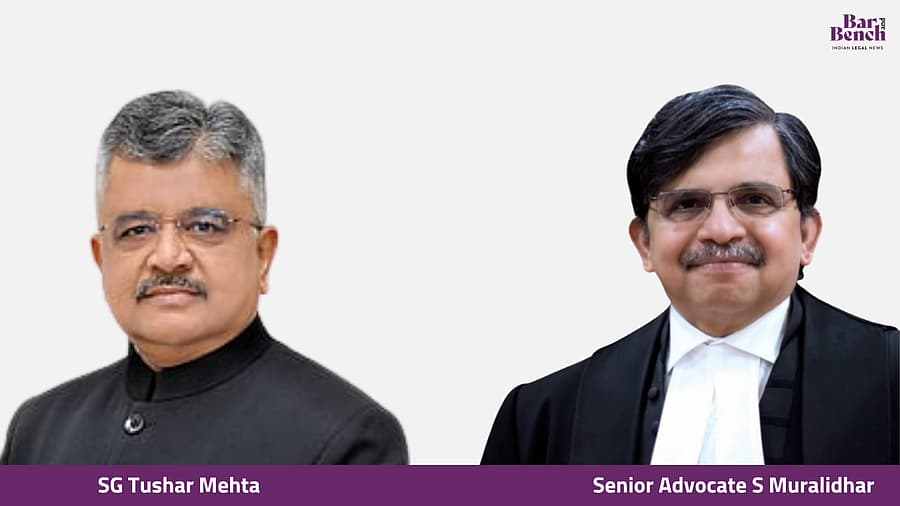
The amendment in question introduces stringent penalties, stipulating up to three years of imprisonment for individuals who intentionally prevent the singing of 'Vande Mataram' or disrupt any assembly engaged in its rendition. The proceedings before a bench comprising Chief Justice of India Surya Kant and Justices Joymalya Bagchi and V Mohana, also saw a notable and heated exchange between Solicitor General Tushar Mehta and Senior Advocate S Muralidhar, Krishna's counsel, regarding Mehta's use of the term "Naxalite."
Undefined 'National Song' at Core of Legal Dispute
At the heart of the Prevention of Insults to National Honour Act challenge is the argument that the 2026 amendment penalizes actions related to the 'National Song' without providing a statutory definition for what constitutes this anthem. Senior Advocate S Muralidhar, representing TM Krishna in his Supreme Court petition, emphasized this critical ambiguity, arguing that a law carrying such severe consequences, including imprisonment, should not rely on vague interpretations or external office memorandums for its fundamental definitions.
Muralidhar highlighted the perceived haste in introducing the Vande Mataram Act amendment, suggesting it was enacted without adequate consideration for its implications. He pressed for clarity, stating that the government must confirm it will not depend on administrative directives to define statutory terms that carry penalties. In response to these concerns, the Court observed that historical understanding generally provides sufficient clarity regarding the identity of the national song. However, Solicitor General Tushar Mehta intervened, urging the bench not to issue notice on the plea, claiming that doing so would have broader implications.
Implications for National Symbols Legislation
The outcome of this Supreme Court petition holds substantial weight for the future interpretation and enforcement of laws pertaining to national symbols in India. The challenge to the Prevention of Insults to National Honour Act 2026 directly questions the legislative precision required when imposing criminal penalties, particularly when a key term like 'National Song' remains undefined within the statute itself. This case could set an important precedent regarding the clarity and constitutional validity of such legislation.
Legal professionals and compliance officers will be closely monitoring the proceedings, as the ruling could significantly impact how national symbols are protected under Indian law and the extent to which legislative intent must be explicitly codified. The debate over the National Song definition India law highlights a crucial aspect of statutory interpretation, where the absence of clear definitions can lead to legal uncertainty and potential misuse of punitive measures.
Practical Implications
Lawyers and compliance officers should closely monitor the outcome of this Supreme Court challenge, as it directly questions the constitutional validity and clarity of the Prevention of Insults to National Honour Act, particularly regarding the undefined 'National Song' and potential penalties for its prevention. The ruling could significantly impact legal interpretations and enforcement related to national symbols.
Source
How does this affect you?
Get an AI analysis of this article grounded in your jurisdictions, practice areas, and any policy documents you've uploaded to Wansom.
Finish Reading the Full Story and the Expert Analysis.
Get the latest legal & regulatory intelligence in India
Wansom is AI and can make mistakes.