
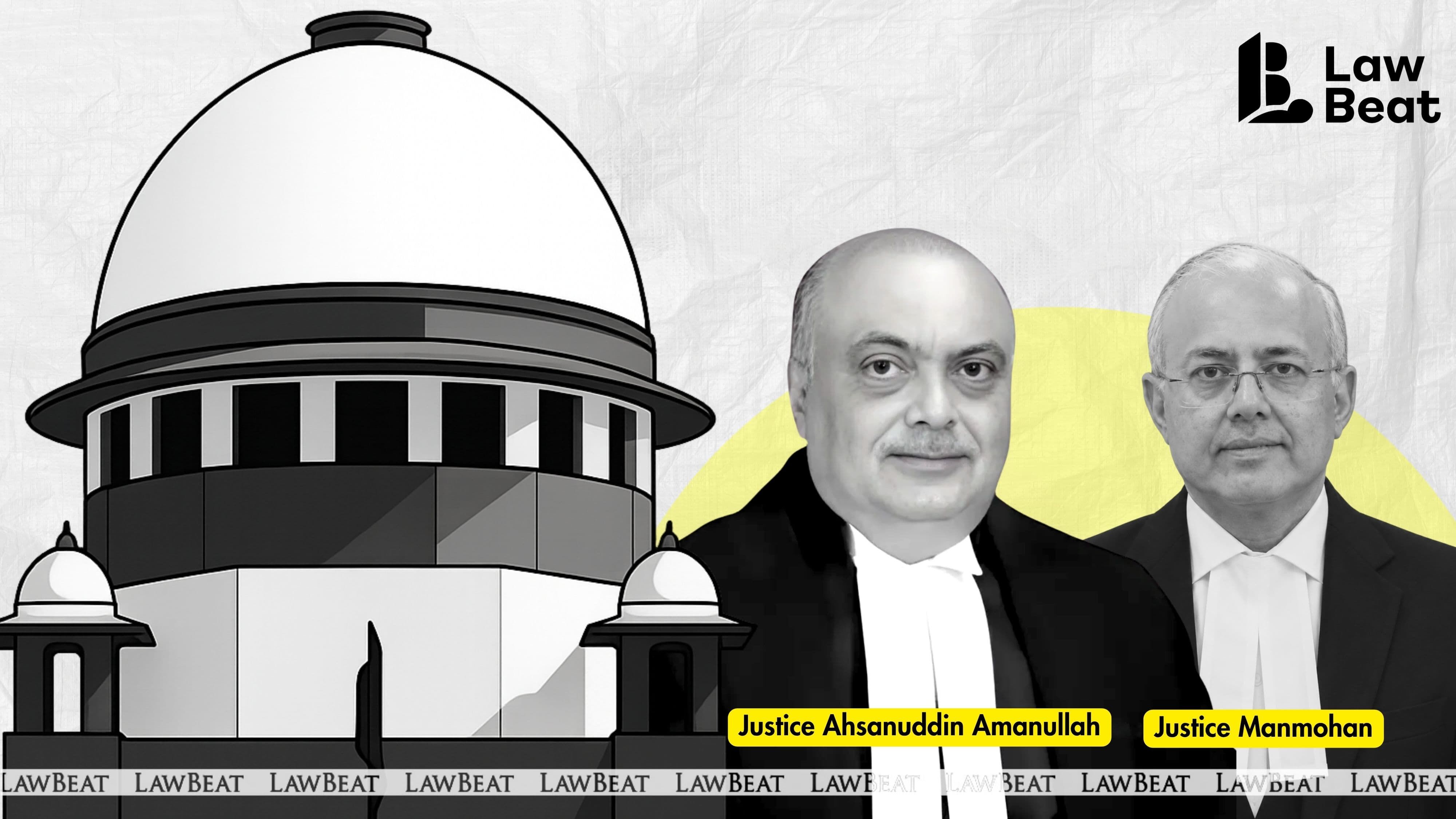
Supreme Court: ONGC Not Liable for Contract Worker Gratuity Without Direct Employment
Summary
- The Supreme Court ruled that principal employers are not liable for gratuity payments to contract workers without a direct employer-employee relationship.
- The Court allowed appeals by ONGC, setting aside a Bombay High Court order that had imposed gratuity liability on the company.
- The Controlling Authority's jurisdiction under the Gratuity Act is limited to calculating the gratuity amount and does not extend to determining or fastening liability on a principal employer.
- ONGC's defense relied on the absence of an employer-employee relationship, Section 21(4) of the Contract Labour Act, and specific contractual terms.
- The ruling reinstated an Appellate Authority's decision that had previously interfered with the Controlling Authority's order against ONGC.
What Happened
The Supreme Court of India recently delivered a significant ruling, clarifying that principal employers bear no liability for gratuity payments to contract workers unless a direct employer-employee relationship exists.
The Supreme Court of India recently delivered a significant ruling, clarifying that principal employers bear no liability for gratuity payments to contract workers unless a direct employer-employee relationship exists. This decision came as the apex court allowed appeals filed by Oil and Natural Gas Corporation Ltd. (ONGC), effectively overturning a Bombay High Court order from August 23, 2023, which had previously imposed gratuity obligations on the public sector undertaking.
The bench, comprising Justices Ahsanuddin Amanullah and Manmohan, reinstated an earlier order from the Appellate Authority. This Appellate Authority had previously intervened to set aside a decision by the Controlling Authority that held ONGC responsible for such payments. The Supreme Court's judgment underscores a crucial distinction in the application of gratuity laws, particularly concerning contract labour arrangements.
Legal Framework and Arguments
Central to the Supreme Court's determination was the absence of a direct employer-employee relationship between ONGC and the contract workers. Solicitor General Tushar Mehta, representing ONGC, argued that Section 4 of the Payment of Gratuity Act specifically mandates gratuity payments to an “employee,” a classification that did not apply to the workers engaged through a contractor in this instance. Consequently, he contended that the provisions of the Gratuity Act could not be invoked against ONGC under these circumstances.
Further bolstering ONGC's position, the Court acknowledged reliance on Section 21(4) of the Contract Labour (Regulation and Abolition) Act, 1970. This particular section outlines the principal employer's statutory responsibilities towards contract labour, which are limited to wage payments and do not extend to gratuity. The contractual agreement between ONGC and its contractor also played a pivotal role; Clause 12.4.1 explicitly defined the arrangement as a job contract, unequivocally stating that it did not establish an employer-employee relationship between ONGC and the contractor's personnel. The Court also referenced its December 2025 decision in *Municipal Council, Nandyal Municipality, Kurnool District, A.P. v. K. Jayaram & Ors.*, which established that individuals deployed through a contractor cannot automatically claim an employer-employee relationship with the principal employer. Conversely, the contractor had argued that the gratuity liability did not rest with them and should ultimately be borne by the principal employer.
Limits of Controlling Authority's Jurisdiction
A key aspect of the Supreme Court's ruling also addressed the scope of the Controlling Authority's powers under the gratuity legislation. The bench unequivocally stated that the authority's jurisdiction is strictly confined to the computation of the gratuity amount payable to an “employee.” It was held that any attempt by the Controlling Authority to determine liability and impose it on a principal employer, such as ONGC, falls outside its statutory mandate.
The Court explicitly declared that the Controlling Authority's adjudication regarding liability was beyond its permissible jurisdiction. Therefore, the proceedings initiated before the Controlling Authority, insofar as they sought to establish and fasten gratuity liability on ONGC, were deemed non-maintainable. This clarification reinforced that the Appellate Authority had correctly intervened to overturn the Controlling Authority's initial decision, and the Bombay High Court's subsequent reversal of the Appellate Authority's order was deemed unjustified.
Why It Matters
This landmark Supreme Court ONGC contract worker gratuity ruling provides critical clarity for principal employers across India regarding their obligations under the Payment of Gratuity Act. By affirming that a principal employer is not liable for gratuity payments to contract workers in the absence of a direct employer-employee relationship, the judgment reinforces the importance of contractual terms and the distinct legal identities of principal employers and contractors.
The decision significantly impacts the understanding of "employer-employee relationship contract labour" dynamics and the scope of "Controlling Authority gratuity jurisdiction India." It delineates that the "ONGC gratuity liability contract workers" case sets a precedent that principal employers must ensure their contracts with service providers are robust and clearly define the nature of the engagement to avoid unintended gratuity liabilities. This ruling, which also considered the implications of "Contract Labour Act Section 21(4)," emphasizes that the Controlling Authority's role is administrative in calculating amounts, not judicial in determining liability, thereby offering a more predictable legal landscape for businesses engaging contract labour.
Practical Implications
This Supreme Court ruling provides clarity for principal employers on their non-liability for gratuity to contract workers in the absence of a direct employer-employee relationship. Lawyers advising such employers should review existing contracts with contractors to ensure robust clauses that align with this precedent and understand the limited jurisdiction of the Controlling Authority under the Gratuity Act.
Source
How does this affect you?
Get an AI analysis of this article grounded in your jurisdictions, practice areas, and any policy documents you've uploaded to Wansom.
Finish Reading the Full Story and the Expert Analysis.
Get the latest legal & regulatory intelligence in India
Wansom is AI and can make mistakes.