
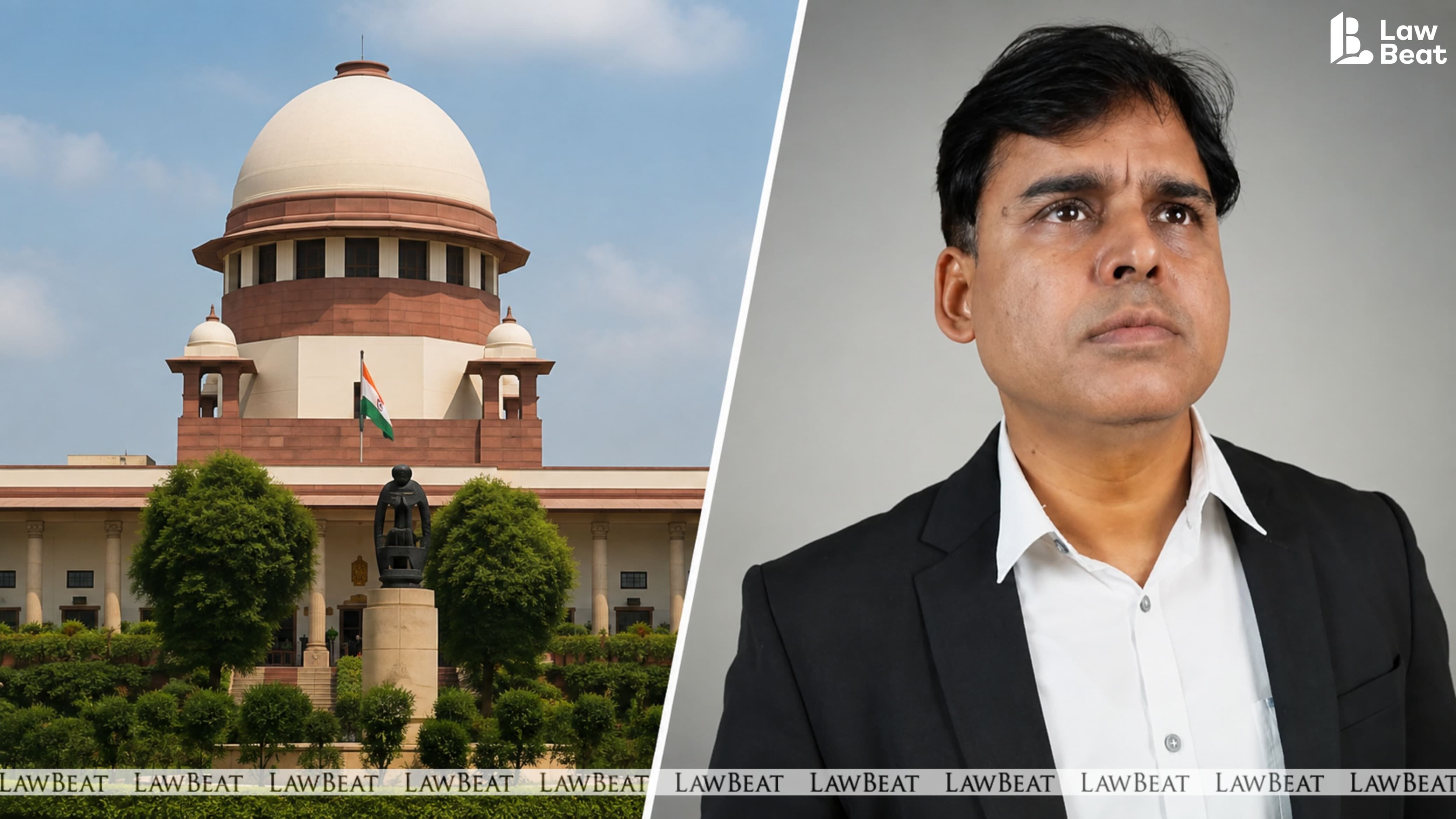
Abhishek Upadhyaya Supreme Court: Challenges X Digital Data Demand
Summary
- Journalist Abhishek Upadhyaya has petitioned the Supreme Court to block Ghaziabad Police from accessing his X account's digital data.
- Upadhyaya alleges the road rage case against him is fabricated retaliation for his investigative reporting on Ram Temple donation irregularities.
- The police's request for digital information, under BNSS Section 94, covers a period significantly preceding the alleged incident, overlapping with his reporting.
- He argues that releasing his digital footprint would compromise his journalistic sources, potentially leading to their harassment.
- The Supreme Court has already stayed his arrest and directed the police to provide him with a copy of the FIR.
Journalist Challenges Digital Data Request in Supreme Court
He argues that granting the Ghaziabad Police access to his X digital data would inevitably expose the identities of individuals who communicated with him in confidence, providing information or evidence for his journalistic work.
Journalist Abhishek Upadhyaya has approached the Supreme Court of India, seeking to prevent the Ghaziabad Police from accessing his X (formerly Twitter) account information. This legal action comes after Upadhyaya was accused in a road rage incident, which he contends is a fabricated charge designed as retaliation for his investigative reporting. He asserts that the police's demand for his digital data is an attempt to uncover and potentially harm his confidential journalistic sources.
Upadhyaya's petition specifically aims to restrain the Ghaziabad Police from requesting, obtaining, processing, or disclosing any information related to his X account, @upadhyayabhii. The Supreme Court has already intervened in the matter, issuing an order on August 25 to stay his arrest. The Court also directed the police to provide him with a copy of the First Information Report (FIR) filed against him, enabling him to pursue further legal remedies at the Allahabad High Court.
During a hearing before a bench led by Chief Justice of India Surya Kant, Advocate Anoop Prakash Awasthi, representing Upadhyaya, highlighted the extensive nature of the police's request. The Ghaziabad Police sought his digital activity dating back to June 1, 2026, a period that significantly predates the alleged road rage incident on August 18, 2026. Upadhyaya's legal team informed the Court that X's legal department in San Francisco, California, had notified him of the Ghaziabad Crime Branch Investigation Unit's request for his account data.
Legal Scrutiny on BNSS Section 94 Notice
Central to Upadhyaya's challenge is a notice issued under Section 94 of the Bharatiya Nagarik Suraksha Sanhita (BNSS) on August 22, 2026, by the Ghaziabad Police's Crime Branch Unit. This notice demands a broad spectrum of his digital data, including location information, device and IMEI details, alternative email addresses, mobile numbers, and IP access logs. Upadhyaya argues that such a comprehensive demand, spanning nearly three months, is highly intrusive and lacks a direct connection to the alleged road rage offense.
His application to the Supreme Court emphasizes that the requested data period, commencing June 1, 2026, substantially precedes the August 18, 2026, incident. Crucially, this timeframe overlaps with his investigative work on alleged irregularities and theft concerning donations for the Ram Temple, which he reported on June 7, 2026. He contends that the absence of a clear and proximate link between this extensive historical digital information and the investigation into the alleged incident renders the demand disproportionate and unwarranted.
Upadhyaya's legal submission asserts that allowing such a sweeping request, merely under the pretext of an ongoing investigation, would set a dangerous precedent. The potential to reconstruct his digital associations, contacts, and movements over an extended period, without a demonstrated nexus to the alleged crime, raises significant concerns about privacy and due process under the BNSS framework.
Protecting Journalistic Sources and Digital Footprints
The core of Abhishek Upadhyaya's Supreme Court petition revolves around the critical issue of journalist source protection in India. He argues that granting the Ghaziabad Police access to his X digital data would inevitably expose the identities of individuals who communicated with him in confidence, providing information or evidence for his journalistic work. This exposure, he fears, could lead to harassment and harm to these sources through state machinery, thereby chilling future investigative reporting.
This case highlights the broader implications for digital footprint privacy, particularly for investigative journalists whose work often relies on anonymous or confidential sources. The demand for extensive historical data, including communication logs and location information, poses a direct threat to the confidentiality essential for such reporting. The timing of the police's demand, coinciding with his high-profile investigative piece, further suggests a potential motive of retaliation against investigative reporting in India.
Upadhyaya's challenge underscores the need for judicial scrutiny over the scope and proportionality of law enforcement's digital data requests. His plea for an ad-interim stay and the quashing of the BNSS Section 94 notice seeks to safeguard not only his personal privacy but also the fundamental principle of protecting journalistic sources, which is vital for a free press and accountability.
Practical Implications
This case signals increased judicial scrutiny over the scope and proportionality of digital data requests by law enforcement under BNSS Section 94, particularly when impacting journalistic sources. Lawyers should monitor its progression for precedents on challenging broad data demands and protecting client privacy in digital investigations.
Source
Source: Original reporting via Live Law
How does this affect you?
Get an AI analysis of this article grounded in your jurisdictions, practice areas, and any policy documents you've uploaded to Wansom.
Finish Reading the Full Story and the Expert Analysis.
Wansom is AI and can make mistakes.