
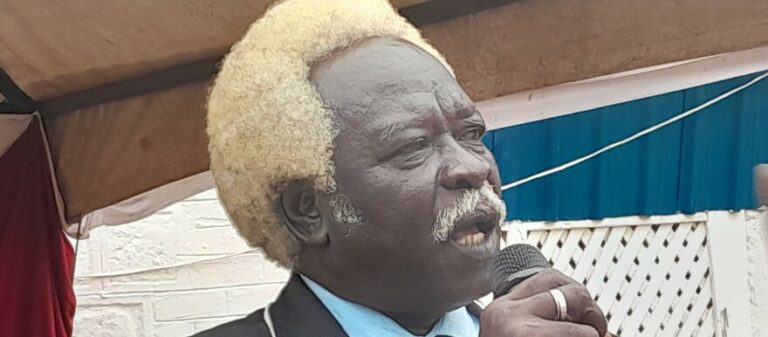
Kon Gives NEC 72 Hours to Reverse Poll Delay or Face Court
Summary
- Presidential aspirant Kornelio Kon Ngon has issued a 72-hour ultimatum to the National Elections Commission (NEC).
- Kon demands the NEC reverse its decision to postpone South Sudan's general elections from December 22, 2026, to February 11, 2027.
- He asserts the postponement violates the Transitional Constitution and the South Sudan Elections Act 2012, as amended.
- The NEC cited insufficient time for electoral preparations and invoked Article 57(1)(c) of the Elections Act to justify the 51-day delay.
- Kon contends the NEC's decision lacked consultation and requires further constitutional amendments to be lawful.
Legal Challenge to Election Delay
Kon contends that any extension beyond the constitutionally mandated three-month timeframe for a caretaker government would necessitate further amendments to the Transitional Constitution, specifically suggesting an "Amendment No. 14" to legitimize the new election date.
Kornelio Kon Ngon, a presidential aspirant and former third deputy speaker of parliament, has issued a stringent 72-hour ultimatum to the National Elections Commission (NEC) of South Sudan. Kon demands that the commission reverse its recent decision to postpone the nation's general elections, threatening to initiate a Kornelio Kon Ngon NEC lawsuit if his demand is not met. The NEC's revised electoral timetable, announced on November 14, shifts the election date from the previously scheduled December 22, 2026, to February 11, 2027, a delay of 51 days.
Speaking at a press conference in Juba, Kon, who represents a faction of the National Alliance of Political Parties (NAPP), firmly stated that this new South Sudan election date 2027 contravenes both the Transitional Constitution South Sudan and the South Sudan Elections Act 2012, as amended in 2026. He emphasized that his alliance expects the National Elections Commission South Sudan to cancel the updated timetable and revert to the original polling date within the specified timeframe, or face legal action. This challenge highlights significant concerns over the legality and procedural integrity of the electoral process.
Constitutional and Electoral Framework
Kon's legal argument centers on specific provisions within the nation's foundational documents. He asserts that the constitution and electoral law unequivocally establish December 22, 2026, as the designated election date. Furthermore, these legal instruments mandate that the president must dissolve the transitional government three months prior to the scheduled polls. According to Kon, the authority of both the president and any subsequent caretaker government is strictly limited to a three-month period, and any extension beyond this duration would require additional amendments to the constitution and electoral legislation.
He referenced Amendment No. 13 to the Transitional Constitution South Sudan, which grants the president the power to form a caretaker government for a maximum of three months. Kon clarified that the transitional period is designed to conclude with elections, which are constitutionally required to be conducted two months before the transitional period's official end. He pointed out that September 22, 2026, marked the conclusion of the transitional government, leading to the president's dissolution of all its organs, including the executive and parliament. Consequently, the caretaker government's role is temporary, with restricted powers, particularly in the absence of a functioning parliament.
Disputed Authority and Consultations
The National Elections Commission South Sudan, through its spokesperson Josephine Achiro Fortelo, has defended its decision to adjust the electoral timetable. The commission cited the necessity for additional time to finalize crucial electoral preparations, including candidate nominations, the submission of candidate lists, and the printing of ballot papers. Fortelo stated that the NEC invoked Article 57(1)(c) of the South Sudan Elections Act 2012, as amended, which she claimed provides the commission with the authority to modify the electoral calendar. Notably, the revised timetable was released on the same day that voter registration was slated to commence, an exercise scheduled from November 14 to 28 across 3,161 centers in the country's 10 states and three administrative areas.
However, Kon strongly disputes the NEC's justification, arguing that the decision to change the South Sudan election date 2027 lacked proper consultation and approval from political parties and other relevant stakeholders. He recounted a consultative meeting held in Juba on Thursday, November 12, where no plans for revising the timetable were communicated. Kon described the commission's subsequent announcement as a "blatant violation" of both the constitution and electoral law, asserting that the Elections Act permits the commission to exercise its powers only within a defined timeframe. Kon contends that any extension beyond the constitutionally mandated three-month timeframe for a caretaker government would necessitate further amendments to the Transitional Constitution, specifically suggesting an "Amendment No. 14" to legitimize the new election date. He criticized the lack of a clear legal provision cited by the NEC to authorize the change, noting that political parties were still awaiting an official, legally grounded explanation for the shift from December 22, 2026, to February 11, 2027.
Practical Implications
Lawyers advising political entities or involved in constitutional law in South Sudan should closely monitor the outcome of Kon's legal challenge against the NEC's election postponement. This case will clarify the constitutional limits on the electoral commission's powers to alter election timelines and could set a significant precedent regarding the interpretation of the Transitional Constitution and the Elections Act, potentially impacting the legitimacy and legal framework of the upcoming elections.
Source
How does this affect you?
Get an AI analysis of this article grounded in your jurisdictions, practice areas, and any policy documents you've uploaded to Wansom.
Finish Reading the Full Story and the Expert Analysis.
Get the latest legal & regulatory intelligence in South Sudan
Wansom is AI and can make mistakes.