
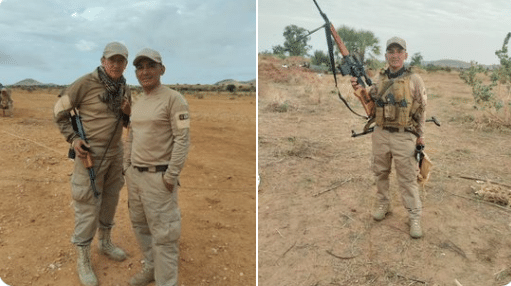
UN Report: UAE Trained RSF Mercenaries for Sudan Conflict
Summary
- A UN Panel of Experts report, revealed in September 2026, alleges that the United Arab Emirates trained Colombian mercenaries for Sudan's Rapid Support Forces (RSF).
- Training reportedly occurred at two military bases in Abu Dhabi and a UAE-funded facility at the Puntland Maritime Police Force base in Somalia.
- These mercenaries were involved in operating drones, training fighters (including children) in guerrilla warfare, and direct combat for the RSF.
- Recruitment, which began in August 2024, was managed by Alvaro Andres Quijano Becerra through his company, International Services Agency.
- Alvaro Andres Quijano Becerra, a dual Colombian-Italian national residing in the UAE, has been listed by a UN Security Council sanctions committee formed under the Darfur arms embargo resolution.
Revelations from the UN Report
The findings of a recent UN Panel of Experts report suggest that the United Arab Emirates played a role in training Colombian mercenaries destined to fight alongside the Rapid Support Forces (RSF) in Sudan.
The findings of a recent UN Panel of Experts report suggest that the United Arab Emirates played a role in training Colombian mercenaries destined to fight alongside the Rapid Support Forces (RSF) in Sudan. Revealed on September 6, 2026, in New York, the report, a leaked copy of which was obtained by Sudan Tribune, details how these foreign fighters were allegedly prepared at two distinct military installations within Abu Dhabi, specifically the Al-Ghayathi and Al-Wathba bases.
Further allegations indicate that a third training facility, located at the Puntland Maritime Police Force base in Somalia, also received funding, training, and oversight from the UAE military. The report outlines the diverse roles these mercenaries fulfilled for the RSF, including operating sophisticated drone systems, instructing fighters—even children—in guerrilla warfare tactics, and directly participating in combat operations on the ground. This extensive involvement underscores the gravity of the allegations concerning the UN report UAE trained RSF mercenaries and the use of UAE military bases for such activities.
The Recruitment Pipeline
The recruitment efforts for these RSF Colombian mercenary involvement reportedly commenced in August 2024, orchestrated by a Colombian entity known as "International Services Agency." This company is managed by Alvaro Andres Quijano Becerra, with ownership attributed to his wife, Claudia Viviana Oliveros, and Mateo Andres Duque Botero listed as a partner.
The report meticulously traces the complex travel logistics for these mercenaries. They would initially arrive in either Abu Dhabi or Bossaso, located in Somalia's Puntland region, via commercial flights. From these points, chartered aircraft would then transport them to Benghazi or Kufra in Libya, serving as intermediate staging grounds before their final transfer to Darfur, where they would engage in combat on behalf of the Rapid Support Forces.
Legal and Sanctions Framework
The individual at the center of the recruitment allegations, Alvaro Andres Quijano Becerra, holds both Colombian and Italian nationalities and is noted to reside in the United Arab Emirates. His activities have drawn the attention of international bodies, leading to his listing by a sanctions committee established under the purview of the UN Security Council.
This specific committee was formed in accordance with a resolution imposing a UN Security Council Sudan arms embargo on Darfur. The inclusion of Alvaro Quijano Becerra on this list highlights the serious legal ramifications associated with facilitating mercenary activities in conflict zones, particularly those under international embargo. The Alvaro Quijano Becerra sanctions underscore the global efforts to curb the flow of illicit support to armed groups and maintain regional stability.
Broader Implications and Scrutiny
The revelations contained within the UN Panel of Experts report carry significant weight, particularly the detail regarding the training of child fighters. Such allegations raise profound humanitarian concerns and could lead to intensified international scrutiny on all parties implicated. The report effectively shines a light on the complex and often clandestine networks that facilitate mercenary operations in volatile regions.
These findings are likely to prompt further investigations and could influence future diplomatic and regulatory actions. The international community will undoubtedly monitor the situation closely, emphasizing the critical need for adherence to international law and the prevention of mercenary involvement in conflicts, especially where vulnerable populations are affected.
Practical Implications
Compliance officers must monitor the UN Security Council's actions regarding the Sudan arms embargo and potential sanctions against individuals and entities, including Alvaro Quijano Becerra and International Services Agency, implicated in mercenary recruitment and training. Lawyers should advise clients on the heightened compliance risks and potential legal liabilities associated with supporting or facilitating armed groups in conflict zones, especially concerning the use of mercenaries.
Source
How does this affect you?
Get an AI analysis of this article grounded in your jurisdictions, practice areas, and any policy documents you've uploaded to Wansom.
Finish Reading the Full Story and the Expert Analysis.
Wansom is AI and can make mistakes.