
UN Panel: RSF Leaders Ordered Killing, Rape in El Fasher Takeover
Summary
- A UN Security Council Panel of Experts revealed that senior Rapid Support Forces (RSF) leaders issued direct orders for rape and encouraged civilian killings during the October 2025 takeover of El Fasher.
- The report, based partly on testimony from an RSF leader, confirmed explicit directives for sexual violence against women and girls from specific non-Arab communities.
- Abdul Rahim Hamdan Dagalo, RSF second-in-command, was identified as the highest-ranking commander present during the El Fasher takeover.
- Major General Al-Nour Ahmed Adam "Al-Qubba" was also named as a senior commander in direct contact with Dagalo, responsible for issuing direct orders.
- The 18-month siege of El Fasher by the RSF blocked essential supplies and destroyed critical infrastructure before the city's fall on October 26, 2025.
Revelations from El Fasher
The direct implication of senior RSF leaders, including عبد الرحيم حمدان دقلو and اللواء النور أحمد آدم القُبّة, for issuing orders for murder and rape in El Fasher significantly elevates the prospect of international criminal law prosecutions.
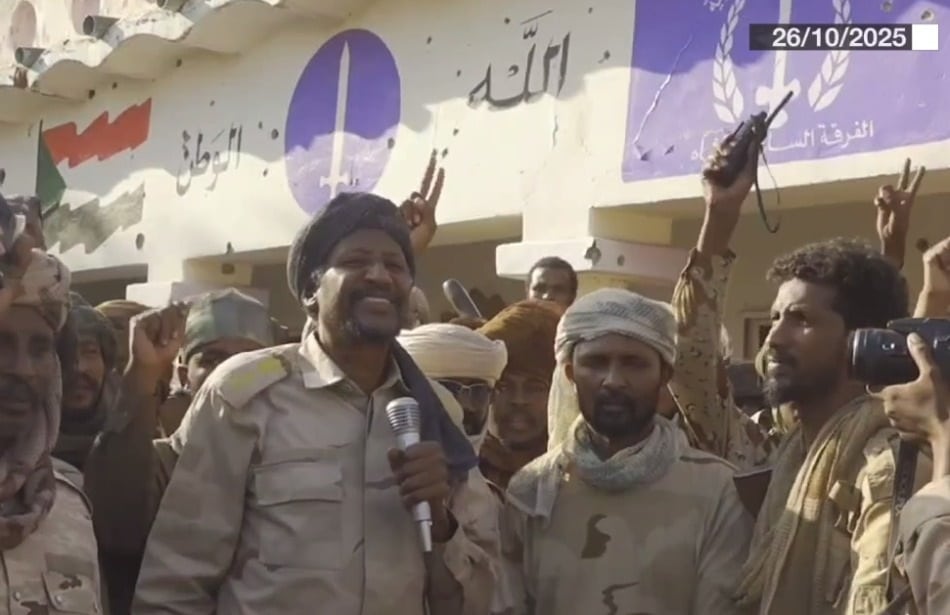
A United Nations Security Council Panel of Experts recently disclosed critical findings regarding the actions of the Rapid Support Forces (RSF) during their seizure of El Fasher in North Darfur, western Sudan. The panel's report, a leaked version of which was obtained by Sudan Tribune on September 5, 2026, indicates that senior RSF commanders issued explicit directives for the rape of women and actively encouraged the killing of civilians. These atrocities reportedly occurred as the RSF took control of the city on October 26, 2025, following an extensive 18-month ground siege.
During this prolonged siege, El Fasher suffered severe deprivation, with essential supplies and food blocked from reaching its inhabitants. The RSF's actions also led to the destruction of vital infrastructure, including water sources, health facilities, local markets, and retail stores. The expert panel's investigation uncovered information from an RSF leader who confirmed that high-ranking officials within the paramilitary group gave direct orders for sexual violence. These orders specifically targeted women and girls belonging to particular non-Arab communities during the conflict and subsequent takeover of El Fasher.
The report further detailed that senior RSF leadership actively promoted acts of rape and sexual violence through explicit instructions for both killing and rape. Among the commanders identified as responsible for the assault, siege, and eventual fall of El Fasher was Abdul Rahim Hamdan Dagalo, the second-in-command of the RSF. The experts verified his presence during the capture of the Sixth Division headquarters, noting his status as the highest-ranking commander present during the city's takeover. Additionally, Major General Al-Nour Ahmed Adam "Al-Qubba" was named as part of the RSF's senior command, maintaining direct communication with Abdul Rahim Dagalo and playing a leading role in issuing direct orders.
Legal and Accountability Context
The findings by the UN Security Council Panel of Experts carry significant weight in the context of international criminal law, particularly given the direct attribution of orders for atrocities to specific high-ranking individuals within the Rapid Support Forces. The report's explicit detailing of commands for rape and encouragement of civilian killings during the El Fasher campaign points to potential war crimes and crimes against humanity. The confirmation of عبد الرحيم حمدان دقلو's presence and his role as the highest-ranking commander during the takeover, alongside اللواء النور أحمد آدم القُبّة as a source of direct orders, strengthens the case for individual criminal responsibility.
This detailed account from the فريق خبراء مجلس الأمن السودان provides crucial evidence for future accountability mechanisms. The fact that the experts obtained information directly from an RSF leader confirming these direct orders underscores the credibility and gravity of the allegations. Such evidence is vital for prosecuting those responsible under international law, as it establishes a clear chain of command for the alleged جرائم حرب الدعم السريع الفاشر, including the horrific acts of اغتصاب الفاشر الدعم السريع. The تقرير خبراء أمميين السودان effectively lays the groundwork for potential legal proceedings against قادة الدعم السريع أوامر قتل اغتصاب الفاشر.
Implications for International Justice
The revelations contained within this report are poised to have profound implications for international justice and diplomatic efforts concerning Sudan. The direct implication of senior RSF leaders, including عبد الرحيم حمدان دقلو and اللواء النور أحمد آدم القُبّة, for issuing orders for murder and rape in El Fasher significantly elevates the prospect of international criminal law prosecutions. These findings could serve as a foundational basis for investigations by bodies like the International Criminal Court, which has jurisdiction over war crimes and crimes against humanity.
Furthermore, the detailed nature of the report, specifying the targeting of non-Arab communities and the destruction of civilian infrastructure, is likely to intensify calls for targeted sanctions against the implicated individuals and potentially the broader RSF command structure. For legal professionals advising on international justice, human rights, or sanctions compliance, these developments necessitate close monitoring. The explicit link between senior leadership and documented atrocities in El Fasher creates a precedent for holding commanders directly accountable, potentially impacting client exposure or informing future accountability efforts on a global scale.
Practical Implications
This report from UN experts, detailing direct orders for atrocities by named RSF leaders in El Fasher, significantly raises the prospect of international criminal law prosecutions and targeted sanctions. Lawyers advising on international justice, human rights, or sanctions compliance must monitor these developments for potential client exposure or accountability efforts.
Source
How does this affect you?
Get an AI analysis of this article grounded in your jurisdictions, practice areas, and any policy documents you've uploaded to Wansom.
Finish Reading the Full Story and the Expert Analysis.
Wansom is AI and can make mistakes.