
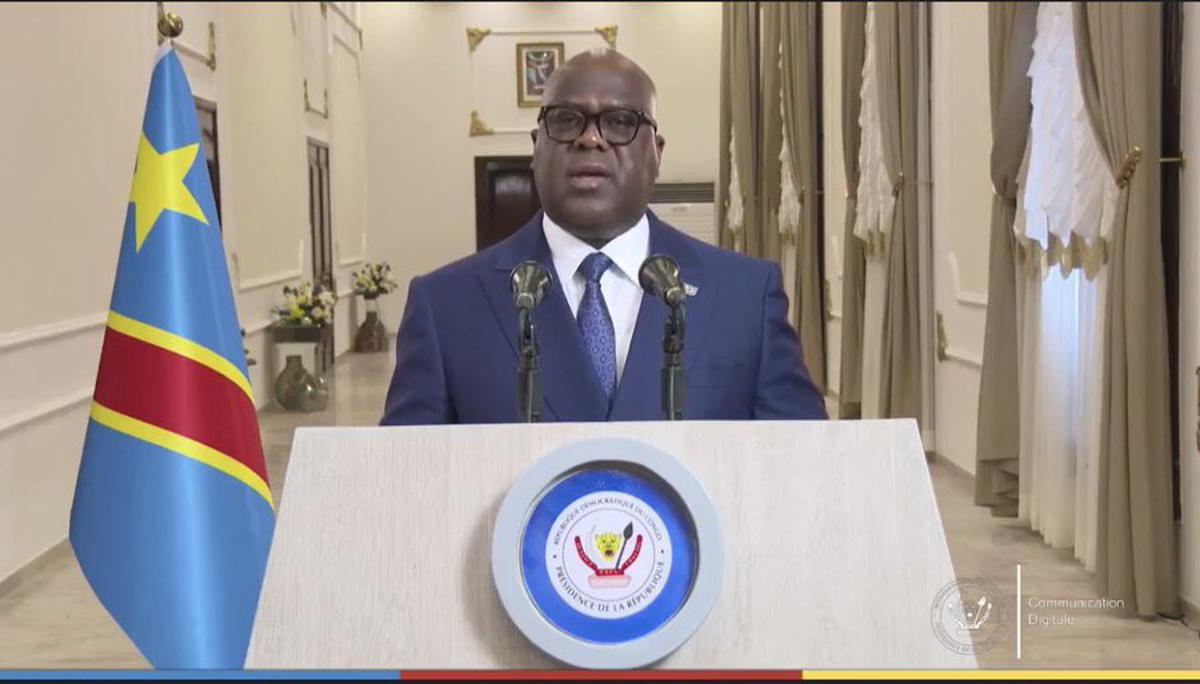
Tshisekedi Promulgue Loi Référendum RDC: Cadre Établi pour les Votes Nationaux
Summary
- President Félix-Antoine Tshisekedi promulgated a new law on November 9, defining the conditions for organizing referendums in the Democratic Republic of Congo.
- The presidential ordinance confirming this law was publicly announced on November 10 via the national broadcaster, RTNC.
- This legislation establishes a formal legal framework for conducting popular consultations on national issues in the RDC.
- The new law is crucial for legal professionals and political actors to understand for future constitutional and electoral processes.
Key Development in Congolese Law
Lawyers specializing in constitutional matters or electoral law must now thoroughly familiarize themselves with the specific provisions of this new legislation.
President Félix-Antoine Tshisekedi officially enacted legislation on November 9, establishing the framework for the conduct of national referendums within the Democratic Republic of Congo. This significant legal development, which outlines the specific "conditions référendum RDC," was formally announced to the public. The presidential ordinance, confirming the promulgation of this new "loi organisation référendum Congo," was broadcast on November 10, a Tuesday, across the national airwaves of the Radio-Télévision nationale congolaise (RTNC). This act by President Tshisekedi marks a crucial step in formalizing the process for direct popular consultation on matters of national importance.
Establishing a Referendum Framework
The newly promulgated law, enacted by President Tshisekedi, specifically details the comprehensive conditions under which a referendum can be organized in the Democratic Republic of Congo. Prior to this legislation, while the concept of a referendum existed within the constitutional framework, the precise procedural steps and requirements for its execution may have lacked explicit statutory definition. This "loi organisation réféérendum Congo" now fills that gap, providing a structured approach to a fundamental aspect of democratic governance.
This legislative act is particularly relevant for the nation's "droit constitutionnel RDC," as referendums often pertain to significant constitutional amendments or major policy decisions that require direct popular assent. By clearly delineating the "conditions référendum RDC," the law aims to ensure transparency, fairness, and legitimacy in any future popular votes. The formalization through an "ordonnance présidentielle référendum" underscores the executive's role in establishing the legal infrastructure for such critical democratic processes, thereby strengthening the rule of law surrounding direct democracy.
Implications for Legal and Political Actors
The enactment of this law by President Tshisekedi carries substantial implications for legal professionals and political entities operating within the Democratic Republic of Congo. Lawyers specializing in constitutional matters or electoral law must now thoroughly familiarize themselves with the specific provisions of this new legislation. Understanding the detailed "conditions référendum RDC" is paramount for advising clients, whether they are political parties, civil society organizations, or individual citizens, on the legality and feasibility of initiating or participating in a referendum.
Furthermore, this "loi organisation référendum Congo" will directly influence the strategic planning of political actors. Any proposals for constitutional reform or major policy shifts that might necessitate a popular vote will now be evaluated against the backdrop of these newly established rules. The clarity provided by this "ordonnance présidentielle référendum" is expected to streamline the process, while also potentially opening avenues for legal challenges if the prescribed conditions are perceived to be unmet during the organization of a future referendum. This new legal instrument is therefore a critical reference point for all stakeholders involved in the nation's democratic life.
Practical Implications
Lawyers advising on constitutional matters or electoral processes in the DRC must now familiarize themselves with the specific conditions and procedures outlined in this new law for the organization of any future referendums. This impacts strategic planning for political actors and legal challenges related to constitutional amendments or public consultations.
Source
Source: Original reporting via RTNC
How does this affect you?
Get an AI analysis of this article grounded in your jurisdictions, practice areas, and any policy documents you've uploaded to Wansom.
Finish Reading the Full Story and the Expert Analysis.
Get the latest legal & regulatory intelligence in DR Congo
Wansom is AI and can make mistakes.