
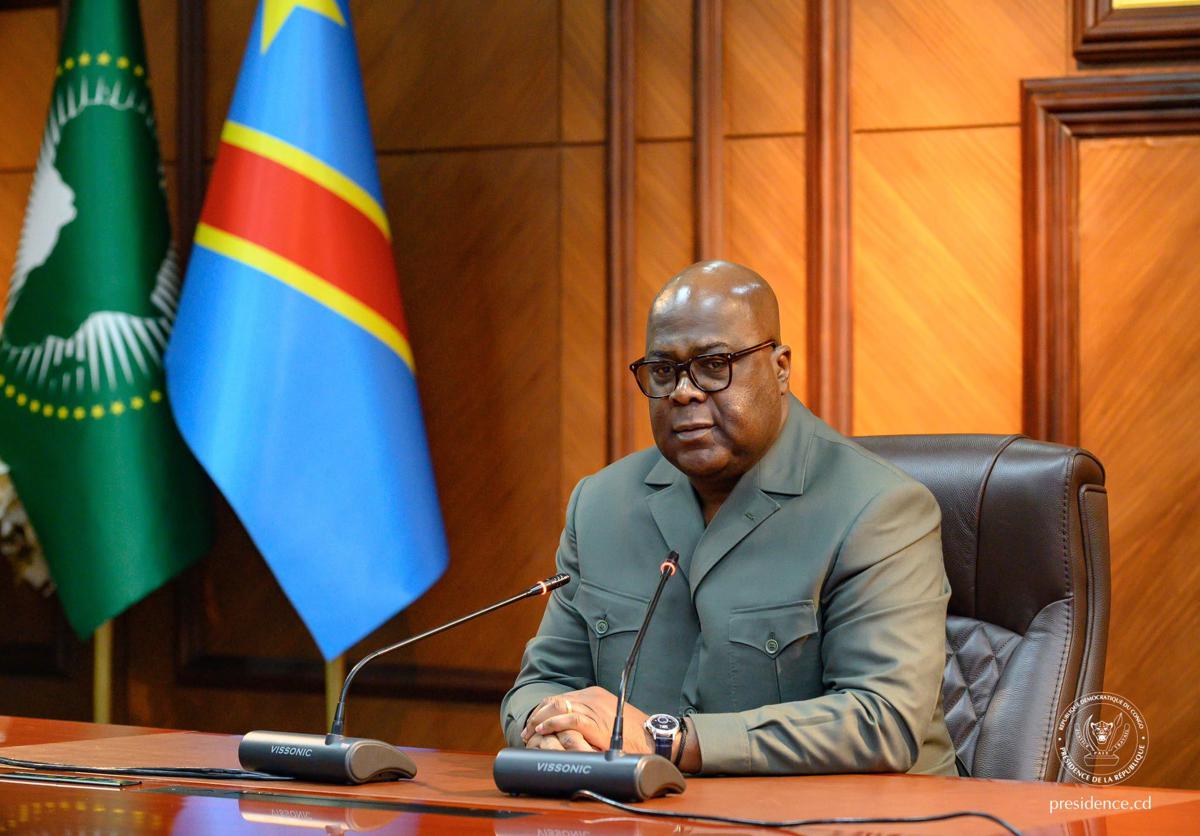
RDC Loi Référendum Nouvelle Constitution Promulguée par Tshisekedi
Summary
- President Félix Tshisekedi has signed a new law governing referendums in the Democratic Republic of Congo.
- This legislation replaces a 2005 law and aims to broaden the scope for constitutional changes via public consultation.
- Interpreted through Constitutional Court rulings, the law allows for the adoption of a new constitution or the amendment of any existing constitutional provision without explicit exceptions.
- The new framework appears to conflict with Article 220 of the current Constitution, which prohibits revisions to presidential mandates.
- Concurrently, former National Assembly President Aubin Minaku was placed under house arrest, shifting his detention conditions amid political tensions.
New Referendum Law Enacted in DRC
The new legislation notably lacks any explicit exceptions, directly conflicting with Article 220 of the current Constitution, which expressly forbids revisions concerning presidential term limits and duration.
President Félix Tshisekedi has formally promulgated a new law establishing the conditions for organizing referendums in the Democratic Republic of Congo. This legislative action follows an extensive period of parliamentary debate and adjustments, culminating in the signing of the bill by the head of state. Observers suggest that this development could initiate a significant new phase for the institutional future of the DRC, potentially paving the way for a completely new Constitution.
This recently enacted text supersedes a previous law from 2005, with its primary objectives being to expand the scope of referendums, fully implement Article 5 of the Constitution, and empower the state to adopt a new fundamental law when deemed absolutely necessary. The legislation defines a referendum as a direct expression of the people's sovereignty, serving as a mechanism for the Congolese populace to exercise national sovereignty by voting 'yes' or 'no' on a specific text or question.
Expanding Constitutional Revision Powers
A particularly sensitive aspect of this new RDC loi référendum nouvelle Constitution hinges on interpretations derived from two Constitutional Court rulings, issued on January 15, 2021, and July 28, 2026. According to the explanatory memorandum accompanying the law, Article 5, as interpreted by these judicial decisions, permits the state to adopt a new constitution or amend any existing constitutional provision through a referendum, provided there is an 'absolute necessity' and the approval of the people or their legitimate representatives.
The new legislation notably lacks any explicit exceptions, directly conflicting with Article 220 of the current Constitution, which expressly forbids revisions concerning presidential term limits and duration. This broad allowance for révision constitutionnelle RDC, facilitated by the loi fixant conditions organisation référendum RDC, raises significant questions regarding the stability of existing constitutional safeguards, particularly those related to the presidency. The implications for droit constitutionnel RDC are profound, as the new framework appears to grant extensive power to alter the nation's foundational legal document.
Broader Political Context and Implications
The promulgation of this law by Félix Tshisekedi référendum marks a pivotal moment, potentially reshaping the political landscape of the Democratic Republic of Congo by opening avenues for fundamental constitutional change. This development unfolds amidst other significant political events, including the recent placement of Aubin Minaku, former President of the National Assembly and a prominent figure of the now-dissolved PPRD party, under house arrest.
Minaku's house arrest, which occurred the day before media reports, follows his initial arrest in January and nearly ten months spent in intelligence service facilities. While he has been released from detention, he remains under house arrest, with the exact modalities of this measure not disclosed by his lawyer. This judicial evolution has prompted inquiries, particularly concerning the status of Emmanuel Ramazani Shadary, permanent secretary of the now-dissolved PPRD, who is reportedly still in custody. The move is seen as a turning point in the ongoing tensions between President Tshisekedi's administration and political figures associated with former President Joseph Kabila, who authorities identify as the leader of the Front pour la refondation de la nation (FRN).
Practical Implications
Lawyers and compliance officers in the DRC should closely monitor the application of this new referendum law, as it broadens the scope for constitutional revisions, potentially overriding existing prohibitions like Article 220, which could significantly alter the political and legal landscape.
Source
How does this affect you?
Get an AI analysis of this article grounded in your jurisdictions, practice areas, and any policy documents you've uploaded to Wansom.
Finish Reading the Full Story and the Expert Analysis.
Get the latest legal & regulatory intelligence in DR Congo
Wansom is AI and can make mistakes.