
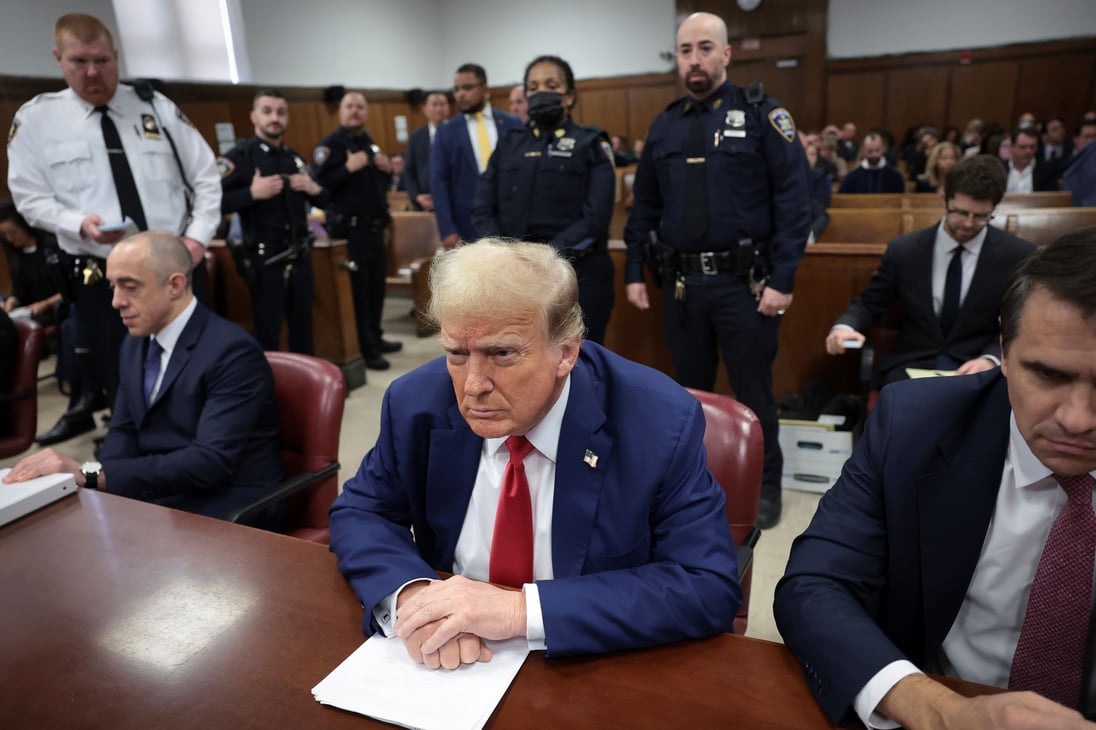
Donald Trump: New York Hush Money Conviction Appeal Advances
Summary
- Former President Donald Trump is appealing his 2024 New York hush money conviction on 34 counts of falsifying business records.
- Trump's appeal argues the prosecution was politically motivated and that Justice Juan Merchan should have recused himself due to an "appearance of bias."
- Merchan's refusal to recuse was based on a judicial ethics panel's finding that he could remain objective despite donations to Democrats and his daughter's firm working with them.
- Legal experts, including retired New York Judge George Grasso, consider the chances of overturning the conviction "highly unlikely" due to the high bar for identifying substantial legal error.
- Trump's legal team, Sullivan & Cromwell, is handling the appeal before the New York appellate court.
What Happened
The First Department appellate court would only reverse the conviction if it identified a "very substantial legal error" by the trial court, an outcome he described as highly unusual.
Former President Donald Trump is pursuing an appeal in a New York appellate court to overturn his historic hush money conviction. This legal action follows his 2024 conviction on 34 counts of falsifying business records, marking the first instance of a former U.S. commander-in-chief being found guilty of a crime. The Manhattan jury concluded that Trump orchestrated an extensive scheme to conceal negative publicity during his 2016 presidential campaign.
During the trial, Michael Cohen, Trump's former personal attorney and "fixer," provided testimony indicating that Trump instructed him to pay $130,000 to adult film star Stormy Daniels. This payment was intended to prevent Daniels from disclosing a sexual encounter she had with Trump a decade earlier, while he was married. Cohen further testified that Trump approved a monthly repayment schedule, illicitly disguising these reimbursements as standard legal fees. Evidence presented also revealed that Trump frequently signed these deceptive checks from the Oval Office during his initial presidential term. Despite the potential for incarceration, Trump received a sentence of unconditional discharge early last year, subsequent to his 2024 presidential election victory, a decision Justice Juan Merchan deemed the only appropriate outcome for an incoming president.
Arguments on Appeal
In his ongoing efforts to invalidate the conviction, Donald Trump's legal team contends that the prosecution was politically motivated, labeling it "the most politically charged prosecution in our nation’s history" in court filings. Trump asserts that he was improperly prosecuted for actions undertaken in his official capacity as president, an argument that has been consistently rejected by multiple judges who have classified the hush money payments as personal matters. This forms a key part of the Trump falsifying business records appeal.
A central point of the Donald Trump conviction appeal also revolves around the impartiality of the judiciary, specifically Justice Juan Merchan. Trump's lawyers argue that Justice Merchan should have recused himself from the case due to an "appearance of bias." This claim stems from Merchan's 2020 donations of $15 to Joe Biden and an additional $20 to two Democratic PACs. Furthermore, during the trial, Merchan's daughter operated an advertising firm that engaged with Democratic clients. Despite these concerns, Merchan declined to recuse himself on several occasions, relying on the assessment of a judicial ethics panel that affirmed his ability to maintain objectivity. Trump's brief asserts that, like any criminal defendant, he was entitled to a fair trial before a neutral judge and a properly instructed jury, and that his constitutional rights, along with federal and New York law, were violated. This is a significant aspect of the Justice Juan Merchan recusal appeal.
Legal Scrutiny and Outlook
The New York appellate court Trump now faces will consider these arguments, with his new legal team from Sullivan & Cromwell handling the appeal. However, the prospects for overturning the conviction are considered "highly unlikely" by retired New York Judge George Grasso. Grasso, who observed the entire six-week trial, explained that the First Department appellate court would only reverse the conviction if it identified a "very substantial legal error" by the trial court, an outcome he described as highly unusual.
Grasso maintained that Justice Merchan acted appropriately in not recusing himself and demonstrated "abundantly fair" conduct toward both sides throughout the proceedings. Based on his understanding of the case and prevailing legal principles, Grasso anticipates that the felony conviction of President Trump will be upheld. This Trump Stormy Daniels case appeal represents the latest in a series of attempts by Trump to challenge the legal process; he previously sought multiple times to transfer the case from state to federal court, even after sentencing, arguing for immunity for official acts. These efforts were consistently rebuffed by U.S. District Judge Alvin Hellerstein.
Practical Implications
Lawyers should note the specific appellate arguments raised by Trump's legal team regarding judicial recusal and political motivation, as these may inform strategies for challenging convictions or judicial impartiality in other New York state criminal proceedings. The article underscores the high legal threshold for overturning a conviction on such grounds, providing insight into the standards applied by appellate courts.
Source
How does this affect you?
Get an AI analysis of this article grounded in your jurisdictions, practice areas, and any policy documents you've uploaded to Wansom.
Finish Reading the Full Story and the Expert Analysis.
Wansom is AI and can make mistakes.