
Abdennabi RVRTSEA License Plate: First Amendment Halts CA DMV Recall
Summary
- A federal judge granted a temporary restraining order, allowing Iasmine Abdennabi to keep her "RVRTSEA" personalized license plate in California.
- The California DMV had ordered the plate's surrender after receiving complaints that the "river to the sea" slogan connoted violence or genocide.
- Abdennabi sued, arguing the DMV infringed on her First Amendment rights to political expression.
- U.S. District Judge Richard Seeborg questioned the constitutionality of DMV regulations that prohibit speech "referring to violence," suggesting it might be viewpoint discrimination.
- The judge distinguished "speech referring to violence" from unprotected "fighting words" or "incitement," indicating the former is protected First Amendment expression.
What Happened
If the regulations are indeed found to treat speech 'referring to violence' in the same manner as unprotected categories, Judge Seeborg indicated they would be deemed "unconstitutional because they discriminate among private speech based on viewpoint."
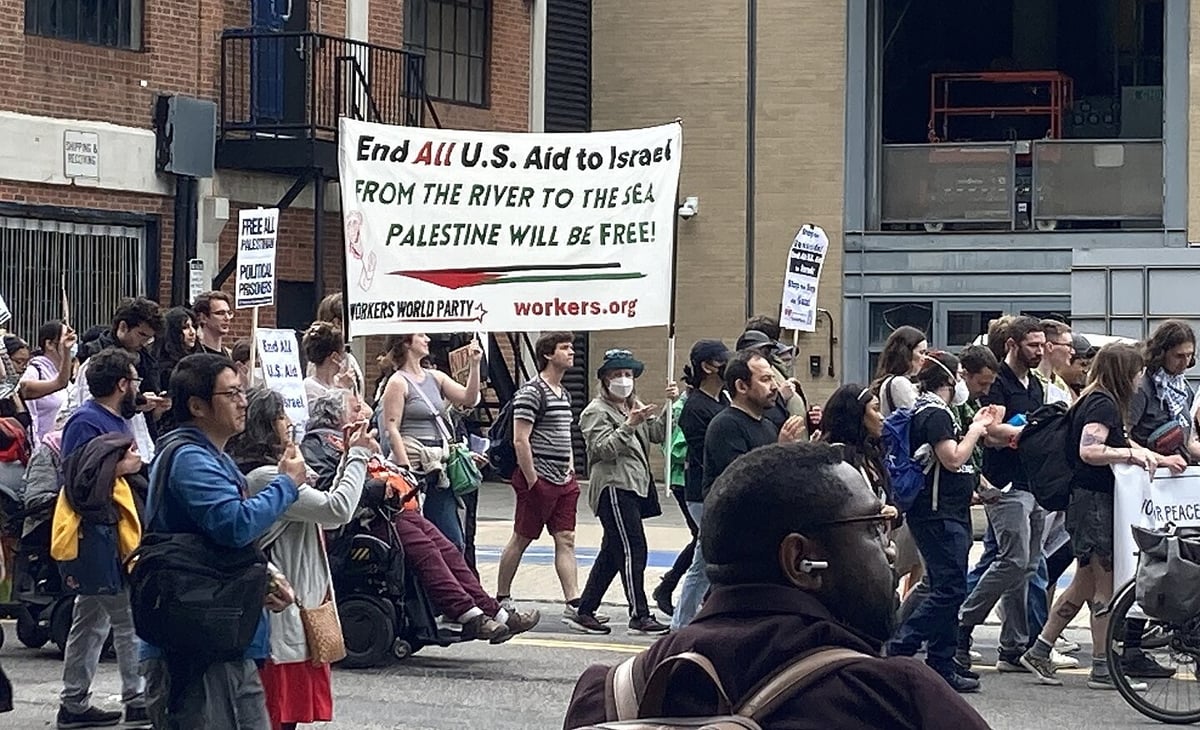
Iasmine Abdennabi, a resident of the Bay Area, recently secured a temporary federal court order allowing her to retain her personalized California license plate, which displays the abbreviation "RVRTSEA." This phrase is shorthand for "from the river to the sea, Palestine will be free," a slogan Abdennabi has used on her plate since 2024. While Abdennabi asserts her intention is to advocate for equal civil and political rights for all individuals residing between the Jordan River and the Mediterranean Sea, explicitly stating it is not a call for genocide, a threat against Jewish people, or an incitement to violence, the slogan carries varied interpretations.
The California Department of Motor Vehicles (DMV) received three complaints regarding Abdennabi's plate. One complainant specifically alleged that the plate "advocates for the extermination of the state of Israel and all Jewish people," further claiming it "supports terrorism and encourages violence." Following its established policy, the DMV subsequently directed Abdennabi to surrender her plates in 2025, fifteen months after their initial issuance. The agency justified this decision during an administrative hearing, explaining the removal was "based on the connotation of violence or genocide."
After her administrative appeal was denied, Abdennabi initiated legal action, contending that the DMV's directive infringed upon her First Amendment rights to express her political convictions. Her lawsuit led to a federal judge granting a temporary restraining order, which permits her to keep her "RVRTSEA" plate pending a forthcoming preliminary injunction hearing. This development highlights a significant challenge to the state's authority over personalized license plate content.
Legal Context and Judge's Scrutiny
U.S. District Judge Richard Seeborg, in his order, expressed considerable skepticism regarding the constitutional validity of the regulations governing California DMV vanity plates. These regulations permit the rejection of plates for various reasons, including the presence of swear words, dirty jokes, sexual connotations, hate speech, offensive messages, and references to violence, drugs, or illegal activities, such as gang references or marijuana. For instance, plates containing the number "420" are explicitly disallowed. California boasts over a million personalized license plates, a figure surpassing any other state.
Judge Seeborg specifically questioned the DMV's broad prohibition on "speech referring to violence." He noted that while "fighting words" and "incitement" are well-established categories of low-value speech that do not receive First Amendment protection, "speech merely 'referring to' violence" appears to fall into a different category. The judge suggested this type of expression is more akin to "language of offense," which the Supreme Court has explicitly recognized as protected First Amendment expressive conduct.
The judge's analysis suggests a critical distinction: the government's ability to restrict speech that directly incites violence or constitutes "fighting words" is constitutionally permissible, but its power to ban speech merely "referring to violence" without meeting these higher thresholds is far more limited. If the regulations are indeed found to treat speech 'referring to violence' in the same manner as unprotected categories, Judge Seeborg indicated they would be deemed "unconstitutional because they discriminate among private speech based on viewpoint."
Why It Matters
This ruling, though preliminary, signals a significant legal hurdle for state agencies like the California DMV in regulating personalized license plate content, particularly when it touches upon political expression. The judge's skepticism about the constitutionality of prohibiting speech that merely "refers to violence" could set an important precedent for future challenges against government restrictions on expressive conduct. It reinforces the principle that the government cannot engage in viewpoint discrimination by selectively suppressing messages based on their content or perceived offensiveness, unless they fall into narrowly defined categories of unprotected speech.
For individuals seeking to express political beliefs through personalized license plates, this decision offers a temporary victory and a strong indication that their First Amendment rights may prevail against broad regulatory prohibitions. Michael Millen, Abdennabi's attorney, lauded the ruling, emphasizing its importance for free speech. The ongoing legal battle surrounding the Abdennabi RVRTSEA license plate highlights the complex interplay between public sentiment, state regulations, and fundamental constitutional protections in the realm of personalized expression.
Practical Implications
This ruling indicates that government regulations restricting speech on personalized license plates, particularly those prohibiting speech 'referring to violence' without meeting the higher bar of 'fighting words' or 'incitement,' may be unconstitutional viewpoint discrimination. Lawyers advising clients on free speech challenges against state agencies should consider this precedent when evaluating the scope of permissible government restrictions on expressive conduct.
Source
How does this affect you?
Get an AI analysis of this article grounded in your jurisdictions, practice areas, and any policy documents you've uploaded to Wansom.
Finish Reading the Full Story and the Expert Analysis.
Wansom is AI and can make mistakes.