
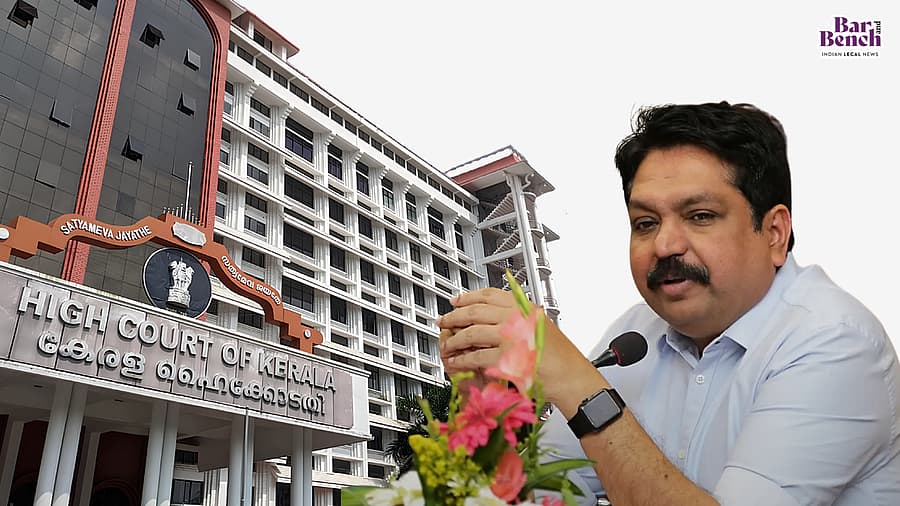
Kerala High Court: Tomin Thachankery DA Case Appeal, Objections Limited
Summary
- Former DGP Tomin Thachankary has appealed his conviction and four-year jail sentence in a disproportionate assets case before the Kerala High Court.
- The Kerala government sought to file written objections against Thachankary's plea to suspend his sentence during the appeal.
- The Kerala High Court observed that the State does not have an absolute right to file such objections when the imprisonment sentence is less than 10 years.
- The Court noted that all Prevention of Corruption Act cases are considered crimes against society, countering the State's argument for special treatment.
- Justice A Badharudeen has directed the State to submit its formal counter by September 24.
What Happened
The Kerala High Court's explicit statement that the State lacks an absolute right to file such objections when the sentence is under 10 years provides crucial guidance.
Former Director General of Police (DGP) Tomin Thachankary has lodged an appeal with the Kerala High Court, challenging his conviction and a four-year prison sentence stemming from a disproportionate assets (DA) case. This legal action, formally known as *Tomin J Thachakary v. State of Kerala*, sees the Kerala government strongly opposing the former officer's petition. A key point of contention emerged when the State expressed its intent to submit written objections to Mr. Thachankary's request for a suspension of his jail sentence, pending the final decision on his appeal. This move by the prosecution was met with opposition from Mr. Thachankary's legal team.
Mr. Thachankary's appeal seeks to overturn the verdict that led to his four-year imprisonment, a sentence handed down in connection with the disproportionate assets case. The State's immediate response to his plea for sentence suspension highlights the contentious nature of the proceedings, setting the stage for a significant legal battle in the Kerala High Court.
Legal Scrutiny and Procedural Nuance
During the proceedings, the Kerala High Court, presided over by Justice A Badharudeen, acknowledged a significant procedural point regarding the State's right to file such objections. Mr. Thachankary's counsel highlighted the unusual nature of the State's request, noting that it was "the first time the prosecution is asking to file written objections in a case with less than 10 years' sentence." The Court concurred with this observation, clarifying that the State does not possess an absolute right to file written objections when the imposed imprisonment sentence is less than a decade. Justice Badharudeen specifically stated, "This sentence is under 10 years. There is no absolute right to file objection. You may have a right but it is not absolute," addressing the State's legal representative.
This observation from the Kerala High Court on written objections suspension is particularly relevant for cases involving the Prevention of Corruption Act sentence suspension, where the length of the sentence can dictate procedural entitlements. The Court's clarification underscores a nuanced interpretation of the State's powers in appellate matters, especially when dealing with sentences that fall below a certain threshold.
State's Arguments and Court's Response
Despite the Court's clarification on the State's non-absolute right, the Kerala government maintained its firm stance, asserting that the *Tomin Thachankery DA case appeal Kerala* should not be treated as a typical matter. The State's counsel emphasized the former DGP's high-ranking position, the gravity of the allegations, and the argument that the offense constituted a crime against society, necessitating robust opposition to any plea for sentence suspension. This argument aimed to justify the State's insistence on filing written objections, irrespective of the procedural observations.
However, the Court promptly countered this argument, pointing out that "All Prevention of Corruption Act cases are against society," thereby contextualizing the State's claim within the broader framework of anti-corruption legislation. This remark suggested that the State's justification for special treatment, based on the nature of the crime, was inherent to all such cases. Ultimately, Justice Badharudeen directed the State to submit its formal counter-affidavit by September 24, setting a clear timeline for the next phase of the legal battle concerning the DGP disproportionate assets conviction appeal.
Why It Matters
The Kerala High Court's recent observations in the *Tomin Thachankery DA case appeal Kerala* carry significant implications for appellate practice, particularly concerning the State's ability to file written objections against sentence suspension. The Court's explicit statement that the State lacks an absolute right to file such objections when the sentence is under 10 years provides crucial guidance. This procedural nuance could prove instrumental for legal practitioners defending clients in corruption cases, especially those facing sentences below the ten-year threshold.
It suggests that while the State may have a right to present its case, this right is not unfettered, potentially influencing arguments for Prevention of Corruption Act sentence suspension. The ruling underscores a judicial emphasis on the specific parameters governing the State's intervention in such appeals, offering a clearer framework for future legal challenges involving similar circumstances and clarifying the scope of the Kerala High Court written objections suspension process.
Practical Implications
This development clarifies a procedural nuance in appellate practice regarding the State's right to file written objections against the suspension of a sentence. Lawyers defending clients in corruption cases with sentences under 10 years can note the Kerala High Court's observation that the State does not have an absolute right to file such objections, potentially influencing arguments for sentence suspension.
Source
How does this affect you?
Get an AI analysis of this article grounded in your jurisdictions, practice areas, and any policy documents you've uploaded to Wansom.
Finish Reading the Full Story and the Expert Analysis.
Get the latest legal & regulatory intelligence in India
Wansom is AI and can make mistakes.