
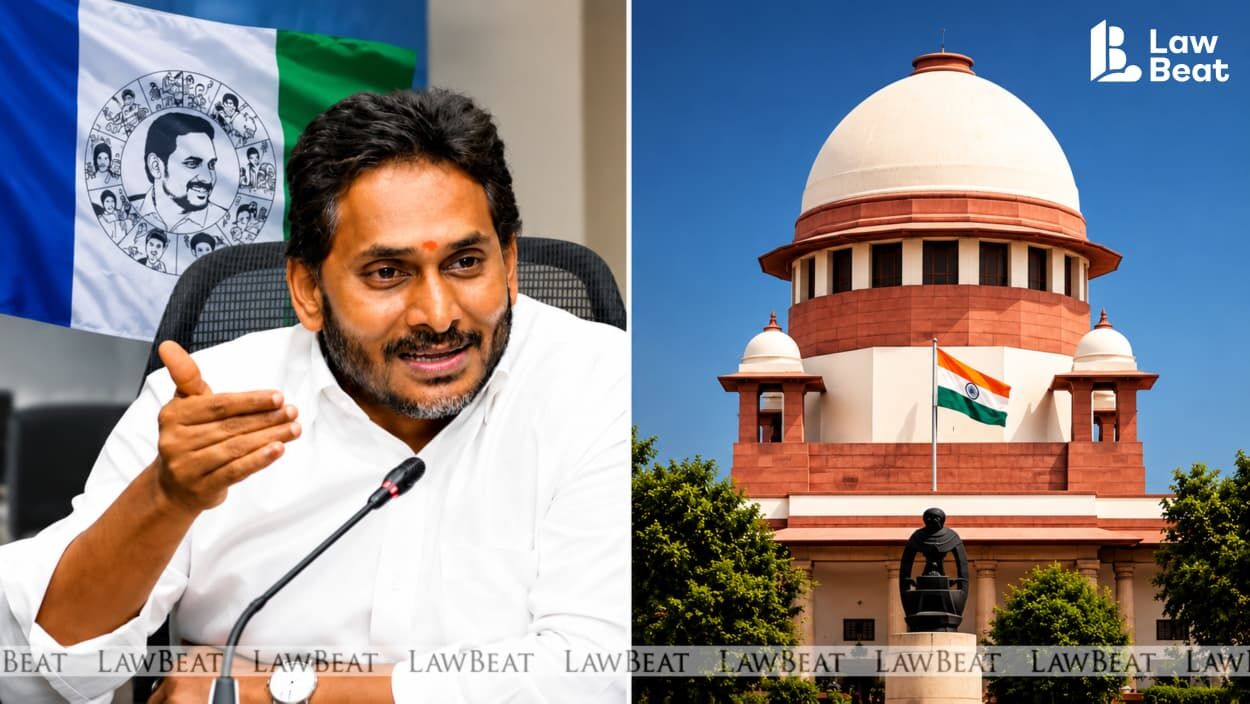
Supreme Court: Dismisses YSRCP Andhra Pradesh Election Nominations Plea
Summary
- The Supreme Court dismissed a plea by the YSRCP alleging widespread violence prevented its candidates from filing nominations in Andhra Pradesh local body elections.
- The Court, led by CJI Surya Kant, refused to intervene, citing "disputed questions of fact" that cannot be resolved at this stage.
- The Supreme Court advised that claims of wrongful exclusion should be pursued through election petitions after the election.
- The YSRCP's plea followed rejections by both a single judge and a division bench of the Andhra Pradesh High Court.
- An earlier special bench of the Supreme Court had directed the State Election Commission to consider evidence and potentially extend nomination deadlines in affected areas.
What Happened
The Supreme Court emphasized that individuals who believe they were wrongfully excluded from the nomination process have the option to pursue election petitions after the election, provided they can legally substantiate their claims.
The Supreme Court of India recently dismissed a plea from the Yuvajana Sramika Rythu Congress Party (YSRCP) concerning the conduct of urban local body elections in Andhra Pradesh. The party had alleged widespread violence and intimidation, claiming that workers of the ruling party prevented its candidates from submitting their nominations. Specifically, YSRCP cited incidents on October 16, 2026, the first day of the three-day nomination period, including violence in Punganur and Rayachoti, the tearing of nomination papers in Kadapa, and physical assaults on candidates in Tirupati, which allegedly stopped them from reaching nomination centers.
This Supreme Court intervention followed a series of legal challenges initiated by the YSRCP. Initially, on October 15, 2026, a single judge of the Andhra Pradesh High Court rejected the party's request for immediate alternative and secure locations for nomination submissions, deeming the plea based on "mere apprehension." The High Court instead advised individual candidates to approach election officers within the established schedule. Following the alleged incidents of violence and the High Court's initial refusal, the YSRCP made representations to the State Election Commission on October 16 and again in person on October 18, 2026, the final day for nominations, but these efforts did not yield the desired outcome.
Subsequently, the YSRCP filed an appeal with the Andhra Pradesh High Court, providing sworn affidavits from candidates who claimed they were prevented from filing nominations. This appeal also sought a one-day extension for receiving nominations. However, a Division Bench of the High Court dismissed this plea, ruling that the requested relief fell outside the scope of a writ petition and that any extension after the nomination period had closed would constitute interference with the ongoing election process. The YSRCP's appeal was scheduled for October 26, 2026, a date by which the withdrawal period would have concluded, potentially leading to unopposed returns for candidates in wards where YSRCP members were allegedly excluded. It was against this backdrop that the YSRCP brought its case before the Supreme Court.
Legal Context
The Supreme Court, led by Chief Justice of India Surya Kant, declined to intervene in the YSRCP's allegations regarding the prevention of candidates from filing nominations in the Andhra Pradesh local body elections. The bench determined that the claims involved "disputed questions of fact" which could not be properly adjudicated at that stage of the proceedings. The Court also noted that the State Election Commission had already addressed various representations and, in certain instances, extended nomination deadlines. The Supreme Court emphasized that individuals who believe they were wrongfully excluded from the nomination process have the option to pursue election petitions after the election, provided they can legally substantiate their claims.
This ruling aligns with a principle of judicial restraint in electoral matters, particularly when factual disputes are central to the petition. The YSRCP, in its Supreme Court plea filed through AOR Mahfooz A Nazki, had argued that the High Court should have recognized that the principle of non-interference with elections is a rule of judicial restraint, not an absolute prohibition. They contended that only challenging an election "otherwise than by an election petition" is barred, not issuing directions that facilitate and further the election process. However, the Supreme Court's decision underscored the procedural pathway for addressing such grievances.
It is noteworthy that a special bench of Justices Joymalya Bagchi and V Mohana had, in the preceding week, issued a directive to the State Election Commission. This directive instructed the SEC to consider representations from the YSRCP and other candidates, including all relevant evidentiary and electronic materials. The special bench mandated the SEC to decide by the following day whether to extend the final date for filing nominations in urban local bodies where it concluded that candidates were unable to submit papers due to law and order situations. Furthermore, the SEC was directed to postpone the publication of the final list of nominations until October 25, 2026, indicating an earlier judicial acknowledgment of potential issues.
Why It Matters
The Supreme Court's decision to dispose of the YSRCP's plea reinforces a critical aspect of Indian election law: the judiciary's reluctance to interfere with the electoral process at a pre-election stage, especially when allegations involve complex factual disputes. By directing aggrieved parties to election petitions, the Court upholds the established legal framework for challenging election outcomes, which is designed to handle detailed evidence and factual controversies in a structured manner post-election. This approach prevents the disruption of election schedules based on claims that require extensive factual inquiry, which writ jurisdiction is generally not suited for.
This ruling holds significant implications for political parties and candidates participating in elections across India. It clarifies that claims of nomination exclusion, particularly those stemming from alleged violence or obstruction, are unlikely to find immediate relief through writ petitions in higher courts if they necessitate the resolution of disputed facts. The emphasis on election petitions as the appropriate remedy underscores the importance of meticulously documenting evidence of any alleged electoral malpractices, as such evidence will be crucial for establishing claims in a post-election challenge.
The Supreme Court's stance, particularly the CJI Surya Kant election ruling, highlights the judiciary's commitment to maintaining the integrity and timely conduct of elections while ensuring that avenues for redress remain open through statutorily defined processes. While the YSRCP argued for judicial intervention to "facilitate and further" the election, the Court prioritized the principle that interference should not occur in a manner that disrupts the election schedule or adjudicates facts best left to an election tribunal. This serves as a strong precedent for how similar pre-election challenges regarding nomination exclusions will likely be handled in future Andhra Pradesh local body elections and other electoral contests.
Practical Implications
Lawyers advising political parties or candidates in India should note the Supreme Court's reinforcement that pre-election challenges to nomination exclusions, particularly those based on disputed facts like violence, are unlikely to succeed via writ petitions; the proper recourse is generally an election petition post-election, requiring robust evidence.
Source
How does this affect you?
Get an AI analysis of this article grounded in your jurisdictions, practice areas, and any policy documents you've uploaded to Wansom.
Finish Reading the Full Story and the Expert Analysis.
Wansom is AI and can make mistakes.