
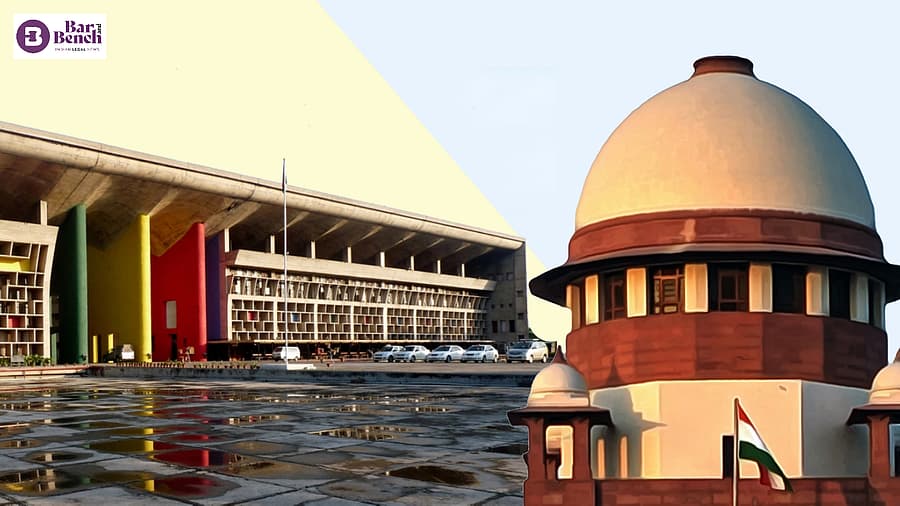
Supreme Court Stays Rohtak Judges Bail in DHL Fraud Case
Summary
- The Supreme Court stayed a Punjab and Haryana High Court order that barred Rohtak judges from hearing bail pleas in a fraud case.
- The High Court's September 30 order had restricted local judges from presiding over bail petitions concerning DHL Infratech Pvt Limited and Gupta Property Developers.
- The underlying case involves allegations of cheating against the companies for failing to deliver units or execute sale deeds for the 'DHL New Town' project in Rohtak.
- Police investigations indicate that nearly ₹11.69 crore from at least 30 homebuyers was involved in the alleged scam.
- The High Court had expressed displeasure over the local judiciary and police, noting that co-accused, including DHL Infratech directors, had received bail from the trial court.
Supreme Court Intervenes in Rohtak Bail Matter
With the stay in effect, judges in Rohtak are once again permitted to hear and decide on bail applications related to this specific criminal matter, removing the previous blanket restriction.
The Supreme Court of India recently issued a stay on a directive from the Punjab and Haryana High Court, which had previously prohibited judges in Rohtak from presiding over bail petitions connected to a criminal case involving DHL Infratech Pvt Limited and Gupta Property Developers. This significant intervention by the apex court, delivered by a bench comprising Justices JB Pardiwala and K Vinod Chandran, effectively suspends the High Court's September 30 order. The Supreme Court's directive included issuing a formal notice to the parties involved, signaling a deeper review of the High Court's earlier decision.
This development stems from the ongoing legal proceedings in the case titled Sidhant Ohlan v. State of Haryana, which centers on allegations of a widespread fraud. The High Court's original order had imposed a blanket restriction on the local judiciary, preventing them from hearing bail applications in this specific, high-profile matter. The Supreme Court's stay means that the Rohtak judges are no longer under this specific prohibition, at least for the time being, pending further consideration by the higher court.
Unpacking the DHL Infratech Fraud Allegations
The underlying criminal case involves serious accusations of cheating leveled against DHL Infratech Pvt Limited and Gupta Property Developers. These companies are alleged to have enticed numerous homebuyers to invest in a residential project named 'DHL New Town', situated in Sector-27A, Rohtak. Complainants assert that despite making full payment of the agreed consideration amounts, they were neither granted possession of their purchased units nor were the necessary sale deeds executed, leaving them in a precarious financial and legal situation.
Preliminary investigations conducted by the police have shed light on the substantial financial scope of this alleged scam. It has been revealed that approximately ₹11.69 crore belonging to at least 30 individual buyers was implicated in the fraudulent scheme. The High Court's initial involvement in this matter arose during its consideration of an anticipatory bail plea filed by Subhash Gupta, who serves as a director of Gupta Property Developers Limited, highlighting the direct connection between the corporate entities and the alleged misconduct.
High Court's Displeasure and Supreme Court's Oversight
The Punjab and Haryana High Court, while deliberating on Subhash Gupta's anticipatory bail application, had expressed considerable dissatisfaction with the conduct of both the local judiciary and law enforcement agencies. The High Court specifically noted that several co-accused individuals, including directors associated with DHL Infratech, had previously been granted bail by the trial court in connection with the same fraud case. This observation appears to have been a key factor in the High Court's decision to issue its restrictive order on September 30, aiming to address what it perceived as irregularities or leniency in the local judicial process.
The Supreme Court's subsequent decision to stay this order underscores the complex jurisdictional dynamics between different levels of the Indian judiciary. By issuing a notice and temporarily halting the High Court's directive, the Supreme Court has signaled its intent to review the propriety of such a broad prohibition on local judges. This action ensures that the higher court maintains oversight over decisions that could impact the fundamental rights of accused individuals and the operational autonomy of lower courts in handling bail matters.
Implications for Bail Proceedings in Rohtak
The Supreme Court's temporary injunction against the Punjab and Haryana High Court's order carries significant implications for the ongoing legal proceedings in the DHL Infratech fraud case. With the stay in effect, judges in Rohtak are once again permitted to hear and decide on bail applications related to this specific criminal matter, removing the previous blanket restriction. This development could alter defense strategies for those accused, as the local judiciary's role in assessing bail pleas is reinstated.
This ruling also highlights the Supreme Court's role in balancing judicial oversight with the independence of lower courts. The decision to stay the High Court's order, which had effectively removed a category of cases from the Rohtak judges' purview, reinforces the principle that such broad restrictions require careful scrutiny. It ensures that the process for adjudicating bail, a critical aspect of criminal justice, remains accessible and subject to established legal procedures, even in cases where higher courts express concerns about local judicial conduct.
Practical Implications
The Supreme Court's stay means that judges in Rohtak are no longer barred from hearing bail pleas related to the DHL Infratech fraud case. This decision impacts defense strategies for accused parties in this specific case and sets a precedent regarding the jurisdictional oversight of higher courts over local judiciary in bail matters, which lawyers should consider when advising clients in complex fraud proceedings.
Source
How does this affect you?
Get an AI analysis of this article grounded in your jurisdictions, practice areas, and any policy documents you've uploaded to Wansom.
Finish Reading the Full Story and the Expert Analysis.
Wansom is AI and can make mistakes.