
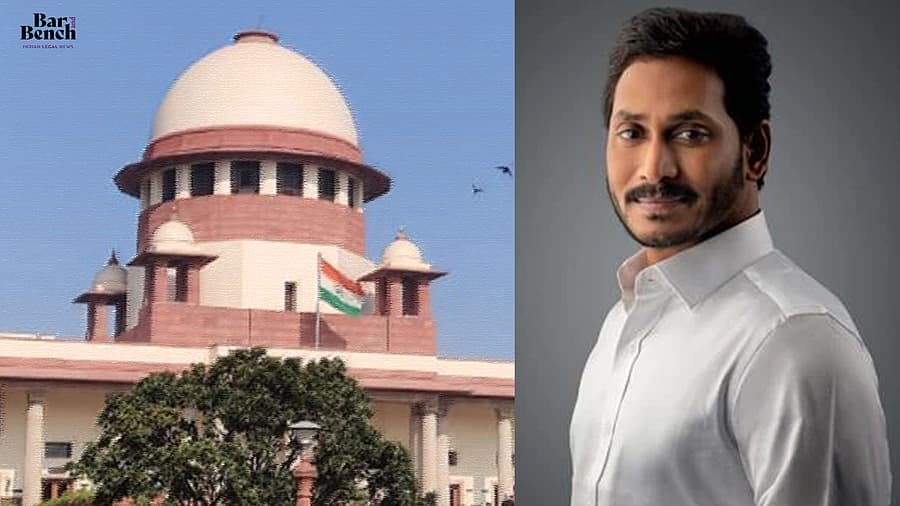
Supreme Court: Won't Order YSRCP Election Allegations Inquiry
Summary
- The Supreme Court stated it would not order a 'fishing or roving inquiry' into allegations concerning YSRCP candidates in Andhra Pradesh municipal polls.
- The YSR Congress Party alleged candidates were prevented from filing nominations due to violence and intimidation.
- A bench including CJI Surya Kant observed that these allegations involve disputed questions of fact not suitable for the current proceedings.
- The Court plans to issue new guidelines to safeguard the electoral process, including the preservation of CCTV footage.
- This decision follows earlier directives for the State Election Commission to consider complaints and extend nomination deadlines where necessary.
Supreme Court Declines Broad Inquiry into YSRCP Election Allegations
Chief Justice Surya Kant explicitly articulated the Court's position, asserting that it would not initiate a 'fishing or roving inquiry' into the matter.
The Supreme Court recently indicated its unwillingness to order a sweeping investigation into claims that candidates from the YSR Congress Party (YSRCP) were unlawfully prevented from submitting their nominations for local body elections in Andhra Pradesh. During oral remarks, a bench comprising Chief Justice of India Surya Kant and Justices Joymalya Bagchi and V Mohana stated that such allegations involve factual disputes that cannot be resolved through the ongoing judicial proceedings.
Chief Justice Surya Kant explicitly articulated the Court's position, asserting that it would not initiate a 'fishing or roving inquiry' into the matter. Instead, the Court expressed its intention to establish a comprehensive set of guidelines designed to enhance the integrity of the electoral process. These forthcoming Supreme Court electoral guidelines are expected to address crucial aspects, including the preservation of evidence such as CCTV footage, to safeguard future elections.
Background of the Electoral Dispute
The Supreme Court's current deliberations stem from its earlier directives, which mandated the State Election Commission (SEC) to review complaints made by candidates who alleged they were obstructed from filing their nominations. The YSR Congress Party had initially approached the Supreme Court after the Andhra Pradesh High Court declined to provide relief concerning nomination arrangements and requests for extended deadlines for the Andhra Pradesh municipal polls.
In its appeal, the YSRCP detailed instances of alleged violence and intimidation, specifically citing incidents in various locations including Kadapa, Tirupati, Punganur, and Rayachoti. Prior to the current remarks, a vacation bench, which included Justices Bagchi and Mohana, had issued an order on October 21. This order instructed the SEC to consider all representations, including electronic evidence, and to extend nomination deadlines in any cases where candidates were found to have been genuinely prevented from filing their papers.
Implications for Future Electoral Processes
The Supreme Court's firm stance against conducting a 'fishing and roving inquiry' into the YSRCP election allegations underscores a judicial preference for clear, actionable evidence over broad investigations into disputed facts. This approach suggests that while the Court acknowledges the seriousness of electoral malpractices, it expects established mechanisms, such as the State Election Commission complaints process, to be the primary avenue for resolving such issues.
The decision to focus on developing new guidelines rather than retrospectively investigating past claims holds significant implications for electoral governance. By emphasizing the creation of robust frameworks for evidence preservation, particularly CCTV footage, the Court aims to prevent future disputes by ensuring greater transparency and accountability in the nomination and election processes. This shift indicates a forward-looking strategy to fortify the electoral system against similar allegations in the future, rather than engaging in extensive fact-finding for historical grievances.
Practical Implications
Lawyers advising political parties or candidates in India should note the Supreme Court's reluctance to conduct broad, fact-finding inquiries into past electoral allegations. Instead, the focus will likely shift to the development of new, specific guidelines for electoral processes, including evidence preservation like CCTV footage. This implies a need for proactive evidence gathering and adherence to established complaint mechanisms rather than relying on judicial 'roving inquiries' for factually disputed claims.
Source
How does this affect you?
Get an AI analysis of this article grounded in your jurisdictions, practice areas, and any policy documents you've uploaded to Wansom.
Finish Reading the Full Story and the Expert Analysis.
Wansom is AI and can make mistakes.