
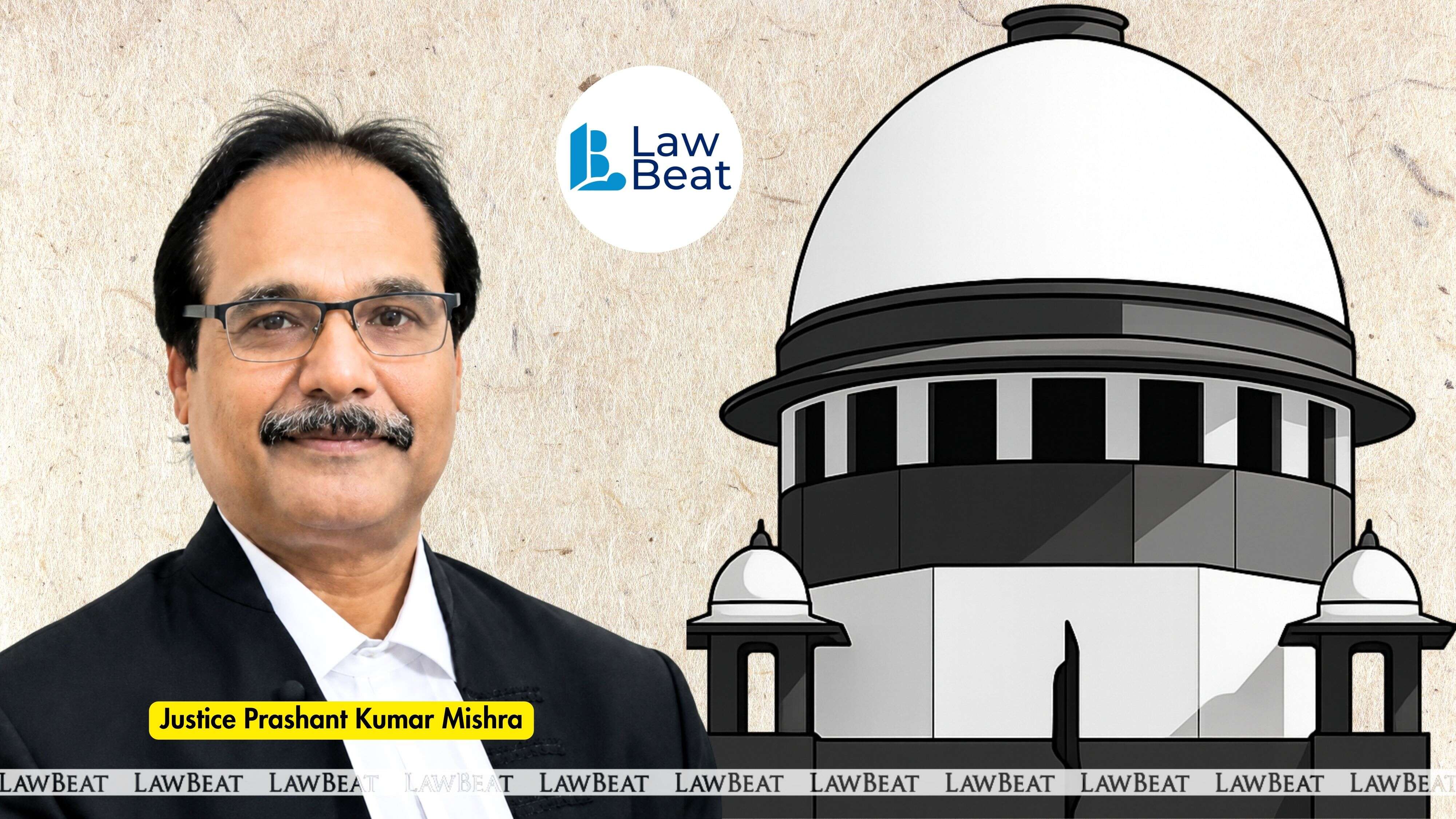
Supreme Court: Upholds Padmesh Mishra AAG Rajasthan Appointment
Summary
- The Supreme Court dismissed a plea challenging the appointment of Padmesh Mishra as Rajasthan's Additional Advocate General.
- Padmesh Mishra, son of sitting Supreme Court Justice Prashant Kumar Mishra, was appointed AAG after an amendment to the Rajasthan Litigation Policy 2018.
- The policy amendment, Clause 14.8, allowed appointments based on expertise, overriding other experience requirements, and was enacted on the same day as Mishra's AAG appointment.
- The Rajasthan High Court had previously ruled that the State Litigation Policy 2018 was a guideline, not legally enforceable, and its gazette publication did not grant it statutory force.
- The petitioner, Sunil Samdaria, argued the amendment was for Mishra's benefit and that the AAG post is a public office requiring adherence to strict criteria.
Supreme Court Upholds Appointment
This judicial stance clarifies that state litigation policies, even if gazetted, may be considered guidelines rather than legally enforceable rules by higher courts, suggesting that policy breaches alone may not be sufficient grounds for judicial intervention without statutory or constitutional violations.
India's Supreme Court has dismissed a challenge to the appointment of Padmesh Mishra as an Additional Advocate General (AAG) for Rajasthan, specifically for cases before the apex court. The decision, handed down by a bench comprising Justices Aravind Kumar and Vipul M Pancholi, upheld a previous ruling by the Rajasthan High Court that had affirmed Mishra's position. This outcome means that the appointment of Padmesh Mishra, who is the son of sitting Supreme Court Justice Prashant Kumar Mishra, stands.
Background to the Contested Appointment
The controversy surrounding Padmesh Mishra's appointment as Additional Advocate General for Rajasthan began shortly after his enrollment as an advocate in August 2019. He was initially appointed as a panel lawyer at the Supreme Court on August 20, 2024, a role that typically required a minimum of five years of legal practice. Just three days later, on August 23, 2024, a significant amendment was made to the Rajasthan Litigation Policy 2018.
This amendment introduced Clause 14.8, which granted the appropriate authority the power to appoint any counsel to any post, including that of AAG, based on their expertise in a relevant field, thereby overriding other conditions stipulated within the policy. On the very same day the amendment was gazetted, Mishra's appointment as a panel lawyer was withdrawn. Subsequently, he was appointed as an AAG for Rajasthan for cases before the Supreme Court, a position that, under the original policy, mandated ten years of legal experience.
Advocate Sunil Samdaria argued that the rapid succession of these events – the policy amendment, the withdrawal of the panel lawyer role, and the immediate appointment as AAG – strongly suggested that the amendment was specifically introduced to facilitate Mishra's appointment. He highlighted that other AAGs appointed by the Rajasthan government possessed an average of over 25 years of experience, with the least experienced having 13 years, making Mishra's roughly five years of practice a notable deviation from the norm for Rajasthan AAG appointment eligibility.
Petitioner's Legal Arguments
Sunil Samdaria's challenge was multifaceted, focusing on procedural irregularities and the nature of the AAG position. He contended that the appointment lacked effective consultation with the Advocate General, a requirement under the existing litigation policy. Furthermore, Samdaria argued that there were no objective criteria used to assess Padmesh Mishra's claimed 'expertise' under the newly inserted Clause 14.8, raising questions about the transparency and fairness of the selection process.
Before the Supreme Court, the petitioner emphasized that the Rajasthan Litigation Policy 2018, having been framed pursuant to an earlier Supreme Court directive, should be considered binding rather than merely advisory. He also asserted that the post of Additional Advocate General should be recognized as a public office. This argument was based on the fact that the occupant is remunerated by the government and appointed under the Governor's authority, implying a 'public element' that transcends a private professional engagement, drawing on established Supreme Court precedent.
These arguments underscored the petitioner's belief that the state's actions, particularly the Rajasthan Litigation Policy 2018 amendment, were not just a breach of internal guidelines but potentially an infringement on the principles governing public appointments. The challenge sought to establish that the appointment of Justice PK Mishra son AAG India was not only procedurally flawed but also undermined the integrity of public service roles.
High Court's Rationale and Implications
Samdaria initially approached the Rajasthan High Court, seeking a writ of quo warranto against both the August 23, 2024 appointment order and the controversial Clause 14.8. The Single Judge dismissed the petition on February 4, 2025, affirming the State Government's power under Clause 14.8 to appoint counsel based on experience and finding no material to establish arbitrariness in the clause itself. The subsequent appeal to the Division Bench was also dismissed on December 2, 2025, providing a crucial interpretation of state policy.
The Division Bench's ruling was particularly significant, as it held that the Rajasthan State Litigation Policy, 2018, was not legally enforceable. Instead, the court characterized it as a guideline intended to direct how the State should operate as a litigant, rather than a rigid, legally binding rule. This interpretation directly addressed the petitioner's argument that the policy, due to its origin from a Supreme Court direction, should carry statutory weight.
The High Court further rejected the contention that the Gazette publication of Clause 14.8 imbued the policy with statutory force. It clarified that the notification merely announced the addition of a clause to an existing policy, rather than constituting an amendment to a statutory rule. This judicial stance clarifies that state litigation policies, even if gazetted, may be considered guidelines rather than legally enforceable rules by higher courts, suggesting that policy breaches alone may not be sufficient grounds for judicial intervention without statutory or constitutional violations.
Practical Implications
This ruling clarifies that state litigation policies, even if gazetted, may be considered guidelines rather than legally enforceable rules by higher courts. Lawyers challenging or defending public appointments based on such policies should be aware that policy breaches alone may not be sufficient grounds for judicial intervention, requiring a focus on statutory or constitutional violations.
Source
Source: Original reporting via Live Law
How does this affect you?
Get an AI analysis of this article grounded in your jurisdictions, practice areas, and any policy documents you've uploaded to Wansom.
Finish Reading the Full Story and the Expert Analysis.
Wansom is AI and can make mistakes.