
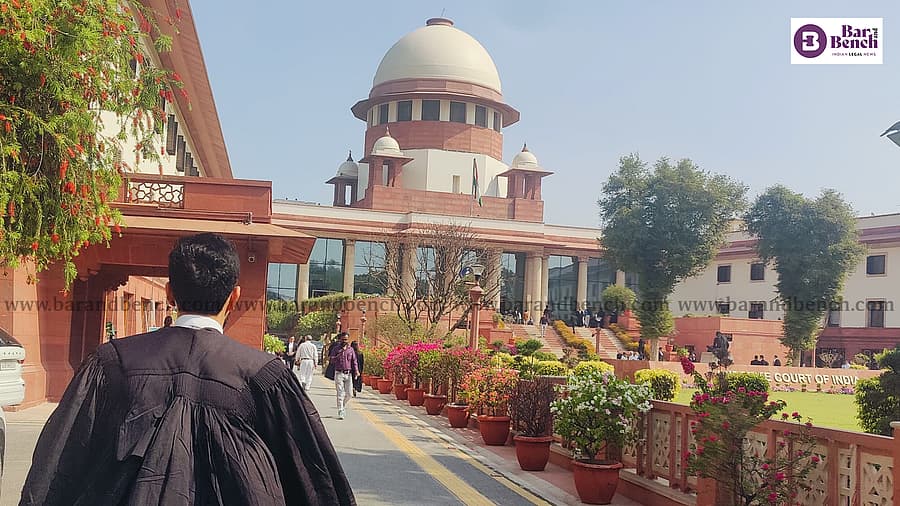
Supreme Court Challenges Tripura Jamatia Act Section 143 Validity
Summary
- The Supreme Court has issued notice on a PIL challenging a provision of Tripura’s Jamatia Customary Laws Act, 2017.
- The PIL contests Section 143, which allegedly allows rape cases to be settled through a fine of up to ₹1 lakh.
- Petitioner Madhumita Bhattacharya argues this provision assigns a monetary value to a woman's dignity.
- The Court has sought responses from the Tripura government and the Tripura Tribal Areas Autonomous District Council.
- The case, Madhumita Bhattacharya v. State of Tripura, questions the constitutional validity of the customary law's handling of serious crimes.
What Happened
The argument presented is that by allowing an accused individual to be absolved of severe sexual violence through financial means, the provision dangerously blurs the distinction between minor infractions and heinous criminal acts involving malicious intent.
India's Supreme Court recently took cognizance of a significant public interest litigation (PIL) petition, issuing notices to the State of Tripura and the Tripura Tribal Areas Autonomous District Council (TTAADC). This action by the apex court signals a serious review of customary legal practices within the region.
The petition, filed by Madhumita Bhattacharya, specifically challenges the constitutional validity of Section 143 within Tripura’s Jamatia Customary Laws Act, 2017. This particular provision is alleged to permit the resolution of serious criminal offenses, specifically rape cases, through the payment of a monetary fine, potentially reaching up to ₹1 lakh. A bench comprising Chief Justice of India Surya Kant, alongside Justices Joymalya Bagchi and V Mohana, is presiding over the case, titled Madhumita Bhattacharya v. State of Tripura and Another, and has requested formal responses from the involved governmental and autonomous bodies. The Supreme Court has sought responses from the Tripura government and the Tripura Tribal Areas Autonomous District Council (TTAADC) on the PIL. The bench also tagged the petition with a pending matter and listed it for hearing on November 27, 2026.
Legal Context
At the heart of the legal challenge lies Section 143 of the Tripura’s Jamatia Customary Laws Act, 2017, which the petitioner contends facilitates the private settlement and compounding of grave crimes such as rape. The PIL asserts that this section, when read in conjunction with Section 164, which outlines penalties and fines, effectively assigns a monetary value to the dignity of women.
The argument presented is that by allowing an accused individual to be absolved of severe sexual violence through financial means, the provision dangerously blurs the distinction between minor infractions and heinous criminal acts involving malicious intent. The petitioner is seeking a judicial declaration that Section 143 is unconstitutional and has also requested that the respondents furnish all pertinent records related to the Act for the Court's review.
Why It Matters
The Supreme Court's examination of the constitutional validity of Section 143 of the Jamatia Act holds profound implications for the administration of justice, particularly concerning serious offenses like rape within customary law frameworks. The petitioner's argument that the provision "places a price tag on a woman's dignity" underscores a fundamental concern about the potential for customary laws to undermine the principles of criminal justice and gender equality.
This challenge to the Supreme Court regarding the Tripura Jamatia Act Section 143 is crucial, as its outcome will determine whether a customary legal framework can permit financial settlements for crimes universally recognized as severe, thereby influencing the interpretation and application of tribal customary law in the broader Indian legal landscape. This case highlights the ongoing tension between traditional legal practices and modern constitutional safeguards, especially regarding the protection of fundamental rights and ensuring that justice is not compromised by financial considerations.
Practical Implications
Lawyers and compliance officers in India, particularly those advising on criminal law or tribal customary law in Tripura, should closely monitor the Supreme Court's proceedings regarding this PIL. The outcome will determine the constitutional validity of Section 143 of the Jamatia Customary Laws Act, 2017, which could significantly impact the handling of serious criminal offenses, specifically rape cases, under customary law in the region and influence legal advice given to clients.
Source
How does this affect you?
Get an AI analysis of this article grounded in your jurisdictions, practice areas, and any policy documents you've uploaded to Wansom.
Finish Reading the Full Story and the Expert Analysis.
Wansom is AI and can make mistakes.