
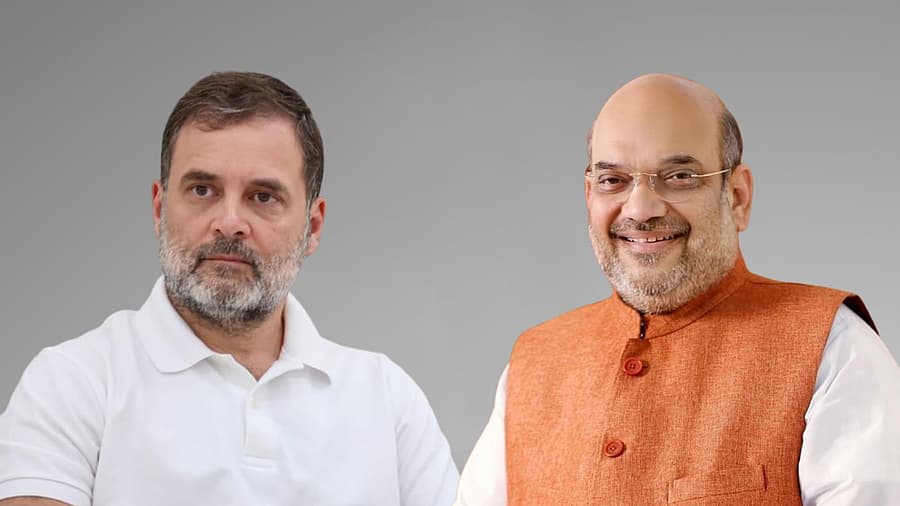
Rahul Gandhi Acquitted Amit Shah Defamation UP: Court Dismisses Case
Summary
- Rahul Gandhi was acquitted by a court in Uttar Pradesh in a criminal defamation case.
- The case stemmed from his 2018 remarks referring to Amit Shah as a "murder accused" during the Karnataka elections.
- Additional Chief Judicial Magistrate Shubham Verma found the complaint suspicious, uncorroborated, and politically motivated.
- The court noted that political figures routinely question each other's credibility during election periods.
- The acquittal was granted under Sections 499 and 500 of the Indian Penal Code.
Acquittal in Uttar Pradesh Defamation Case
This acquittal provides significant insight into the judicial approach to criminal defamation claims, particularly those involving political figures and statements made during elections.
A court in Uttar Pradesh recently acquitted Rahul Gandhi, a prominent opposition leader, in a criminal defamation case that originated from remarks he made in 2018. The case centered on a statement where Gandhi referred to Union Home Minister Amit Shah as an individual accused of murder. The complaint, filed by Aam Aadmi Party (AAP) leader Vinay Mishra, invoked Sections 499 and 500 of the Indian Penal Code (IPC), which deal with criminal defamation.
The specific comments in question were made by Gandhi in Bengaluru during the 2018 Karnataka elections. He stated, "People in India forget that the president of BJP is a murder accused. That's the truth. The party that talks about honesty, decency, has a person who has been accused of murder as president." This statement formed the basis of the defamation charge, leading to a protracted legal battle that has now concluded with Gandhi's acquittal.
Court's Rationale and Scrutiny of the Complaint
Additional Chief Judicial Magistrate (ACJM) Shubham Verma, presiding over the case, delivered a judgment that critically examined the nature of the complaint itself. The court found the criminal complaint, which accused the Congress leader of defaming the BJP and its office-bearers, to be "prima facie suspicious, unnatural, and uncorroborated." This assessment highlights the court's skepticism regarding the foundational elements of the accusation.
Furthermore, the ACJM Shubham Verma judgment explicitly noted that the complaint appeared to have been lodged "merely for the sake of filing a complaint by hook or by crook." The court concluded that the motivation behind the complaint was likely "political or other considerations," rather than a genuine grievance of defamation. This finding underscores the judiciary's careful approach to cases that may be driven by ulterior motives, particularly in the realm of political discourse in India.
Implications for Political Speech and Defamation Law
This acquittal provides significant insight into the judicial approach to criminal defamation claims, particularly those involving political figures and statements made during elections. The Uttar Pradesh court's decision to dismiss the case against Rahul Gandhi, despite the direct nature of his Amit Shah murder accused remarks, emphasizes the importance of context in political speech. The court observed that it is routine for political persons to question each other's credibility during electoral campaigns, suggesting a higher tolerance for robust debate in such environments.
Lawyers should note the court's emphasis on the context of political discourse and its scrutiny of the complainant's motivation, which sets a high bar for successfully prosecuting such cases under Sections 499 and 500 of the IPC. This outcome could influence how similar politically motivated complaint dismissal India cases are viewed, reinforcing the principle that defamation complaints must demonstrate genuine harm and not merely serve as tools for political maneuvering. The Rahul Gandhi criminal defamation case thus offers a crucial precedent for future legal challenges involving public figures and their statements.
Practical Implications
This acquittal provides significant insight into the judicial approach to criminal defamation claims, particularly those involving political figures and statements made during elections. Lawyers should note the court's emphasis on the context of political discourse and its scrutiny of the complainant's motivation, which sets a high bar for successfully prosecuting such cases under Sections 499 and 500 of the IPC.
Source
How does this affect you?
Get an AI analysis of this article grounded in your jurisdictions, practice areas, and any policy documents you've uploaded to Wansom.
Finish Reading the Full Story and the Expert Analysis.
Wansom is AI and can make mistakes.