
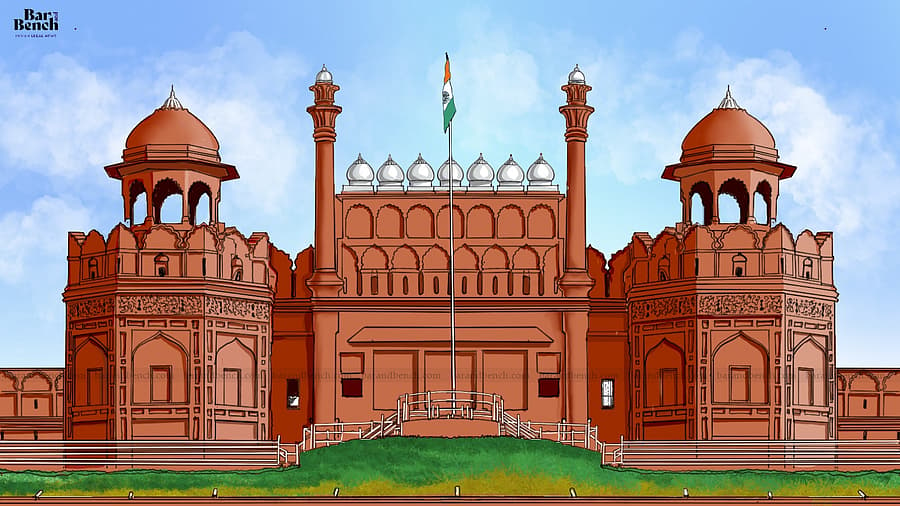
Supreme Court: Orders Red Fort Blast Case Transfer, Clubbing FIRs
Summary
- The Supreme Court ordered the transfer of two criminal cases related to the November 2025 Red Fort metro station bomb blast to a special court in New Delhi.
- Justices Prashant Kumar Mishra and Shree Chandrashekhar issued the order following a plea from the National Investigation Agency (NIA).
- The Court directed that three First Information Reports (FIRs) from Delhi, Jammu and Kashmir, and Haryana be clubbed for a joint trial.
- The blast involved a Hyundai car explosion near gate No. 3 of the Red Fort metro station on November 10, 2025.
- The NIA identified Dr. Umar Un Nabi of Al-Falah University as the vehicle's driver and described the perpetrators as a "white-collar" terror network including doctors.
Supreme Court Mandates Case Consolidation
The Supreme Court's decision to allow the NIA case transfer Supreme Court and clubbing FIRs Delhi NIA court sets a significant precedent for handling complex criminal matters, particularly those involving national security and multi-jurisdictional implications.
The Supreme Court recently issued a directive to consolidate criminal proceedings related to the November 2025 Red Fort metro station bomb blast. This significant ruling, delivered by a bench comprising Justices Prashant Kumar Mishra and Shree Chandrashekhar, mandates the transfer of two distinct criminal cases from Jammu & Kashmir and Haryana. These cases will now proceed to a special court located in New Delhi, centralizing the legal proceedings.
The decision came in response to a plea filed by the National Investigation Agency (NIA), which sought to bring these disparate cases under a single jurisdiction. The blast, which occurred on November 10, 2025, involved the explosion of a Hyundai car positioned near gate number three of the Lal Qila (Red Fort) metro station in Delhi. This incident prompted a complex, multi-state investigation, necessitating the Supreme Court's intervention to streamline the judicial process.
Unifying Multi-State Investigations
Beyond merely transferring the cases, the Supreme Court's order further stipulated that all three First Information Reports (FIRs) pertaining to the Red Fort metro station blast — originally filed in Delhi, Jammu and Kashmir, and Haryana — must be clubbed together. This directive aims to facilitate a joint trial before the designated special NIA court in Delhi, ensuring a unified approach to the prosecution of those involved. The NIA's petition underscored the challenges posed by parallel investigations across different states following the incident.
The central agency's probe revealed that the driver of the vehicle involved in the explosion was identified as Dr. Umar Un Nabi, affiliated with Al-Falah University in Faridabad. Early in the investigation, Delhi courts had already placed key suspects, such as Amir Rashid Ali, into NIA custody, highlighting the intricate web of individuals involved. The consolidation of these cases under the Supreme Court Red Fort blast case transfer ruling is a critical step towards an efficient and comprehensive legal resolution.
Unveiling a "White-Collar" Terror Network
The National Investigation Agency characterized the perpetrators behind the Red Fort metro station blast as a "white-collar" terror network. This group, according to the central agency, comprises educated professionals, including several doctors, indicating a sophisticated and unexpected profile for those involved in such an act. The multi-faceted nature of the conspiracy led to parallel investigative efforts across various states, each uncovering different aspects of the network.
For instance, the State Investigation Agency (SIA) of the Jammu & Kashmir Police made significant arrests, apprehending ten individuals. Among those arrested were four doctors, one of whom has also been formally charged in connection with the Delhi blast case. This overlap underscores the interconnectedness of the various regional probes and the necessity for a consolidated trial, as now mandated by the Supreme Court.
Why It Matters
The Supreme Court's decision to allow the NIA case transfer Supreme Court and clubbing FIRs Delhi NIA court sets a significant precedent for handling complex criminal matters, particularly those involving national security and multi-jurisdictional implications. By centralizing the trial for the Red Fort metro station blast, the Court has demonstrated a clear intent to streamline judicial proceedings and enhance the efficiency of investigations conducted by agencies like the NIA. This approach is crucial when dealing with sophisticated networks that operate across state lines.
This ruling, stemming from the Justices Mishra Chandrashekhar order, underscores the judiciary's role in facilitating comprehensive justice in cases where fragmented investigations could impede a thorough prosecution. For future cases of similar complexity, especially those involving terror-related incidents, this consolidation strategy could become a standard practice, ensuring that all evidence and accused parties are addressed within a single, coherent legal framework.
Practical Implications
This Supreme Court ruling sets a precedent for the consolidation of multi-jurisdictional criminal cases, especially those involving national security, under a single investigative agency like the NIA. Lawyers defending clients in complex, multi-state criminal matters should note the Court's willingness to streamline trials by transferring and clubbing FIRs, which could impact jurisdictional challenges and defense strategies.
Source
How does this affect you?
Get an AI analysis of this article grounded in your jurisdictions, practice areas, and any policy documents you've uploaded to Wansom.
Finish Reading the Full Story and the Expert Analysis.
Get the latest legal & regulatory intelligence in India
Wansom is AI and can make mistakes.