
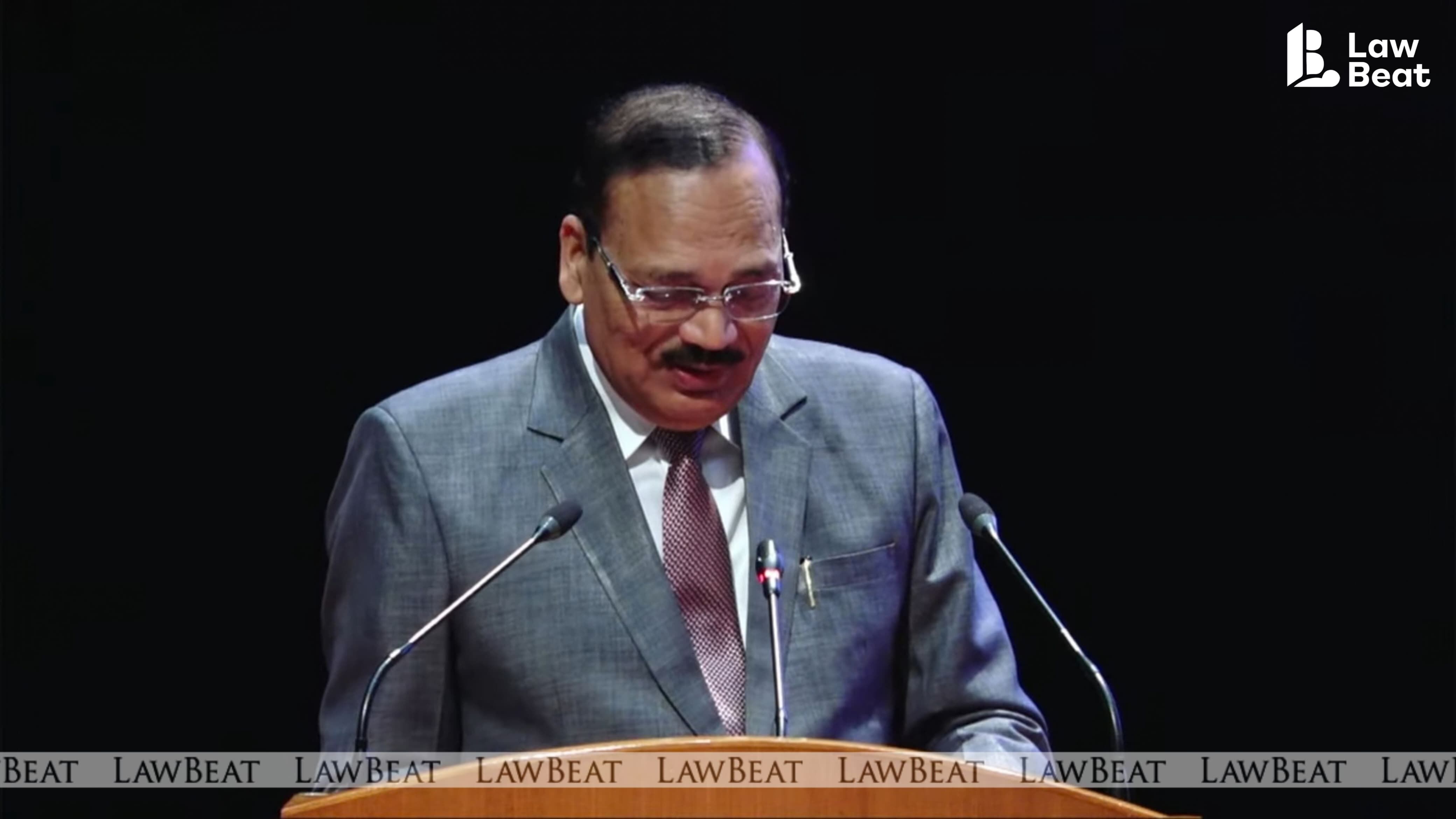
Supreme Court: Nyaya Shiksha Samman Lecture Series & Monthly Program Inaugurated
Summary
- CJI Surya Kant launched the Monthly Lecture Series on Law, Justice and Legal Education and the Annual Supreme Court Nyaya Shiksha Samman at the Supreme Court.
- The initiatives aim to promote legal education and foster sustained engagement with legal ideas and scholarship.
- The monthly lectures will feature distinguished experts discussing important legal questions, accompanied by an "Ideas Dialogue" for young professionals.
- The Nyaya Shiksha Samman is an annual award recognizing contributions to legal education, with Prof. Ranbir Singh as its first recipient.
- CJI Surya Kant emphasized the critical role of teachers in shaping legal professionals and the importance of continuous learning in the evolving legal field.
New Initiatives Launched at Supreme Court
The CJI highlighted that the law is in a constant state of evolution, with new questions continually emerging.
Chief Justice of India (CJI) Surya Kant recently inaugurated two significant programs at the Supreme Court: a Monthly Lecture Series on Law, Justice and Legal Education, and the Annual Supreme Court Nyaya Shiksha Samman. These initiatives are designed to foster continuous engagement with legal scholarship, promote the development of law, and provide a platform for deeper reflection within the legal community.
During the inaugural event, CJI Surya Kant emphasized the necessity for the legal profession to periodically step back from the immediate demands of litigation. He articulated that every profession benefits from moments of pause to reflect on the foundational ideas that sustain it, a need particularly acute in law, which constantly adapts to evolving circumstances, new questions, and societal aspirations. The initiatives aim to create a dedicated space for such critical conversation and introspection.
The Monthly Lecture Series is conceived to bring a distinguished jurist, scholar, legal educationist, or expert to the Supreme Court each month. These experts will delve into important legal questions that extend beyond the immediate scope of adjudication, offering a broader perspective on legal principles and their application. The CJI highlighted the central idea as exploring “one important idea, every month,” thereby enriching the intellectual discourse within the legal fraternity.
Complementing the lectures, an “Ideas Dialogue” session will provide a unique opportunity for young advocates, law students, and researchers. This segment allows them to interact directly with the speakers, present their questions, and share their perspectives, effectively bridging the gap between theoretical learning and practical application. The CJI expressed hope that this interactive component would become a crucial feature, synchronizing the courtroom environment with the academic classroom.
Recognizing Contributions to Legal Education
Alongside the lecture series, the Supreme Court Nyaya Shiksha Samman has been established as an annual honor to acknowledge outstanding contributions to legal education. The inaugural recipient of this prestigious award is Professor Ranbir Singh, recognized for his significant impact in the field.
CJI Surya Kant underscored the critical role of legal educators, stating that the strength and integrity of the legal system are substantially dependent on the caliber of its judges, advocates, scholars, and administrators. He stressed that behind every generation of legal professionals stands a generation of dedicated teachers who impart foundational understanding, introduce methodologies and values, and cultivate critical, independent thought among their students.
Describing teaching as a vital form of public service, the CJI noted that the students trained by these educators would ultimately bear the responsibility for interpreting, practicing, and developing the law. The Nyaya Shiksha Samman serves as a formal recognition of this profound and often understated contribution to the nation's legal framework.
A Personal Connection to Learning
Chief Justice Surya Kant also shared a personal anecdote, revealing his deep-seated connection to the teaching profession. He recounted that his father dedicated his entire working life to teaching, an experience that instilled in the CJI an appreciation for the discipline, meticulous preparation, and unwavering commitment inherent in the role of an educator.
Recalling a formative lesson from his childhood, the CJI shared a family adage: “shiksha hi sabse bada dhan hai,” which translates to education being the greatest wealth a person can possess. He emphasized the particular relevance of this philosophy to the legal profession, where learning is not confined to the completion of a law degree.
The CJI highlighted that the law is in a constant state of evolution, with new questions continually emerging. Consequently, every judge, lawyer, and academician must remain committed to lifelong learning and intellectual growth. This continuous pursuit of knowledge is essential for navigating the complexities and dynamism of the legal landscape.
Source
Source: Original reporting via Live Law
How does this affect you?
Get an AI analysis of this article grounded in your jurisdictions, practice areas, and any policy documents you've uploaded to Wansom.
Finish Reading the Full Story and the Expert Analysis.
Get the latest legal & regulatory intelligence in India
Wansom is AI and can make mistakes.