
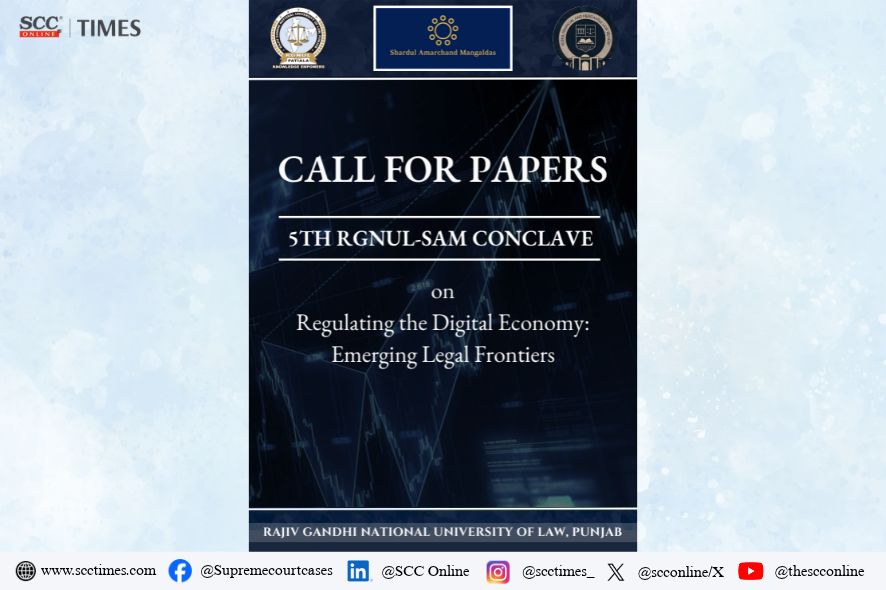
5th RGNUL-SAM Conclave: Call for Papers on Digital Economy Legal Frontiers
Summary
- The 5th RGNUL-SAM Conclave has issued a call for papers.
- The conclave's theme is "Regulating the Digital Economy: Emerging Legal Frontiers."
- It will focus on the complex challenges of arbitrating technology and digital economy disputes in India.
- The event aims to foster insightful discussions on emergent trends in this legal area.
- Legal professionals are invited to contribute to shaping future policy and practice.
Conclave Overview
The 5th RGNUL-SAM Conclave call for papers presents a pivotal opportunity for legal professionals specializing in digital economy regulation or technology arbitration.
The 5th RGNUL-SAM Conclave has issued a call for papers, inviting contributions that delve into the complex legal landscape surrounding the digital economy. This significant academic and professional gathering is specifically themed "Regulating the Digital Economy: Emerging Legal Frontiers," signaling its intent to explore the cutting-edge issues shaping jurisprudence in this rapidly evolving sector. The conclave aims to foster robust dialogue and analysis among legal scholars, practitioners, and policymakers regarding the intricate challenges presented by digital transformation within India's legal framework.
This upcoming event, the 5th RGNUL-SAM Conclave call for papers, represents a crucial opportunity for legal minds to contribute to the discourse on how India navigates the legal implications of its burgeoning digital sphere. By focusing on emerging trends, the conclave seeks to generate fresh perspectives and innovative solutions for the legal and regulatory hurdles that accompany technological advancement. It underscores the growing recognition within the legal community of the need for specialized expertise in understanding and governing digital interactions and transactions.
Thematic Focus: Digital Economy and Arbitration
A central focus of the 5th RGNUL-SAM Conclave is the intricate domain of arbitration concerning disputes that originate from technology and the broader digital economy. This area is characterized by its inherent complexity, driven by the constantly evolving nature of digital technologies and the highly technical specifics often involved in such disagreements. The conclave will provide a dedicated forum to dissect these challenges, offering a platform for in-depth discussions on how traditional dispute resolution mechanisms adapt to, and are challenged by, digital innovation.
The theme, "Regulating the Digital Economy: Emerging Legal Frontiers," directly addresses the necessity of developing sophisticated legal frameworks for a sector that is continuously redefining economic and social interactions. Experts are encouraged to submit papers that explore the nuances of arbitration technology disputes, considering the unique evidentiary, jurisdictional, and procedural issues that arise. This emphasis highlights the pressing need for legal professionals to not only understand the digital economy but also to actively shape its regulatory future in India.
Why This Matters for Legal Professionals
The 5th RGNUL-SAM Conclave call for papers presents a pivotal opportunity for legal professionals specializing in digital economy regulation or technology arbitration. Engaging with this platform allows participants to contribute directly to the foundational discussions that will likely influence future policy and practice in India's digital legal landscape. The conclave is designed to initiate insightful conversations on emergent trends, making it an essential forum for those looking to stay at the forefront of legal developments in this dynamic field.
For legal practitioners and academics, the chance to submit research and analysis to the RGNUL call for papers is more than just an academic exercise; it is an invitation to help define the legal frontiers of the digital economy. By addressing the complexities of regulating the digital economy India, contributors can play a direct role in shaping how disputes are resolved and how innovation is governed. This proactive engagement is vital for ensuring that India's legal system remains robust and responsive to the challenges and opportunities presented by technological advancement.
Practical Implications
Legal professionals specializing in digital economy regulation or technology arbitration should consider submitting papers to the 5th RGNUL-SAM Conclave to contribute to and shape discussions on emerging legal frontiers in India, potentially influencing future policy and practice.
Source
Source: Original reporting via SCC Times
How does this affect you?
Get an AI analysis of this article grounded in your jurisdictions, practice areas, and any policy documents you've uploaded to Wansom.
Wansom is AI and can make mistakes.