
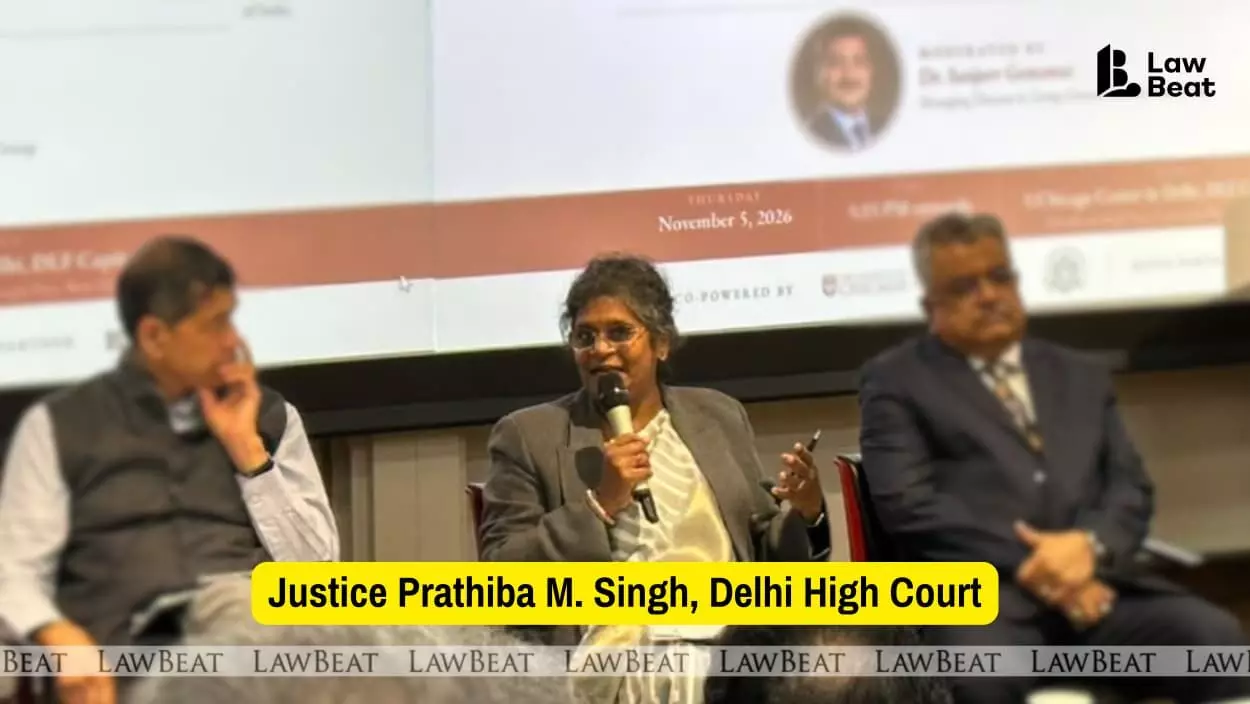
Justice Prathiba Singh: Urges Uniform IP Courts for India
Summary
- Delhi High Court Justice Prathiba M. Singh advocates for uniform intellectual property courts across India, from district to high court levels.
- She believes dedicated IP courts would ensure trained judges and a predictable body of law, potentially through an amendment to the Commercial Courts Act.
- Justice Singh credited three reforms for India's IP success: innovative judicial remedies, the Commercial Courts Act, and the establishment of IP Divisions.
- India has transformed from a reluctant TRIPS implementer to one of the top five global destinations for IP enforcement.
- She also emphasized the need for judges to adopt technology to manage workloads and prioritize private disputes over government litigation.
A Push for Uniform IP Courts
By ensuring that judges handling intellectual property cases receive specific training, the legal system can guarantee a more predictable and uniform jurisprudence across all judicial levels.
Delhi High Court Justice Prathiba M. Singh recently articulated a strong case for the establishment of uniform intellectual property (IP) courts across India, spanning from the district level up to the High Courts and their appellate divisions. Speaking at a session focused on "Shaping the Legal Architecture of Viksit Bharat: The Supreme Court and India @ 2047," Justice Singh, while clarifying that her remarks were personal and not made in her judicial capacity, expressed her firm conviction that such a dedicated stream is essential for the nation's legal framework. She emphasized that these specialized courts would foster the development of properly trained judges and cultivate a consistent body of law, thereby ensuring a more predictable legal environment for intellectual property matters.
Justice Singh further suggested that the creation of these specialized IP courts could be achieved by integrating a new chapter into the existing Commercial Courts Act. She lauded the significant contributions of dedicated commercial courts over the past eleven years, highlighting their role in streamlining dispute resolution. The vision for IP courts mirrors this success, aiming to provide a structured pathway for IP cases that would lead to enhanced judicial training and the evolution of a robust, uniform jurisprudence throughout the country. This move, she argued, is crucial for India to solidify its position as a leading jurisdiction in intellectual property enforcement and innovation.
India's Journey to IP Prominence
Reflecting on India's trajectory in intellectual property, Justice Singh recounted the nation's initial stance as a "developing country" during the negotiation of global trade agreements. This classification afforded India an extended period, until January 2005, to comply with the TRIPS Agreement, a decade after developed nations faced their 1995 deadline. Despite an initial "reluctance" in implementing TRIPS, the subsequent 21 years have witnessed India transform into a notable success story in the realm of intellectual property.
Today, India stands among the top five global destinations for intellectual property enforcement. This remarkable shift, according to Justice Singh, is attributable to a confluence of strategic reforms and judicial innovation. The country has moved beyond its early hesitations to establish itself as a significant player on the international IP stage, demonstrating a commitment to protecting intellectual assets that reassures both domestic and global industries operating within its borders.
Key Reforms Driving IP Success
Justice Singh identified three pivotal reforms that have underpinned India's intellectual property achievements. Firstly, the judiciary's capacity for "innovative remedies" has been instrumental. While courts cannot legislate, they have adeptly innovated within the existing legal framework, particularly in areas such as recognizing well-known trademarks, addressing transborder reputation, and tackling passing off in domain names. In certain instances, Indian courts have even delivered rulings on these complex issues ahead of their counterparts in the United Kingdom or the United States.
Secondly, the Commercial Courts Act has played a crucial role. Justice Singh recalled her own experience as a lawyer appearing before the Joint Parliamentary Committee, where the necessity of a "rich man's court" was questioned. Despite initial skepticism, district commercial courts in Delhi now efficiently resolve commercial disputes, often within one to one and a half years. The third significant reform involves the establishment of specialized IP Divisions, pioneered by the Delhi High Court and subsequently adopted by Madras, Himachal Pradesh, and Calcutta. Bombay is reportedly in the process of creating one, while Gujarat already maintains a separate IP roster. These divisions, alongside the broader judicial system, have employed robust enforcement mechanisms, including John Doe orders, Anton Piller orders, dynamic injunctions, and decisive action against e-commerce counterfeiting, ensuring that trademark and copyright matters are frequently resolved within approximately a year of filing. Even in the patent landscape, where the Novartis judgment of April 1, 2013, drew criticism, the COVID-19 pandemic later validated India's approach, with many developed nations adopting similar strategies. India has also emerged as the fourth leading jurisdiction globally for standard essential patents, partly due to the economic reality that major telecom companies cannot afford to withdraw from India, one of their largest markets.
The Path to Predictable IP Jurisprudence
The advocacy for uniform IP courts underscores a broader vision for India's legal architecture, aligning with the "Viksit Bharat" initiative. Justice Singh's proposal aims to create a system where specialized knowledge and consistent application of law are paramount. By ensuring that judges handling intellectual property cases receive specific training, the legal system can guarantee a more predictable and uniform jurisprudence across all judicial levels. This predictability is not only beneficial for rights holders seeking efficient resolution of disputes but also for fostering an environment conducive to innovation and investment. Furthermore, Justice Singh highlighted the broader need for judges to embrace technology to manage their workloads effectively, suggesting that judicial time should primarily be dedicated to private disputes rather than government litigation.
The integration of such a specialized framework, potentially through an amendment to the Commercial Courts Act, would signify a strategic enhancement of India's commitment to intellectual property protection. It would streamline processes, reduce litigation timelines, and ultimately strengthen India's standing as a global leader in intellectual property enforcement and development. This forward-looking approach seeks to build upon the successes of the past two decades, ensuring that India's legal infrastructure remains agile and responsive to the evolving demands of the global knowledge economy.
Practical Implications
Lawyers and compliance officers should monitor legislative developments regarding the establishment of dedicated IP courts in India, as Justice Singh's advocacy suggests a potential shift towards more specialized and predictable IP jurisprudence. This could impact litigation strategies, case timelines, and the need for specialized expertise in IP matters across various judicial levels.
Source
How does this affect you?
Get an AI analysis of this article grounded in your jurisdictions, practice areas, and any policy documents you've uploaded to Wansom.
Wansom is AI and can make mistakes.