
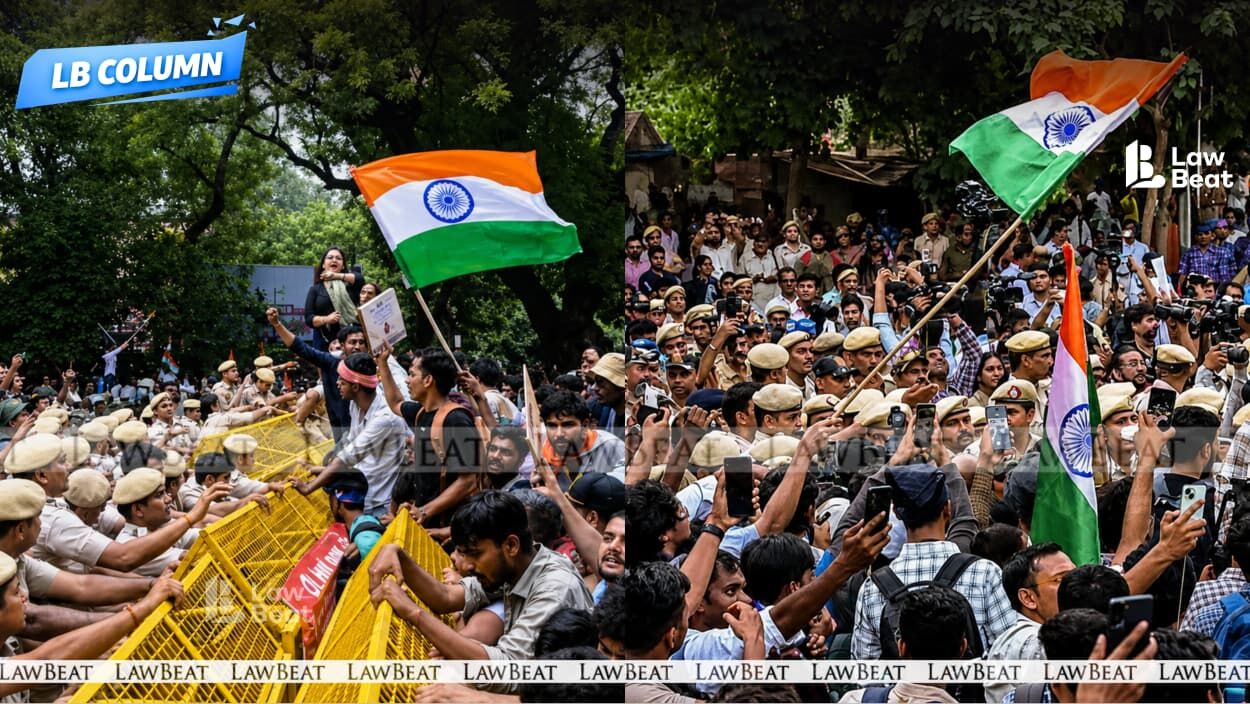
Supreme Court: No Blanket Withdrawal of Cases Against Protesters Under BNSS Framework
Summary
- Several states in India issued notifications stating that cases against protesters would be withdrawn following student protests in July 2026.
- The Hon'ble Supreme Court intervened, staying coercive action against students but directing that those with criminal antecedents must still face prosecution.
- Withdrawal of cases against protesters is governed by the BNSS framework and can only be done through specific procedures outlined in law.
- Blanket notifications declaring cases withdrawn are unconstitutional and cannot be relied upon.
What Happened
The withdrawal of cases against protesters is an executive function, but subject to judicial review to ensure it is exercised independently, in good faith, and within the purpose of the law.
In July 2026, student protests erupted in India, leading to the resignation of Education Minister Shri Dharmendra Pradhan. Following the protests, several states, including Bihar, Bengal, and Assam, issued notifications stating that cases against protesters would be withdrawn. However, the Hon'ble Supreme Court intervened in the matter, staying coercive action against students but directing that those with criminal antecedents must still face prosecution. This development has sparked a debate on the constitutional and legal position of withdrawing cases against protesters.
Relevant Legal/Regulatory Context
The withdrawal of cases against protesters is governed by the BNSS framework, which outlines the procedures for closure of cases. Under Section 173 BNSS, an FIR must be registered when information pertaining to a cognisable offence is presented to the police. The Supreme Court has established jurisprudence that an FIR can only be withdrawn through specific procedures outlined in law, including filing a closure report under Section 189 or seeking withdrawal of prosecution under Section 360. A blanket notification declaring cases withdrawn is unconstitutional and cannot be relied upon.
Why It Matters
The issue at hand has significant implications for the balance between protecting peaceful dissent and prosecuting criminal misconduct. The Hon'ble Supreme Court has emphasized that withdrawal of prosecution is an executive function, but subject to judicial review to ensure it is exercised independently, in good faith, and within the purpose of the law. Lawyers must be aware that blanket notifications withdrawing cases against protesters are unconstitutional and cannot be relied upon, instead, they must navigate the specific procedures outlined under Section 360 BNSS for withdrawal of prosecution.
Practical Implications
Lawyers should be aware that blanket notifications withdrawing cases against protesters are unconstitutional and cannot be relied upon, instead, they must navigate the specific procedures outlined under Section 360 BNSS for withdrawal of prosecution.
Source
How does this affect you?
Get an AI analysis of this article grounded in your jurisdictions, practice areas, and any policy documents you've uploaded to Wansom.
Wansom is AI and can make mistakes.