
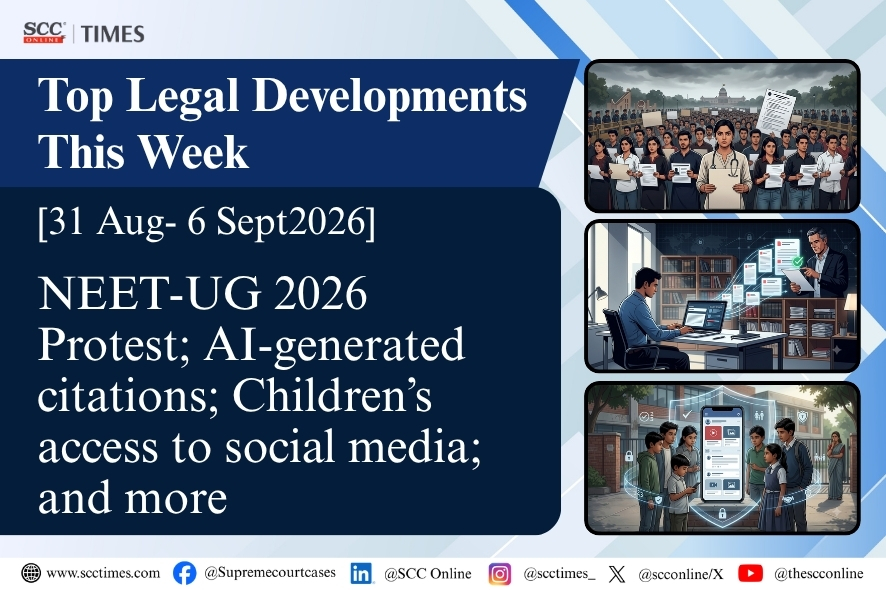
Supreme Court: NEET-UG 2026 Protest FIRs Quashed Under Article 142
Summary
- The Supreme Court quashed FIRs against students involved in peaceful NEET-UG 2026 protests, citing their future prospects and bona fide participation.
- The decision, made under Article 142 for 'complete justice,' also ordered the closure of all other related FIRs from July 20-25, 2026.
- However, the Court allowed fresh FIRs to be registered against 2,873 individuals identified by the Delhi Police.
- A pan-India policy for compensating families of students who committed suicide in connection with the NEET-UG 2026 examination was directed to be formulated within 90 days.
Supreme Court Quashes NEET-UG 2026 Protest FIRs
The Court determined that this was an appropriate circumstance to exercise its exceptional jurisdiction to ensure complete justice between all parties involved.
The Supreme Court of India recently intervened in a significant matter concerning student protests related to alleged irregularities in the NEET-UG Examination, 2026. In the case of Shailendra Mani Tripathi v. Union of India, cited as 2026 SCC OnLine SC 1754, the apex court addressed a batch of applications that sought the invocation of its extraordinary powers under Article 142 of the Constitution. These applications specifically aimed for the quashing of First Information Reports (FIRs) that had been registered against students participating in demonstrations.
The Court determined that this was an appropriate circumstance to exercise its exceptional jurisdiction to ensure complete justice between all parties involved. A primary consideration for the bench was the future prospects of the young individuals who had engaged in these protests. The Court acknowledged that their participation was bona fide and that the demonstrations were peaceful, leading to a pivotal decision in their favor.
Consequently, the Supreme Court ordered that the specific FIRs under consideration be quashed. Furthermore, it issued a directive that any other FIRs pertaining to the same incidents of protest, which occurred between July 20, 2026, and July 25, 2026, should not be pursued or investigated further. These additional FIRs are now to be considered closed, providing broad relief to many students involved in the demonstrations.
Legal Framework and Extraordinary Powers
The Supreme Court's decision to quash the NEET-UG 2026 protest FIRs hinged on its unique authority under Article 142 of the Constitution. This article grants the Supreme Court the power to pass any decree or order necessary for doing complete justice in any cause or matter pending before it. This extraordinary power allows the Court to go beyond statutory provisions to ensure equity and fairness, particularly when conventional legal remedies might fall short.
In this instance, the Court's invocation of Article 142 underscored its commitment to safeguarding the future of young citizens. By considering the bona fide nature of the peaceful protests, the judiciary aimed to prevent the long-term adverse impacts that criminal charges could have on students' careers and lives. This approach highlights the Court's role not just as an interpreter of law, but also as a guardian of fundamental rights and societal welfare, especially in cases involving public grievances and youth participation.
Specific Directives and Compensation Policy
While granting significant relief, the Supreme Court also included specific provisions and directives in its order. Notably, the Court permitted the registration of fresh FIRs, but only against a clearly identified group of 2,873 individuals. These individuals had been identified by the Delhi Police, indicating a distinction between general peaceful protesters and those against whom specific allegations might warrant further investigation.
Beyond the immediate issue of the protests, the Court issued a crucial directive concerning the tragic suicides linked to the NEET-UG Examination, 2026. It mandated the formulation of a pan-India policy for compensation to the families of students who committed suicide in connection with the examination. This policy is to be developed and implemented within a strict timeframe of 90 days, reflecting the Court's recognition of the severe emotional and social toll associated with the examination process and its irregularities.
Implications for Student Activism and Accountability
The ruling in Shailendra Mani Tripathi v. Union of India sets a significant precedent for how student protests, particularly those addressing perceived systemic irregularities, are handled legally. By quashing the FIRs, the Supreme Court has affirmed the right to peaceful protest and demonstrated a willingness to protect students from disproportionate legal consequences for expressing grievances. This decision could empower future student movements, offering a degree of assurance against punitive actions for bona fide participation.
However, the Court's allowance for fresh FIRs against specific identified individuals also underscores that while peaceful protest is protected, acts that cross legal boundaries may still face accountability. The directive for a nationwide compensation policy for suicide victims further highlights the Court's concern for the broader welfare implications of high-stakes examinations like NEET-UG. This dual approach balances the protection of protest rights with the need for order and addressing the underlying causes of distress among students.
Source
Source: Original reporting via LiveLaw
How does this affect you?
Get an AI analysis of this article grounded in your jurisdictions, practice areas, and any policy documents you've uploaded to Wansom.
Finish Reading the Full Story and the Expert Analysis.
Wansom is AI and can make mistakes.