
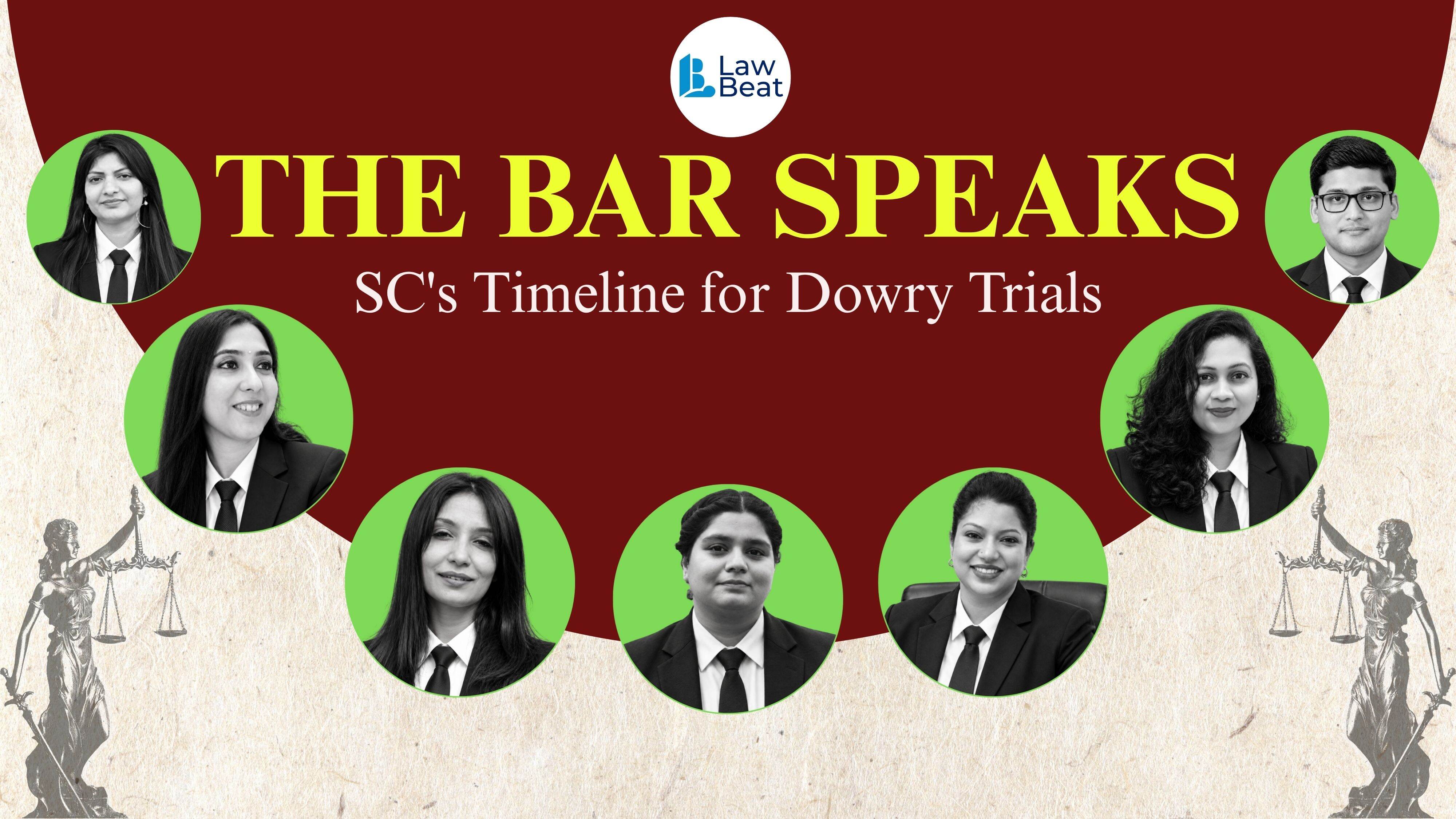
Supreme Court: Sets 60-90 Day 498A Charge Framing Deadline
Summary
- The Supreme Court has directed trial courts to endeavor to frame charges in dowry death and matrimonial cruelty cases within 60 to 90 days of chargesheet filing.
- These SC dowry case trial directions also mandate discouraging unnecessary adjournments and prioritizing cases pending over three years.
- While allowing exploration of mediation for cases primarily arising from matrimonial discord, Section 498A IPC remains non-compoundable, meaning mediation cannot directly settle the criminal offense.
- Legal experts highlight the challenge of defining "matrimonial discord" at the outset and stress that any non-compoundable 498A settlement must be voluntary and free from coercion.
- High Courts and States are now required to periodically report on the pendency and disposal status of these cases, aiming for faster trials while balancing fairness.
Supreme Court Mandates for Expedited Trials
The critical challenge lies in balancing the imperative for faster trials with the fundamental requirement for fair justice, especially given the profound consequences for both complainants and the accused.
The Supreme Court has recently issued comprehensive directives aimed at accelerating the resolution of dowry death and matrimonial cruelty cases, particularly those falling under Section 498A of the Indian Penal Code. These SC dowry case trial directions instruct trial courts to endeavor to frame charges within a strict 60 to 90-day period following the filing of a chargesheet. This move signifies a concerted effort to introduce greater urgency into the criminal justice system, which often grapples with significant delays.
Beyond the specific Supreme Court 498A charge framing deadline, the directives also encompass broader procedural reforms. Trial courts are now expected to actively discourage unnecessary adjournments, prepare detailed witness calendars, and prioritize cases that have remained pending for more than three years. This holistic approach seeks to streamline the trial process from its initial stages through to resolution.
Furthermore, the Supreme Court's framework extends beyond the trial courts, mandating that High Courts and State authorities periodically report on the pendency, disposal rates, and stage-wise status of these cases. This institutional monitoring is designed to ensure accountability and track progress, aiming to enhance the efficiency of the judicial process without compromising the quality of justice delivered.
Navigating Mediation in Non-Compoundable Cases
A significant aspect of the Supreme Court's new guidelines involves the exploration of mediation or counselling, particularly in cases primarily stemming from matrimonial discord. However, this directive introduces complexities given that Section 498A IPC remains a non-compoundable offense, meaning it cannot be settled privately between parties without court intervention.
Legal experts highlight the inherent difficulty in precisely defining what constitutes a case "primarily arising from matrimonial discord" at the outset. Mansha Khemka, Managing Partner at Khemka & Associates, notes that this distinction is often unclear at the threshold, as allegations of cruelty frequently originate from conduct within the matrimonial home and rely on various forms of evidence, including witness testimonies, communications, and medical records. Consequently, while the court may permit mediation, it cannot directly lead to the settlement of the criminal charge itself.
Advocate Ruhi Ahire-Shukla, Founder Partner of AT Legal Law Firm, Pune, describes mediation in appropriate 498A cases as a lawful, court-monitored mechanism for resolving matrimonial disputes. However, as Advocate Prachi Pratap, who practices before various high courts and the Supreme Court, clarifies, the direction does not create a separate route for privately settling 498A proceedings. Any quashing of proceedings based on a settlement would still necessitate the High Court's examination of the dispute's nature, ensuring that the non-compoundable 498A settlement adheres to legal requirements. Rtn. Advocate Sonia Rajesh emphasizes that while mediation should not be a "backdoor route" to defeat criminal prosecution, not every matrimonial dispute should be deemed incapable of settlement simply because a criminal case has been registered, especially since divorce, maintenance, and custody proceedings often arise from the same marital breakdown.
Balancing Speed with Justice and Safeguards
The critical challenge lies in balancing the imperative for faster trials with the fundamental requirement for fair justice, especially given the profound consequences for both complainants and the accused. While the Supreme Court's directives aim to reduce matrimonial cruelty case timelines in India, there are concerns about the potential for undue haste impacting the fairness of proceedings.
Lawyers have flagged the possibility of pressure being exerted on either party during settlement discussions. Mansha Khemka points out that a genuine allegation could be prematurely categorized as mere matrimonial discord, or an accused might accept an onerous settlement simply to avoid a prolonged prosecution. This underscores the need for careful oversight in mediation processes.
Sonia Rajesh stresses that any settlement reached must be entirely voluntary, informed, and free from coercion, particularly when a complainant might be under financial or social pressure. The core question, therefore, is not merely whether mediation can coexist with matrimonial criminal litigation, but rather who determines a case's suitability for such intervention and at what stage of the proceedings. It is important to note that the 60-90 day period for framing charges is described as "directory," suggesting a guideline rather than an absolute, inflexible deadline, allowing for some judicial discretion while still pushing for efficiency.
Practical Implications
Lawyers handling Section 498A IPC and dowry cases must adapt to the Supreme Court's new 60-90 day charge framing deadline and reduced adjournments, strategically advising clients on accelerated trial timelines and the nuanced role of mediation in non-compoundable cases.
Source
How does this affect you?
Get an AI analysis of this article grounded in your jurisdictions, practice areas, and any policy documents you've uploaded to Wansom.
Finish Reading the Full Story and the Expert Analysis.
Wansom is AI and can make mistakes.