
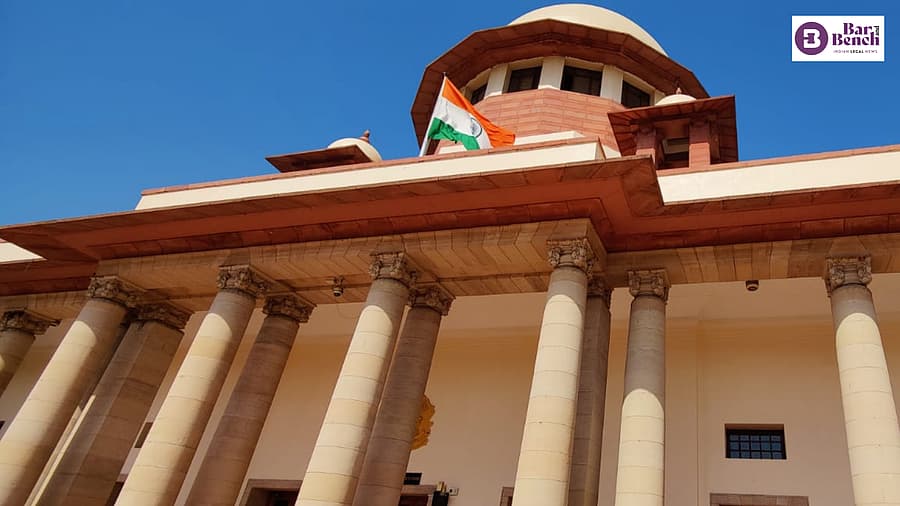
Supreme Court: Grants Deepak Singla Interim Bail in ₹155 Crore Bank Fraud Case
Summary
- The Supreme Court granted AAP leader Deepak Singla four weeks of interim bail in a money laundering case.
- The case stems from an alleged ₹155 crore bank fraud involving Mahesh Timbers Private Limited.
- The court cited Singla's over six months in custody and a co-accused's prior bail as key reasons for the interim relief.
- The Supreme Court directed the High Court to decide Singla's pending bail application within four weeks.
- The interim bail decision should not influence the High Court's adjudication on the merits of the case.
The Supreme Court's Decision
The emphasis placed on the duration of custody—specifically, Singla's six-month incarceration—and the fact that a co-accused had already secured bail, establishes important precedents.
The Supreme Court recently granted Aam Aadmi Party (AAP) leader Deepak Singla interim bail for a period of four weeks. This significant development occurred in a money laundering case that originated from an alleged bank fraud amounting to ₹155 crore. The decision was delivered by a bench comprising Chief Justice of India Surya Kant, alongside Justices Joymalya Bagchi and V Mohana, following a hearing in the matter of Deepak Singla vs Directorate of Enforcement.
This temporary relief allows Singla to be released from custody, contingent upon him furnishing a bond to the satisfaction of the trial court. The apex court's order specifically outlined the conditions for this interim measure, ensuring that while Singla receives temporary freedom, the legal process continues. The ruling marks a crucial juncture in the ongoing legal proceedings against the AAP leader.
Rationale and Directives
The Supreme Court's decision to grant interim bail was primarily influenced by two key considerations. Firstly, the bench noted that Deepak Singla had already spent a considerable period in custody, exceeding six months. Secondly, it was observed that a co-accused in the same case had previously been granted bail, suggesting a potential disparity in treatment that the court sought to address. These factors collectively contributed to the court's determination that temporary relief was warranted.
In addition to granting interim bail, the Supreme Court issued a specific directive to the High Court. It requested that the High Court expedite its decision on Singla's pending plea, which challenges his arrest and seeks regular bail. The High Court has been given a four-week timeframe to adjudicate this application. Crucially, the Supreme Court clarified that its present grant of interim bail should not, in any manner, influence the High Court's independent assessment of the merits of Singla's case. This ensures that the High Court's decision remains unbiased by the temporary relief provided by the higher court.
The Underlying Allegations
The money laundering charges against Deepak Singla are rooted in an extensive alleged bank fraud case, which is reported to involve a sum of ₹155.21 crore. This financial irregularity specifically implicates Mahesh Timbers Private Limited. The Directorate of Enforcement (ED) has been investigating the matter, alleging a sophisticated scheme of financial manipulation.
According to the ED's claims, Mahesh Timbers Private Limited engaged in the fraudulent enhancement of Foreign Letters of Credit (FLCs). The funds acquired through these illicit transactions were then purportedly transferred to a subsidiary located in Singapore. These allegations form the core of the economic offense that led to the money laundering case and Singla's arrest, highlighting the complex nature of the financial crimes under scrutiny.
Broader Legal Implications
This ruling by the Supreme Court carries significant implications for legal practitioners navigating high-profile economic offense cases, particularly concerning interim bail. The emphasis placed on the duration of custody—specifically, Singla's six-month incarceration—and the fact that a co-accused had already secured bail, establishes important precedents. Lawyers can now leverage these factors more effectively when arguing for similar interim relief for their clients who have spent substantial time in detention.
Furthermore, the Supreme Court's proactive instruction to the High Court to decide the pending bail application within a strict four-week period offers a valuable procedural avenue. This demonstrates the apex court's willingness to intervene and ensure timely judicial review of bail matters, providing a mechanism for accelerating decisions in cases where applications might otherwise languish. This aspect of the ruling underscores the judiciary's commitment to balancing the rights of the accused with the demands of justice, even in complex financial crime investigations.
Practical Implications
This Supreme Court ruling provides a precedent for lawyers seeking interim bail in high-profile economic offense cases, particularly where the accused has spent significant time in custody and co-accused have been granted bail. It also highlights the Supreme Court's willingness to direct High Courts to expedite decisions on pending bail applications, offering a procedural avenue for relief in similar circumstances.
Source
How does this affect you?
Get an AI analysis of this article grounded in your jurisdictions, practice areas, and any policy documents you've uploaded to Wansom.
Finish Reading the Full Story and the Expert Analysis.
Get the latest legal & regulatory intelligence in India
Wansom is AI and can make mistakes.