
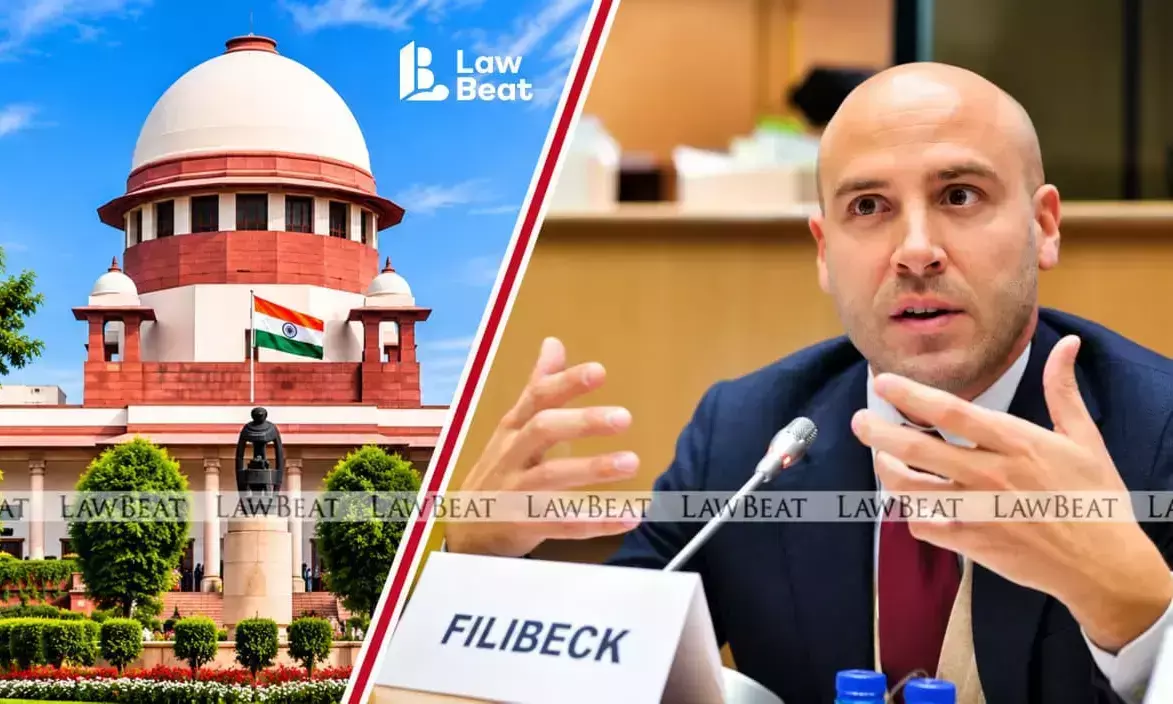
Indian Supreme Court: Dismisses Plea for Foreign Politician Speech Regulation
Summary
- The Indian Supreme Court dismissed a plea seeking to regulate speeches by foreign dignitaries.
- The petition also requested the removal of viral videos showing Giacomo Filibeck, Secretary General of the Party of European Socialists, using the "Vote Chor, Gaddi Chhod" slogan.
- This incident occurred at the Congress's Bharat Summit 2026 in Hyderabad.
- The Court advised the petitioner to first establish a case for regulating the speech of Indian citizens.
- This ruling indicates no immediate new restrictions on foreign guests' speech in India.
The Court's Decision
The Court's emphasis on regulating citizens' speech first implies a hierarchy of concerns, where the conduct and expression of a country's own people are considered the primary domain for legislative and judicial oversight.
The Indian Supreme Court recently dismissed a petition that aimed to establish a regulatory framework for speeches delivered at public gatherings attended by foreign dignitaries within the country. This significant judicial action came in response to a plea that not only sought the creation of specific guidelines for such addresses but also demanded the removal of certain online content.
Specifically, the petitioner requested the deletion of viral video clips featuring Giacomo Filibeck, Secretary General of the Party of European Socialists. These particular videos captured the politician using the politically charged slogan "Vote Chor, Gaddi Chhod" (Vote Thief, Leave the Throne) during the Congress party's Bharat Summit 2026, an event prominently held in Hyderabad. The underlying intent of the plea was to curtail potentially inflammatory or politically sensitive statements made by international guests on Indian soil, citing concerns about their potential impact on public discourse. Despite these arguments, the nation's highest judicial body ultimately chose not to intervene on the grounds presented, signaling a specific approach to the issue of foreign politician speech regulation.
Judicial Reasoning and Precedent
In its decision to dismiss the petition, the Supreme Court issued a clear directive to the petitioner, instructing them to first present a robust case for the regulation of speech by Indian citizens before pursuing similar restrictions on foreign guests. This judicial stance highlights a foundational principle within the Indian legal system, suggesting a prioritization of domestic speech concerns over those pertaining to external actors. The Court's observation implies that the parameters and limitations of free expression for a nation's own populace must be thoroughly defined and established before such frameworks can be appropriately extended to international visitors.
This emphasis on regulating citizens' speech first implies a hierarchy of concerns, where the conduct and expression of a country's own people are considered the primary domain for legislative and judicial oversight. Such an approach indicates that any future legal developments concerning speech regulation in India are more likely to emerge from a domestic context, addressing the actions of its own citizens, rather than being primarily driven by the statements of foreign dignitaries. The plea, which specifically targeted the narrative around events like the Bharat Summit 2026 Hyderabad and the "Vote Chor Gaddi Chhod" slogan, was therefore viewed as premature in its focus on international figures without first solidifying domestic precedents.
Implications for Speech Regulation
This recent ruling by the Indian Supreme Court concerning the regulation of speeches by foreign politicians offers important clarity for legal professionals and event organizers alike. It distinctly signals that, for the foreseeable future, there are no immediate new compliance obligations or restrictions pertaining to the content of addresses given by international guests in India. The Court's refusal to entertain the plea for regulating speeches foreign dignitaries India suggests a cautious and measured approach to imposing such controls, particularly when comprehensive domestic speech regulations are not yet fully established or consistently applied across the board.
The decision effectively dismisses the notion that the judiciary should proactively censor or control the statements of international figures, even when they employ politically charged slogans such as "Vote Chor, Gaddi Chhod." This judicial posture reinforces the idea that the Indian Supreme Court is prioritizing a structured and incremental approach to speech regulation, commencing with its own citizens. Consequently, lawyers should note that any future legal developments in this area are more likely to concentrate on the speech of Indian nationals, rather than imposing novel limitations on international visitors attending high-profile events such as the Bharat Summit 2026. This maintains the current status quo regarding the freedom of expression for foreign guests.
Practical Implications
Lawyers should note that the Indian Supreme Court has declined to regulate speeches by foreign dignitaries, indicating no immediate new compliance obligations or restrictions in this area. The court's emphasis on regulating citizens' speech first suggests that any future legal developments are more likely to focus domestically, rather than on international guests.
Source
How does this affect you?
Get an AI analysis of this article grounded in your jurisdictions, practice areas, and any policy documents you've uploaded to Wansom.
Finish Reading the Full Story and the Expert Analysis.
Get the latest legal & regulatory intelligence in India
Wansom is AI and can make mistakes.