
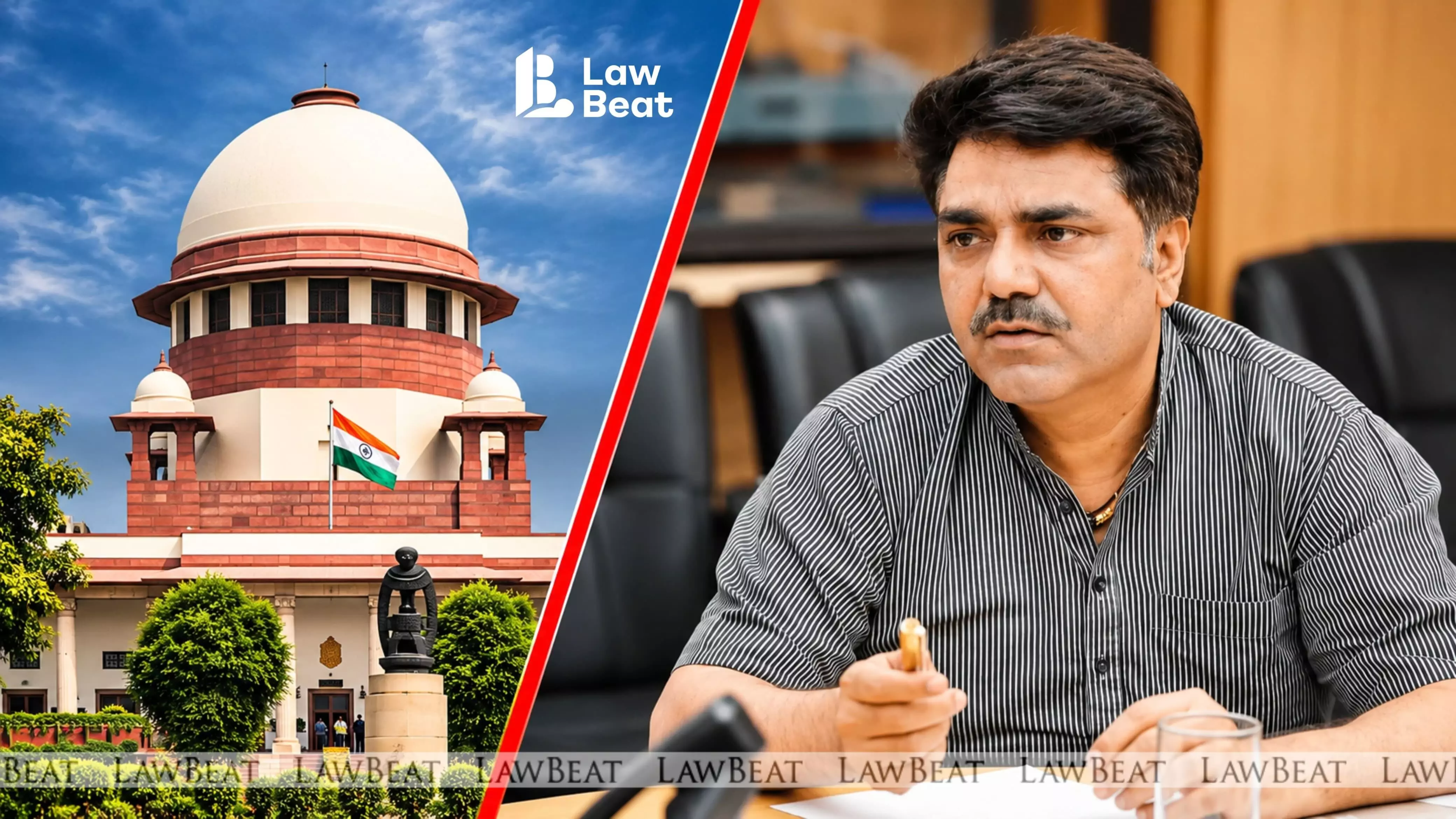
Supreme Court: Grants Bail to Naresh Balyan in MCOCA Case
Summary
- The Supreme Court granted bail to former AAP MLA Naresh Balyan in an MCOCA case, where he was accused of facilitating gangster Kapil Sangwan's syndicate.
- Balyan had been in custody since December 2024, facing allegations of involvement in extortion and property grabbing.
- The bail was issued with the strict condition that Balyan must fully cooperate with the trial, or his bail would be cancelled.
- Balyan's counsel emphasized that two key witnesses had retracted their statements and that Balyan had previously filed a complaint against Sangwan.
- The Delhi High Court had previously denied bail, adopting a "syndicate-centric" approach to MCOCA and finding a prima facie nexus between Balyan and the syndicate.
What Happened
The Supreme Court's decision to grant bail, particularly in light of the witness retractions and the condition of cooperation, signals a careful balancing act within the stringent MCOCA framework.
The Supreme Court recently granted bail to Naresh Balyan, a former Member of the Legislative Assembly (MLA) and Aam Aadmi Party (AAP) leader, who had been in custody since December 2024. Balyan was implicated in a case under the Maharashtra Control of Organised Crime Act, 1999 (MCOCA), facing accusations of facilitating the criminal activities of gangster Kapil Sangwan's syndicate. The Court, comprising Justice Vikram Nath and Justice Aparesh Singh, issued the order, emphasizing that Balyan's bail is contingent upon his full cooperation with the ongoing trial, warning that non-compliance would lead to its cancellation.
Balyan's arrest by the Delhi Police Crime Branch occurred on December 4, 2024, following an FIR registered on August 28, 2024, under Sections 3 and 4 of MCOCA. The prosecution's case posits that Balyan acted as an enabler for Sangwan's criminal enterprise, which is alleged to be involved in a range of illicit activities including extortion, property grabbing, issuing threats, and orchestrating shootings. This syndicate reportedly pressured property owners into selling their land at undervalued prices and intimidated businessmen and property dealers for money.
Legal Context and Prior Proceedings
The Supreme Court's decision came as a result of Balyan's appeal against a Delhi High Court judgment from August 3, 2026, which had previously denied him bail. Prior to this, Balyan's bail applications had also been rejected by the trial court on January 15, 2025, and again on May 27, 2025. The Delhi High Court, in its ruling, determined that there was sufficient prima facie evidence at the bail stage to establish a connection between Balyan and the Sangwan syndicate, noting that approximately 17 First Information Reports (FIRs) were linked to the syndicate's operations.
During the High Court proceedings, Balyan's legal team contended that MCOCA provisions were improperly invoked against him, arguing that no new or continuous unlawful activity could be attributed to him, and that the prosecution relied on outdated FIRs and chargesheets without demonstrating his direct membership in the syndicate. However, the High Court rejected these arguments, asserting that the statutory requirement of multiple chargesheets within a ten-year period, where cognizance had been taken, did not need to be met individually for the accused. Instead, the court adopted a "syndicate-centric" approach, focusing on whether the accused had a nexus with the organized crime group. The High Court also dismissed Balyan's claim of double jeopardy, clarifying that investigating agencies have the discretion to either incorporate MCOCA provisions into an existing FIR or register a new one after securing the necessary approvals. It also referenced Section 21(4) of MCOCA, which requires courts to be satisfied that there are reasonable grounds to believe the accused is not guilty and unlikely to commit an offence while on bail, concluding that prolonged custody alone was not decisive for bail in MCOCA cases.
Arguments and Supreme Court's Rationale
Senior Advocate Vikas Singh, representing Naresh Balyan before the Supreme Court, highlighted several crucial points in his client's defense. Singh informed the bench that two pivotal witnesses in the case had retracted their earlier statements. He further emphasized that Balyan had previously lodged a complaint against Kapil Sangwan and had even been granted police protection due to threats received from the gangster. Additionally, Singh argued that Balyan was not initially named as an accused in the case and questioned the admissibility of the evidence presented by the prosecution.
In response, Additional Solicitor General (ASG) Raja Thakare, representing the State, countered by stating that the case fundamentally concerned organized crime, specifically involving property grabbing and extortion. Thakare reiterated that MCOCA's framework does not necessitate multiple cases against an individual accused, as the legislation is designed to target the organized crime syndicate as a collective entity. He pointed out that the syndicate itself was implicated in 19 different cases. Justice Nath posed a direct question to the prosecution regarding the pursuit of an elected official, to which Thakare responded by underscoring the gravity of the organized crime allegations. The Supreme Court's decision to grant bail, particularly in light of the witness retractions and the condition of cooperation, signals a careful balancing act within the stringent MCOCA framework.
Practical Implications
This Supreme Court ruling provides critical insight into the conditions for granting bail in MCOCA cases, particularly highlighting the significance of witness retraction and the accused's cooperation with the trial. Lawyers handling MCOCA matters should analyze this precedent for arguments concerning the 'syndicate-centric' approach to the Act and the evidentiary thresholds for bail applications, especially when challenging a High Court's refusal.
Source
How does this affect you?
Get an AI analysis of this article grounded in your jurisdictions, practice areas, and any policy documents you've uploaded to Wansom.
Finish Reading the Full Story and the Expert Analysis.
Get the latest legal & regulatory intelligence in India
Wansom is AI and can make mistakes.