
Supreme Court: Dua Not Corrupt Practice in Election, Upholds MLA's Win
Summary
- The Supreme Court upheld the election of AIMIM MLA Mufti Mohammad Ismail Abdul Khalique from Maharashtra's Malegaon Central Assembly constituency.
- The Court ruled that offering a 'dua' (prayer) for electoral success and audience affirmation ('Amen') does not constitute a corrupt practice under election law.
- This decision clarifies the interpretation of soliciting votes on religious grounds under Section 123(3) of the Representation of the People Act, 1951.
- The ruling affirmed the Bombay High Court's finding that such actions are not equivalent to a pledge or undue influence.
- The election petition, initially filed by Shaikh Asif Shaikh Rashid and later appealed by Shaan-e-Hind Nihal Ahmed, was ultimately dismissed.
Supreme Court Clarifies Election Law on Religious Appeals
Lawyers advising political candidates or involved in election petitions must understand that offering a 'dua' (prayer) for electoral success and audience affirmation ('Amen') does not, by itself, constitute soliciting votes on religious grounds.
The Supreme Court of India has delivered a significant ruling concerning the boundaries of religious expression in election campaigns, upholding the election of AIMIM MLA Mufti Mohammad Ismail Abdul Khalique from Maharashtra's Malegaon Central Assembly constituency. The apex court affirmed that merely offering a 'dua' (prayer) for a candidate's electoral success, followed by the audience responding with 'Amen,' does not inherently constitute soliciting votes on religious grounds or qualify as a corrupt practice under the Representation of the People Act, 1951.
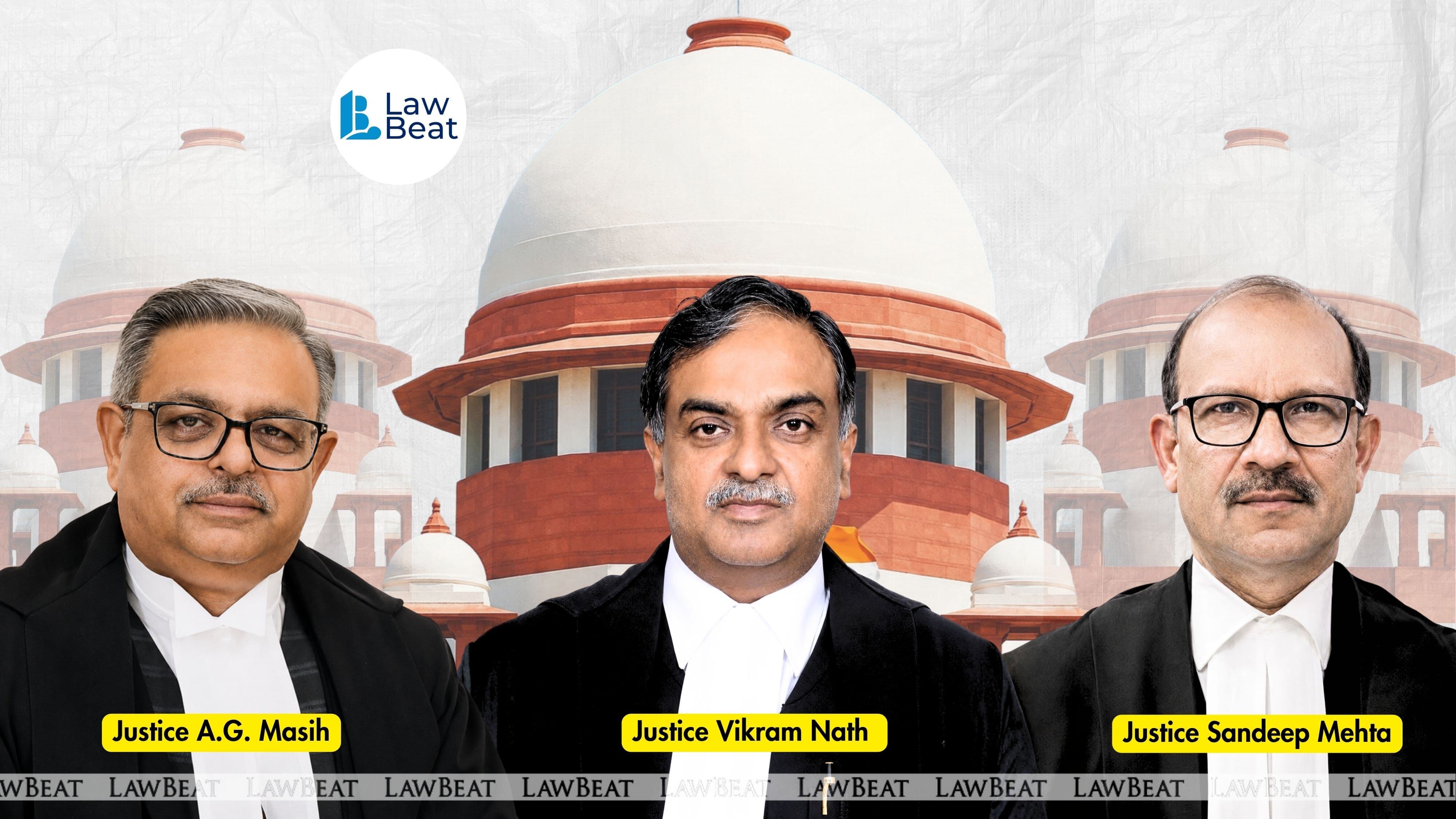
This decision by a Bench comprising Justice Vikram Nath, Justice Sandeep Mehta, and Justice Augustine George Masih, dismissed an appeal challenging Khalique's victory. The ruling effectively endorsed the prior judgment of the Bombay High Court, which had similarly rejected an election petition against Khalique's win in the 2024 Maharashtra Assembly polls. The initial challenge at the High Court was brought by Shaikh Asif Shaikh Rashid, who contested on an Indian Secular Largest Assembly of Maharashtra (ISLAM) ticket, while the Supreme Court appeal was filed by Samajwadi Party candidate Shaan-e-Hind Nihal Ahmed.
In the contested election, Mufti Khalique secured 109,563 votes, narrowly defeating Rashid, who garnered 109,491 votes. Ahmed, the Supreme Court appellant, received 9,624 votes. The core of the legal dispute revolved around allegations that Khalique and his campaign workers engaged in corrupt practices, specifically by making appeals based on religion, which is prohibited under Section 123 of the Representation of the People Act, 1951.
Allegations of Electoral Misconduct
A central accusation against Mufti Khalique involved his practice of offering prayers for his electoral victory during political gatherings and congregational prayers, with attendees reportedly responding 'Amen.' The challenger contended that this act amounted to soliciting votes in the name of religion, arguing that the audience's 'Amen' signified a pledge to vote for Khalique, who also serves as the Imam of Jame Masjid in Malegaon.
Further allegations under Section 123(3) of the Representation of the People Act, 1951, claimed that Khalique invoked Islam and other religious references throughout his campaign in a manner prohibited by law. This specific section defines an appeal to vote or refrain from voting on the basis of religion as a corrupt practice. The petitioners argued that the cumulative effect of Khalique's campaign materials and speeches should have been considered, rather than evaluating individual statements in isolation, to establish a pattern of religious appeal election India.
Judicial Scrutiny of Religious Expression
Both the Bombay High Court and subsequently the Supreme Court meticulously examined these claims, ultimately rejecting the contention that Khalique's actions constituted a corrupt practice. The High Court, whose reasoning was upheld by the Supreme Court, differentiated between an affirmation and a formal pledge. It concluded that while saying 'Amen' might indicate agreement or affirmation of a prayer, it is distinctly different from making a formal promise or undertaking to vote for a candidate. The court emphasized that praying for a candidate's electoral success does not equate to soliciting votes based on the candidate's religion or exercising undue influence.
The High Court had explicitly observed that the act of offering a 'dua' and the corresponding response of 'Amen' does not amount to a pledge. It further clarified that a prayer for success in an election neither constitutes undue influence nor the soliciting of votes in the name of religion. The courts also considered a speech by AIMIM worker Sufi Anees Quadri, who questioned the propriety of seeking votes from Muslims when the candidate was an Imam. While acknowledging that the speech appealed to the emotions of the gathering, the court determined it did not amount to soliciting votes on the specific ground of Khalique's religion, thereby providing crucial clarity on India election law corrupt practices. Senior Advocate Mukul Rohatgi represented the appellant, while Senior Advocate Shadan Farasat appeared for the returned candidate.
Defining 'Corrupt Practice' in Indian Elections
This Supreme Court dua election corrupt practice ruling provides critical clarity on the interpretation of 'corrupt practice' under Section 123(3) of the Representation of the People Act, 1951, specifically defining the boundaries of religious expression in Indian election campaigns. The judgment underscores that not every religious utterance or practice during an election campaign automatically falls under the ambit of a corrupt practice. Instead, a nuanced understanding is required to distinguish between genuine religious expression and an explicit appeal for votes based solely on religious identity.
Lawyers advising political candidates or involved in election petitions must understand that offering a 'dua' (prayer) for electoral success and audience affirmation ('Amen') does not, by itself, constitute soliciting votes on religious grounds. This decision sets an important precedent for future election petitions, particularly those alleging religious appeals, by establishing a higher threshold for what constitutes a prohibited 'religious appeal election India' under the Representation of the People Act 1951 Section 123(3). It reinforces that the mere act of prayer, even for electoral success, does not inherently violate the provisions against corrupt practices.
Practical Implications
This ruling provides critical clarity on the interpretation of 'corrupt practice' under Section 123(3) of the Representation of the People Act, 1951, specifically defining the boundaries of religious expression in Indian election campaigns. Lawyers advising political candidates or involved in election petitions must understand that offering a 'dua' (prayer) for electoral success and audience affirmation ('Amen') does not, by itself, constitute soliciting votes on religious grounds.
Source
How does this affect you?
Get an AI analysis of this article grounded in your jurisdictions, practice areas, and any policy documents you've uploaded to Wansom.
Finish Reading the Full Story and the Expert Analysis.
Get the latest legal & regulatory intelligence in India
Wansom is AI and can make mistakes.