
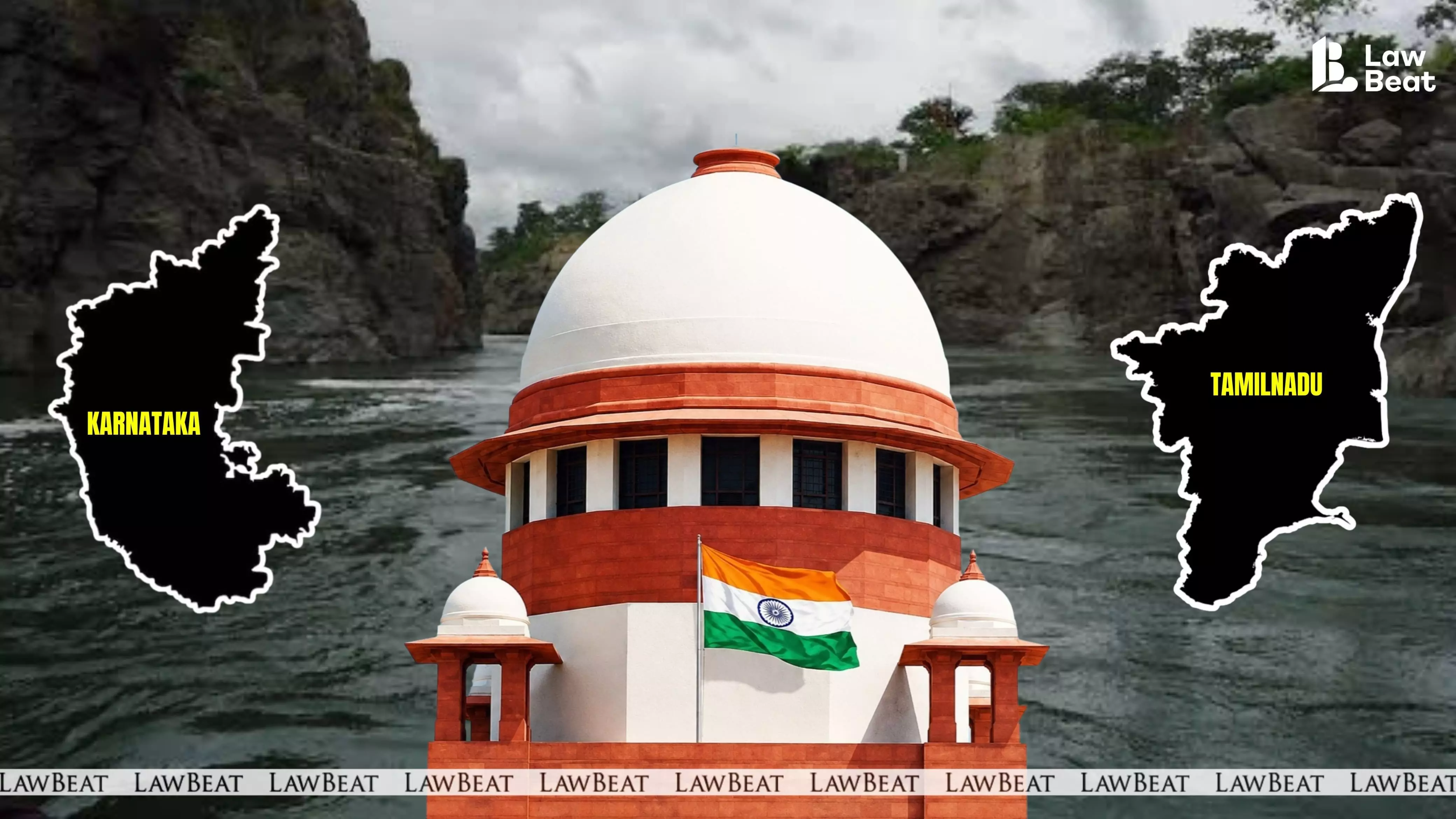
Supreme Court Dismisses Tamil Nadu's Plea for 11 TMC Cauvery Water
Summary
- The Supreme Court dismissed two applications from Tamil Nadu seeking 11 TMC of Cauvery water from Karnataka.
- Tamil Nadu claimed the 11 TMC was an arrears backlog as of October 7, and also sought a daily release of 1.3 TMC.
- The Court also rejected a third application from Tamil Nadu for additional documents.
- The Dravida Munnetra Kazhagam (DMK), currently the main opposition party in the Tamil Nadu Legislative Assembly, had moved the court, citing non-compliance with Cauvery Water Management Authority directions.
- The ruling is the latest development in the long-standing Tamil Nadu Karnataka water dispute, impacting agricultural operations in Tamil Nadu.
Court Rejects Tamil Nadu's Plea
The Supreme Court's decision to dismiss Tamil Nadu's plea for the 11 TMC Cauvery water backlog underscores a reluctance to intervene directly in specific water release demands, especially when established regulatory bodies like the Cauvery Water Management Authority have already issued directions.
The Supreme Court has rejected two petitions filed by the Tamil Nadu government, which sought an order for Karnataka to release 11 thousand million cubic feet (TMC) of Cauvery water. This quantity was claimed by Tamil Nadu as an outstanding amount as of October 7. The apex court's decision also extended to a third application from Tamil Nadu, which aimed to introduce additional documents into the record, dismissing it as well.
The applications specifically requested that Karnataka immediately clear the 11 TMC backlog of Cauvery water. Furthermore, Tamil Nadu had asked for a directive mandating Karnataka to ensure a daily release of 1.3 TMC over a ten-day period at Billigundulu, a critical water-measuring station situated on the river at the Karnataka–Tamil Nadu border. The bench presiding over these matters included Justices Vikram Nath and Aparesh Kumar Singh.
Enduring Water Dispute and Regulatory Framework
The recent Supreme Court verdict is the latest development in the long-standing Tamil Nadu Karnataka water dispute, a contentious issue that dates back to 1974 when Karnataka, as the upper riparian state, began diverting water without Tamil Nadu's consent. The Dravida Munnetra Kazhagam (DMK), currently the main opposition party in the Tamil Nadu Legislative Assembly, had brought the matter before the Supreme Court, pressing for the urgent release of Cauvery River water by Karnataka, citing non-compliance with recent directives from the Cauvery Water Management Authority (CWMA). The CWMA had previously affirmed a decision by the Cauvery Water Regulation Committee (CWRC) to release 3500 cusecs per day to Tamil Nadu for a period of fifteen days.
According to the DMK, the final order issued by the Tribunal specifies the monthly stipulated flows that Karnataka must ensure at Biligundlu. These flows are set between June and January each year, with 123.14 TMC allocated for June to September, and 44.11 TMC for October to January, totaling 167.25 TMC for the June to January period. The current water year has seen a significant deficiency in the South-West Monsoon within the Cauvery basin, leading to exceptionally low flows at Biligundlu, reportedly only about 10% of the stipulated amount for the relevant period. Based on an estimate applying a distress-sharing formula, the backlog owed to Tamil Nadu at Biligundlu stood at 9.46 TMC on July 26, requiring approximately 7000 cusecs per day for fifteen days to be fulfilled.
Implications and Precedents
Despite the clear decisions from statutory authorities, the Dravida Munnetra Kazhagam (DMK) has alleged that Karnataka has failed to release the required water. Reports indicate that representatives from Karnataka have publicly stated their refusal to release the water. This period, from June to September, is particularly vital as nearly three-quarters of the annual 167.25 TMC is needed at Biligundlu to support the cultivation of the Kuruvai paddy crop and prepare for the Samba crop. The Supreme Court's decision to dismiss Tamil Nadu's plea for the 11 TMC Cauvery water backlog underscores a reluctance to intervene directly in specific water release demands, especially when established regulatory bodies like the Cauvery Water Management Authority have already issued directions.
This ruling aligns with previous stances taken by the Supreme Court. Last year, the Court declined to interfere with the Mekedatu Reservoir Project proposed by the Karnataka government, despite a plea from Tamil Nadu against the construction of this balancing reservoir at Mekedatu, located on the Karnataka-Tamil Nadu border. Furthermore, in 2023, the Supreme Court also refused to intervene in a Cauvery Water Management Authority order concerning directives to Karnataka. The Union government had also previously clarified that it had not granted approval for the construction of any new dams across the Cauvery River, with Raj Bhushan Choudhary, Minister of State for Jal Shakti, confirming in a Rajya Sabha reply that no such permission had been given.
Practical Implications
This ruling indicates the Supreme Court's reluctance to directly intervene in specific water release demands between states, especially when statutory bodies like the Cauvery Water Management Authority have already addressed the matter. Lawyers advising clients in agriculture or water-dependent industries in Tamil Nadu should note that immediate judicial relief for water shortfalls may be difficult to obtain, emphasizing the importance of engagement with and adherence to decisions from established regulatory mechanisms.
Source
How does this affect you?
Get an AI analysis of this article grounded in your jurisdictions, practice areas, and any policy documents you've uploaded to Wansom.
Finish Reading the Full Story and the Expert Analysis.
Get the latest legal & regulatory intelligence in India
Wansom is AI and can make mistakes.