
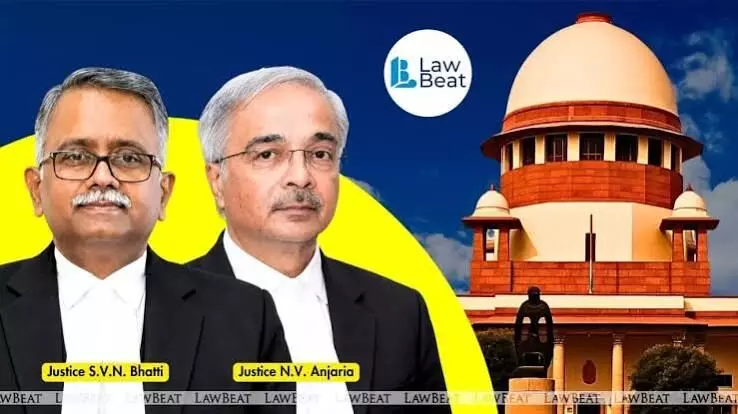
Supreme Court: No Financial Inability for Local Bodies' Sanitation Funding
Summary
- The Supreme Court has ruled that local bodies cannot use financial inability as an excuse for poor sanitation.
- This decision reinforces a 1980 precedent from Municipal Council, Ratlam v. Vardhichand, citing India's economic growth.
- The ruling was made on November 17, 2026, in the case of Bhopal Municipal Corporation v. Dr Subhash C. Pandey & Ors.
- All District Collectors are now required to upload geotagged and timestamped photos of waste management facilities.
- Despite some progress, the Court expressed dissatisfaction with the overall Solid Waste Management Rules, 2026 compliance, noting significant deficiencies.
Judicial Mandate on Sanitation Funding
The Supreme Court of India has issued a significant directive, asserting that local government bodies can no longer cite financial constraints as an excuse for inadequate sanitation services.
The Supreme Court of India has issued a significant directive, asserting that local government bodies can no longer cite financial constraints as an excuse for inadequate sanitation services. This ruling, delivered on November 17, 2026, by a bench comprising Justices S.V.N. Bhatti and N.V. Anjaria, came during the review of compliance with the Solid Waste Management Rules, 2026. The Court explicitly stated that a plea of financial inability, which was rejected in 1980, holds no validity in the current economic landscape, underscoring India's substantial growth since then.
This decision stems from the case of Bhopal Municipal Corporation v. Dr Subhash C. Pandey & Ors, where the Court examined a 48-page Short-Term Report, accompanied by 387 pages of annexures, submitted by the Supreme Court Monitoring Committee (SCMC). The SCMC, which includes high-ranking officials from various ministries and the Central Pollution Control Board, is tasked with overseeing the implementation of the Solid Waste Management Rules, 2026. A pivotal new requirement mandates every District Collector across the nation to upload geotagged and timestamped photographs, documenting the actual state of waste management facilities in both urban and rural local bodies.
Reinforcing a Decades-Old Precedent
The Court's recent pronouncement firmly reiterates a principle established over four decades ago in the landmark 1980 case, Municipal Council, Ratlam v. Vardhichand [(1980) 4 SCC 162]. In that earlier ruling, the Supreme Court had unequivocally declared that municipalities, as local bodies, could not evade their primary responsibilities for public health, hygiene, and maintaining habitable conditions by claiming financial hardship. The Court then refused to accept financial disability as a legitimate reason for denying basic amenities to the citizens within local body jurisdictions.
The current bench emphasized that the Ratlam judgment was rendered at a time when "Bharat was not the economic powerhouse it is today." It highlighted that the nation has experienced considerable and noticeable economic expansion over the past few decades. Consequently, the Court concluded that an argument of financial inability, which failed to persuade the judiciary in 1980, would certainly not be effective in the third decade of the 21st Century, thereby strengthening the legal obligation for Solid Waste Management Rules 2026 compliance.
Persistent Gaps in Waste Management Compliance
Despite the Supreme Court Monitoring Committee's diligent efforts and reported progress, the Court expressed clear dissatisfaction with the overall pace of Solid Waste Management Rules 2026 compliance. The SCMC's report indicated that the initial two phases, focused on establishing administrative mechanisms for monitoring, were successfully implemented, and that the SCMC itself was fully compliant with stipulated timelines. Furthermore, the Court acknowledged that its directives had "percolated, in letter and in spirit," down to Chief Secretaries, District Collectors, and local body heads.
The report detailed several milestones, including 755 out of 784 District Collectors being registered on the CPCB Portal, the onboarding of 4,958 of 5,049 urban local bodies and 699 of 701 District Panchayats, and the convening of Special Gram Sabhas in 89,102 Gram Panchayats. Additionally, 4,592 interception systems were installed, and 21,324.69 metric tonnes of waste were removed from water bodies, with 778 river stretches undergoing restoration. However, the Bench found these achievements insufficient, stating that "milestones, both on the Orders of this Court and on the obligations under the SWM Rules, 2026, are still far from realisation." Significant deficiencies were noted, such as approximately 400 districts yet to establish Special Cells for District Collectors, only 9 of 28 States meeting urban bylaw targets, 16 States failing to report on rural bylaws, and 18 States not providing data on four-way segregation of solid waste in rural areas.
Implications for Local Governance and Accountability
This ruling carries profound implications for India local government waste management, fundamentally altering the landscape of accountability for sanitation. The Supreme Court's firm stance eliminates the long-standing defense of financial inability, placing an undeniable onus on local bodies to ensure robust waste management infrastructure and services. This decision serves as a clear signal that the judiciary expects proactive and effective implementation of environmental regulations, irrespective of perceived budgetary limitations.
The new mandate for District Collectors to provide geotagged waste photos introduces an unprecedented level of transparency and verifiable evidence into the compliance process. This measure is designed to ensure stricter enforcement and provide concrete proof of the operational status of waste management facilities. Consequently, local government bodies must now prioritize resource allocation for sanitation, as the Supreme Court financial inability defense is no longer a viable argument against non-compliance with the Solid Waste Management Rules, 2026.
Practical Implications
Lawyers advising local government bodies must inform clients that financial inability is no longer a valid defense for non-compliance with Solid Waste Management Rules, 2026, following this Supreme Court ruling. Compliance officers should anticipate stricter enforcement and prepare for increased scrutiny, including the mandatory submission of geotagged photographic evidence of waste management facilities by District Collectors.
Source
How does this affect you?
Get an AI analysis of this article grounded in your jurisdictions, practice areas, and any policy documents you've uploaded to Wansom.
Finish Reading the Full Story and the Expert Analysis.
Get the latest legal & regulatory intelligence in India
Wansom is AI and can make mistakes.